
Understanding Allowances in a Custom Home Build
Building a custom home is an exciting journey, but the financial side – specifically “allowances” – can be confusing. Understanding the concept of allowances is important for keeping your project on track and your budget in check. Here's how it actually works.
Building a custom home is an exciting journey, but the financial side – specifically “allowances” – can be confusing. Understanding the concept of allowances is important for keeping your project on track and your budget in check. Here's how it actually works. (And if you haven't purchased land yet, start with our tips for vetting a lot before you get to this stage.)
What are Allowances?
Every custom home build has a construction budget for everything from start (dirt work, concrete, framing) to finish (final touches). Included in the construction budget are “allowances” – an estimated dollar amount specified for items that will be selected later in the process: flooring, cabinets, plumbing fixtures, lighting, appliances, and so on.
Think of allowances as a place holder value in your budget that lets construction move forward, giving you more time for making the right design decisions that will appeal to your lifestyle and custom preferences.
Where Confusion Comes In
Allowances are important and necessary in building a custom home, but they can create uncertainty if they are not understood.
These estimated costs are dollar amounts in your construction budget based on the builder’s expertise and may not be the guaranteed price, depending on what finishes you choose. Allowances can act as a guide for homebuyers to stick to the allowed amounts. If the allotted amount does not align with the type of finishes you were expecting, you may be surprised when you go over budget.
From Confusion to Confidence
Choosing a builder who is transparent about budget, finishes and expectations will help you feel confident throughout the entire home building process – and avoid unexpected surprises.
Make sure you have a clear understanding of what level of finishes will be included in the construction budget. Finish options and costs in each category can range drastically. For example: an appliance package can range from basic to professional-grade, and the price difference may be shocking. Lighting packages also vary quite a bit depending on the style and quality you will be choosing. Slab countertop pricing depends on the material; quartz, granite, quartzite, and the custom fabrication you may be expecting.
Banks, Construction Loans, and Allowances
Your bank wants to ensure that your loan will cover the entire project, including fixed costs and allowance items. After reviewing your construction budget, loan officers will go over the builder’s estimates for amounts you are “allowed” to spend for each category. These amounts are calculated to fit within what your bank has approved for the construction loan.
During construction, your lender will take monthly draws on your loan, releasing funds to pay the builder based on specific milestones as construction progresses. The bank will carefully review the expenses each month to ensure that you are keeping within your budget. When it comes to allowances, the bank will expect you to spend within your allowed amount or pay the difference, out-of-pocket for every dollar that exceeds the allowed amount. Of course, you will be issued a credit if you spend less.
Managing Allowances, Credits and Overages
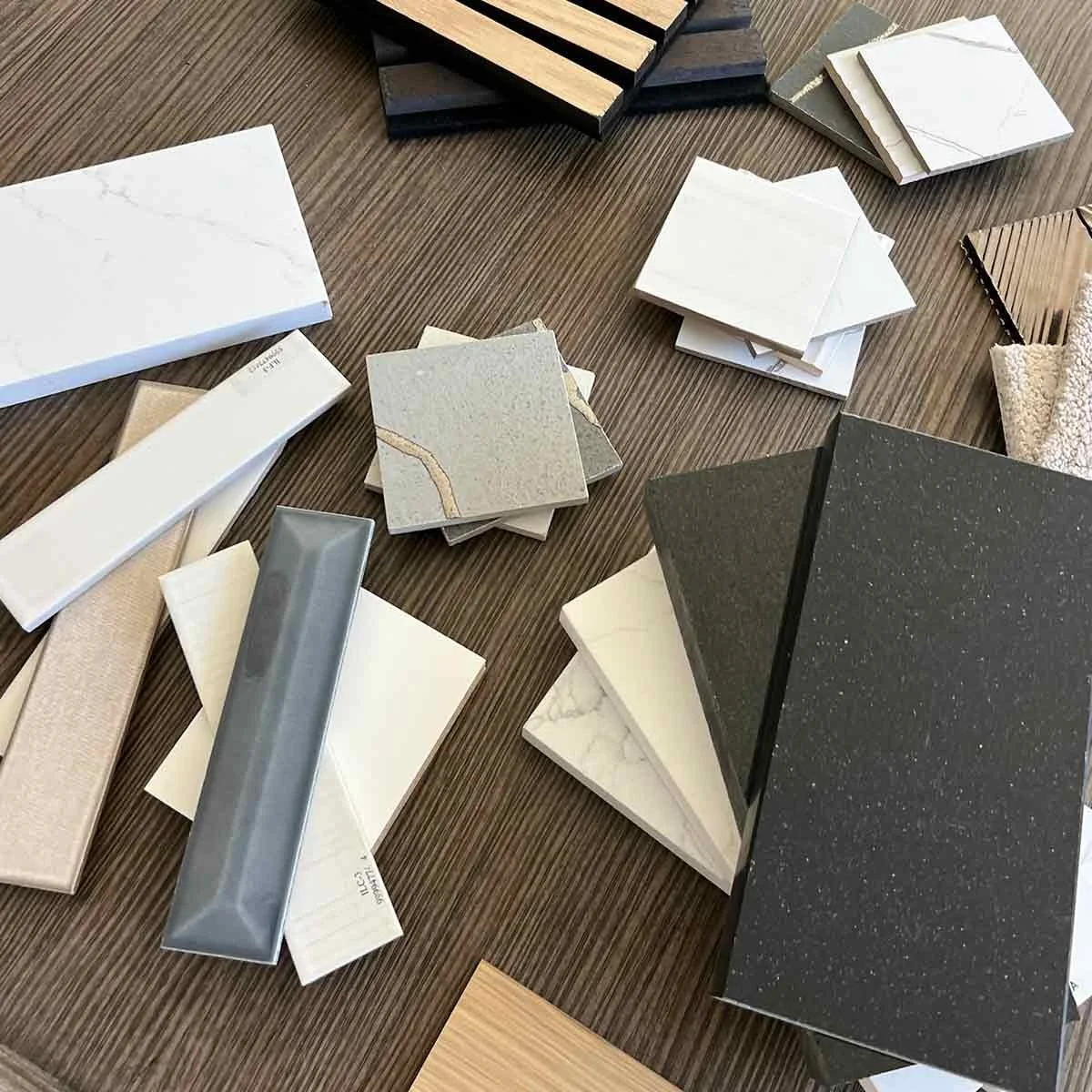
Once you have your construction budget and allowances figured out, it's time to make design selections. If you're standing in a showroom and fall for a slab or tile that costs more than what was budgeted for, you do have options for upgrading finishes:
Cover the difference directly: pay the builder for the upgrades at the time the materials are selected. This ensures the budget stays balanced and the project remains on track.
Loan adjustment: talk to your lender about increasing your loan amount. Note: this may involve additional paperwork for bank approval and could delay your project.
Select less expensive items in another category: if any items come in under budget,you may receive a credit to use on items in a different category.
If you do decide to upgrade, your builder will provide a change order form detailing any cost differences which will be signed by you and the builder before any work can continue.
How This Plays Out
Most of our custom home buyers have come to Sierra Homes with floor plans in hand, a budget prepared, but no design selections made. No problem! Every single client wants to stick tight to their budgets and we understand and respect that.
For example, one recent client had their budget set, but as the design selection process unfolded; spending time in showrooms choosing tile, hardwood, and quartz, these clients found themselves drawn to higher-end finishes that went beyond what was originally allotted. This opened up conversations about how to proceed. Which upgrades mattered the most? How to cover the difference? They splurged on some items and cut back on others. The final result was a beautiful home that reflected exactly what they wanted, all while keeping close to budget!
How to be Prepared Before Your First Meeting
If you're planning a custom home, understanding allowances before your first meeting with Sierra Homes will give you a stronger foundation. You'll know why we ask about your budget upfront, why the numbers get revisited as you make selections, and why a favorite upgrade doesn't have to derail your plans. That's the whole point of building this way: a process where you're informed and in control of your choices, not caught off guard by them. For a closer look at what that first meeting covers, see Starting Your Custom Home Journey: Key Questions We Ask Our Clients.
Curious how your own budget would translate into a custom home plan? We'd love to walk through it with you.
Sound Slats and a Built-In Media Wall: A Bonus Room Transformation
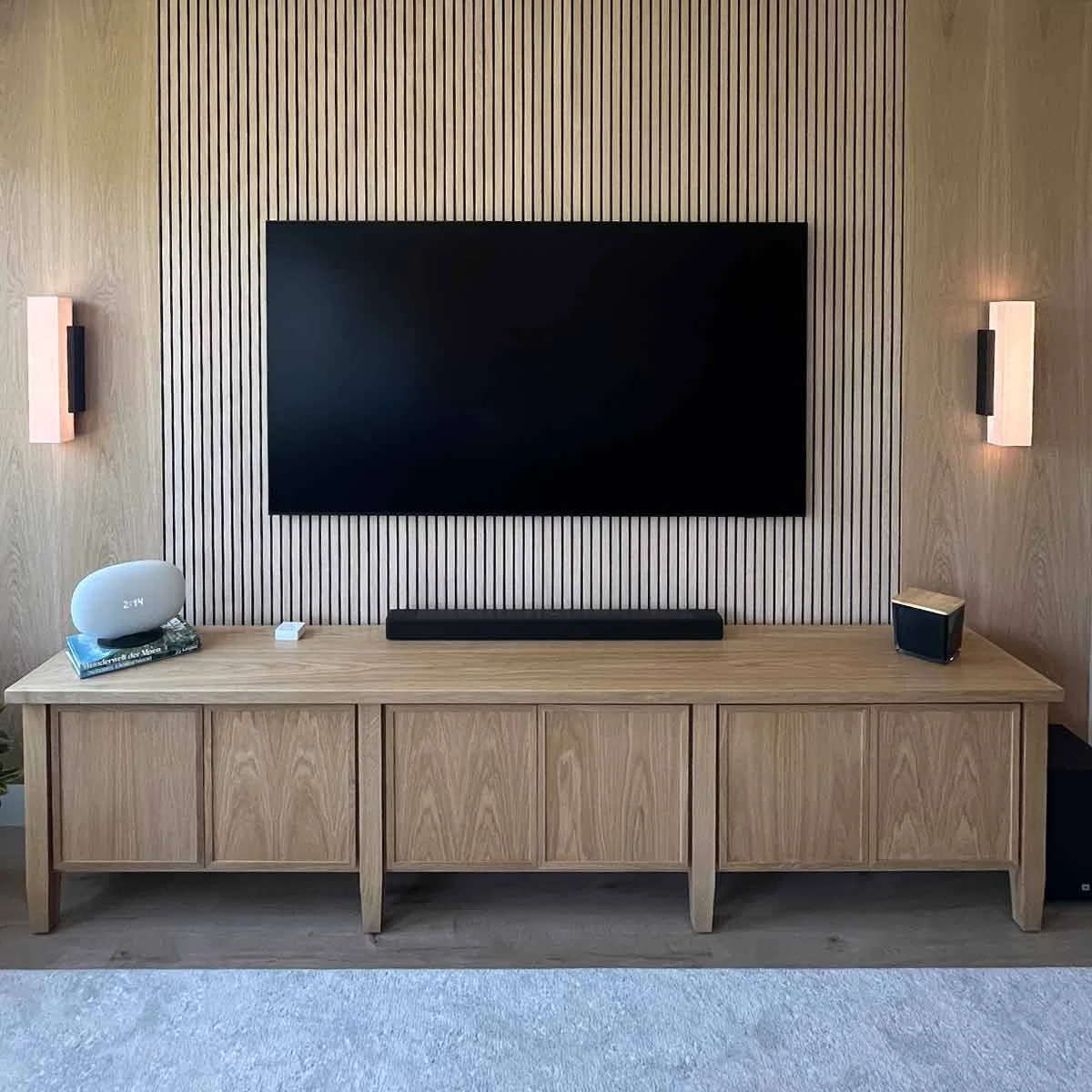
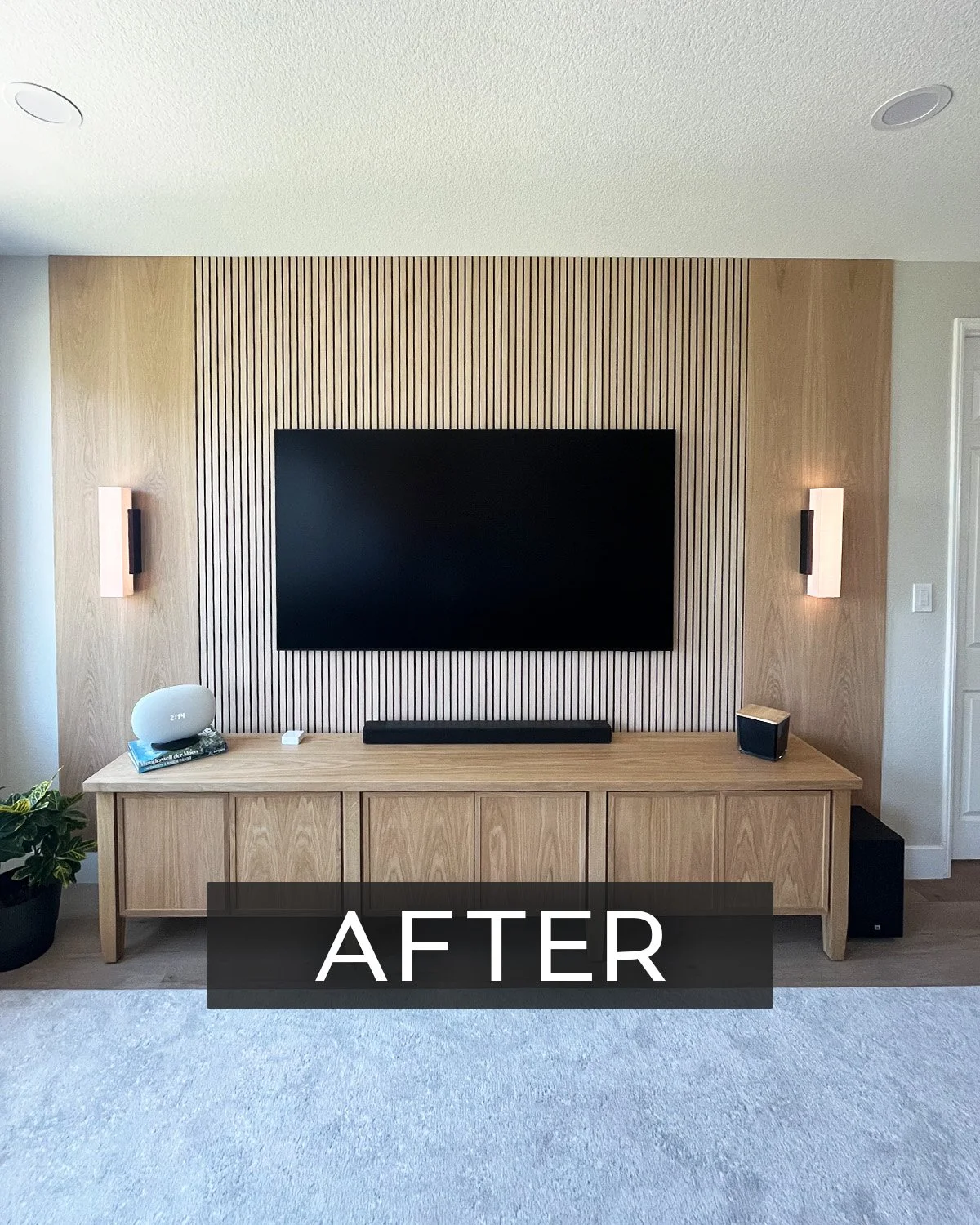
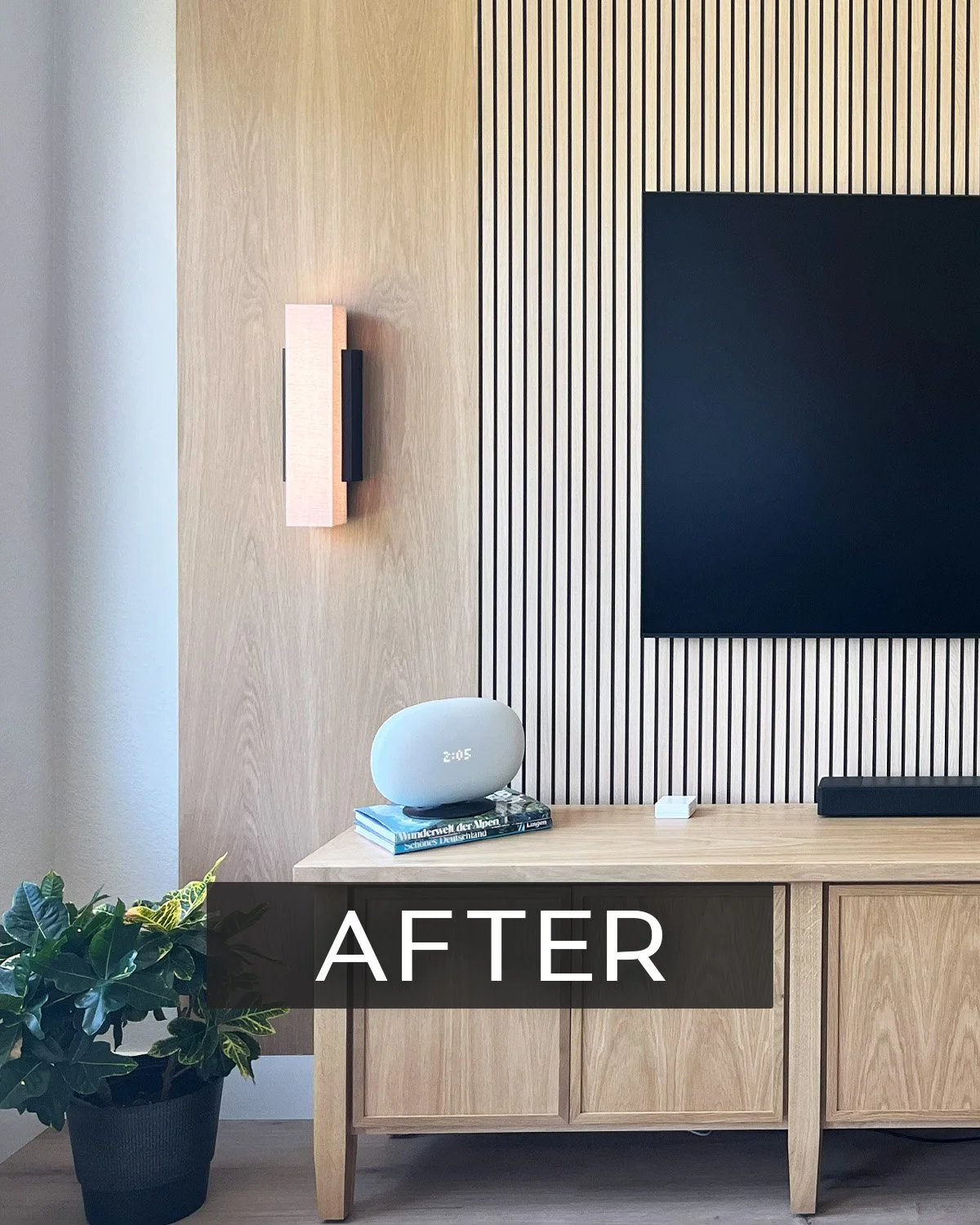
An empty bonus room becomes a cozy entertainment space with a custom media wall, sound-absorbing slats, and built-in storage. See the full transformation.
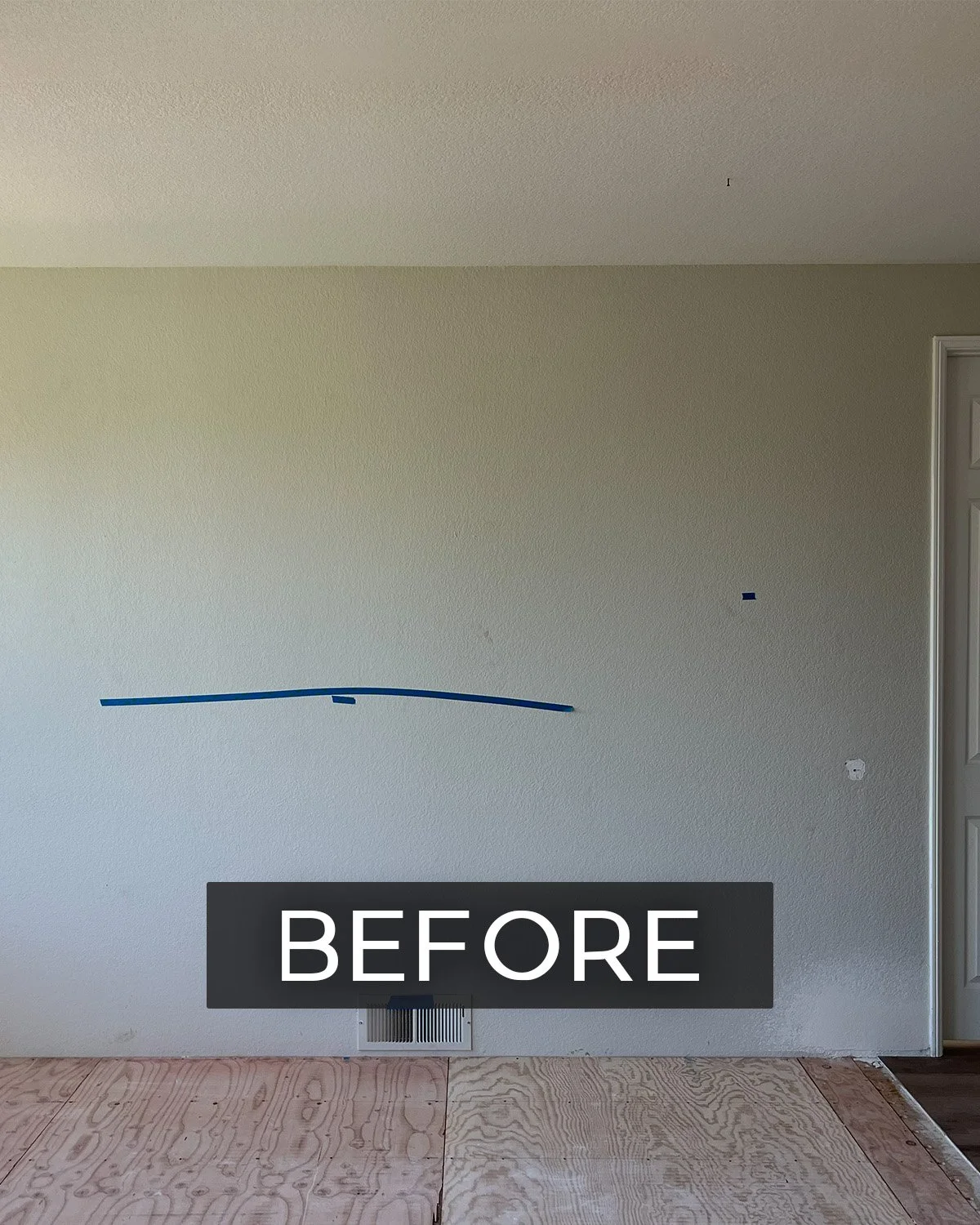
Some rooms just need the right vision to come together. This bonus room started as a blank slate, an empty loft space with no furniture and no clear direction, and it's now a favorite spot to unwind and watch a movie.
Getting the Design Just Right
The room belonged to Kelly and Dan’s sister-in-law, and the goal was simple: turn an empty space into a cozy, functional entertainment hub. What made this project interesting is how much thought went into getting every detail right, even without Kelly walking through the room in person.
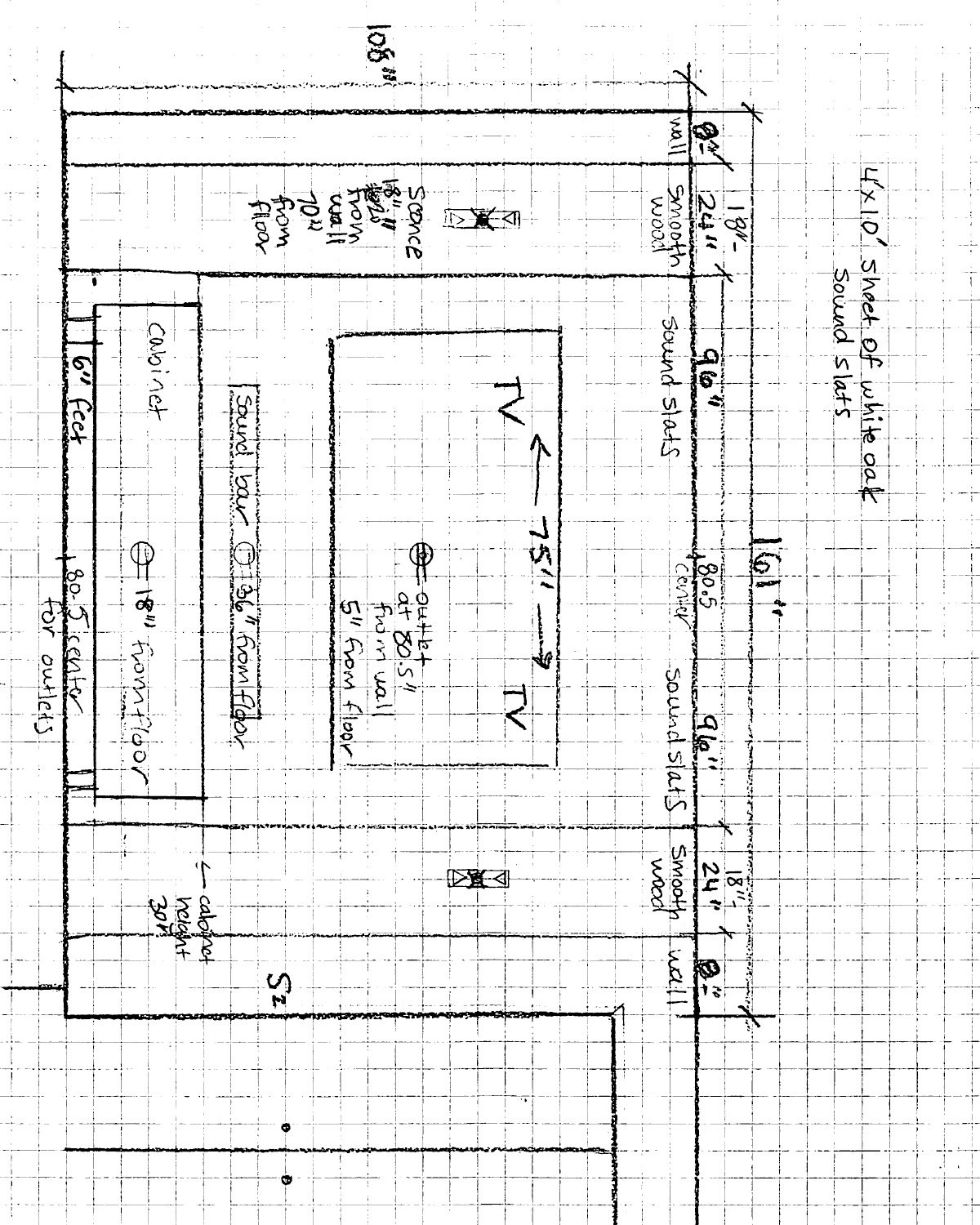
Working from photos and measurements, Kelly sketched the wall design by hand on graph paper, working through proportions, panel placement, and cabinet dimensions until the layout felt right. It's the kind of care that goes into every Sierra Homes design: taking the time to understand the space and the client's vision, then translating that into something that actually fits, down to the inch.
Once the design was approved, a local contractor brought it to life exactly as planned.
The Details That Make It Work
The finished media wall combines style and function in a few key ways:
A sleek TV wall panel finished in white oak
Sound-absorbing slats built into the design, so movie nights don't echo through the house
Elegant sconce lighting on either side for warmth after dark
A storage cabinet below, keeping media components and clutter out of sight
The Result
What started as an empty loft is now a space built for actually using: movie nights, hosting friends, settling in after a long day. It's a good example of what Kelly and the Sierra Homes team bring to every project, whether it's a full custom build or a single-room refresh: thoughtful design that fits the client and the space, right down to the last detail.
Looking for inspiration for your own space?
Breaking Ground: Our New Renton Neighborhood is Underway
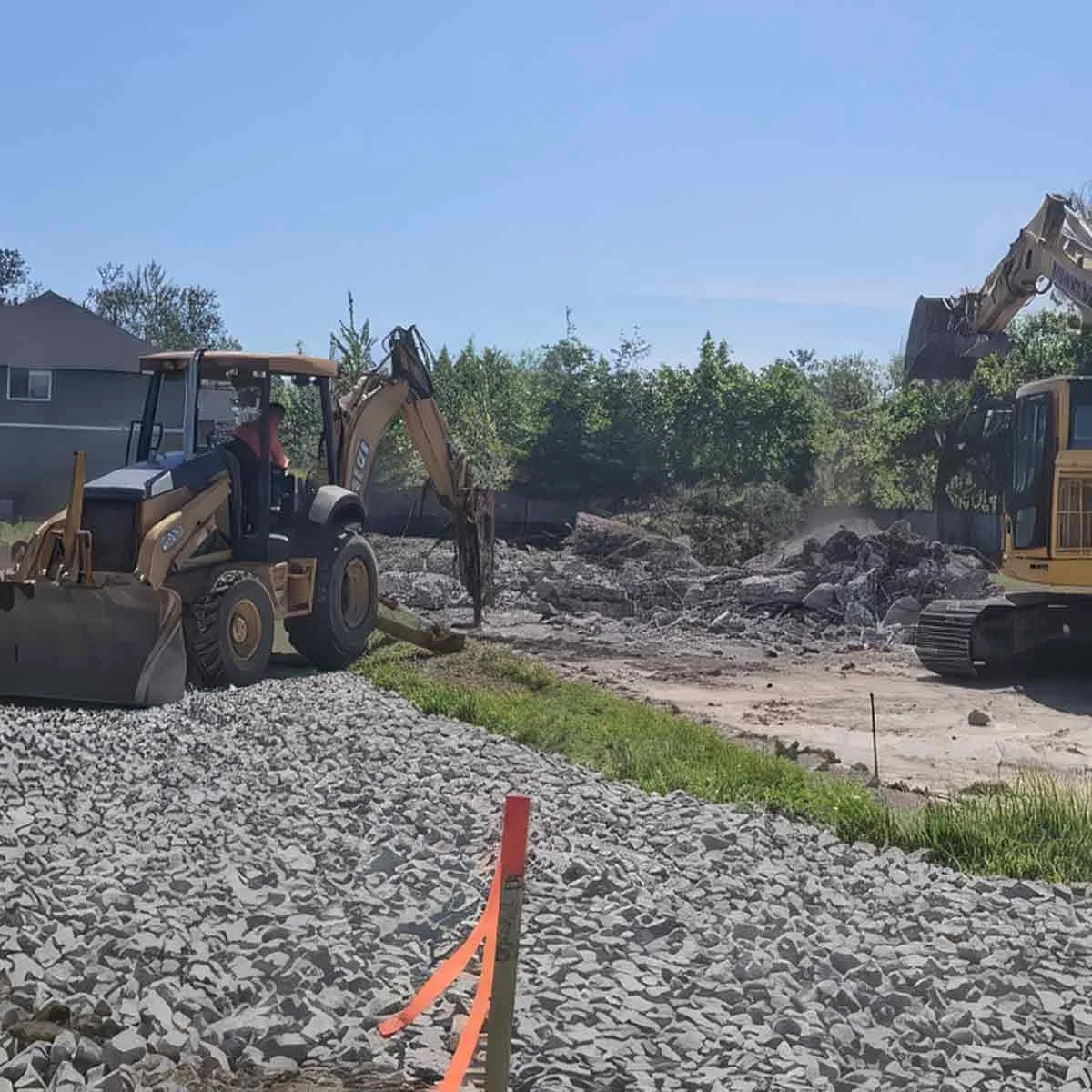
Site prep is officially underway on our newest Renton neighborhood. Take a look behind the scenes as three new home lots take shape.
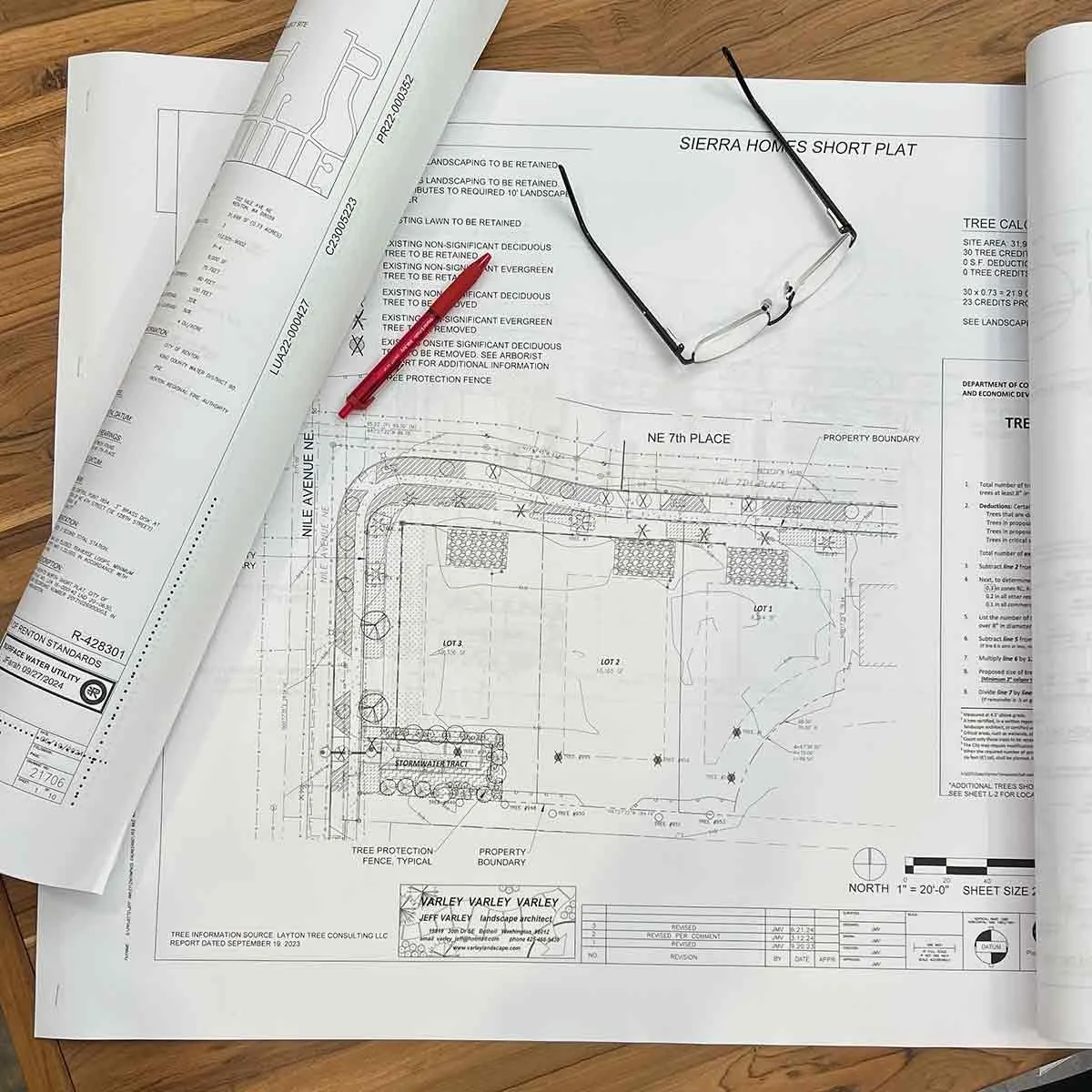
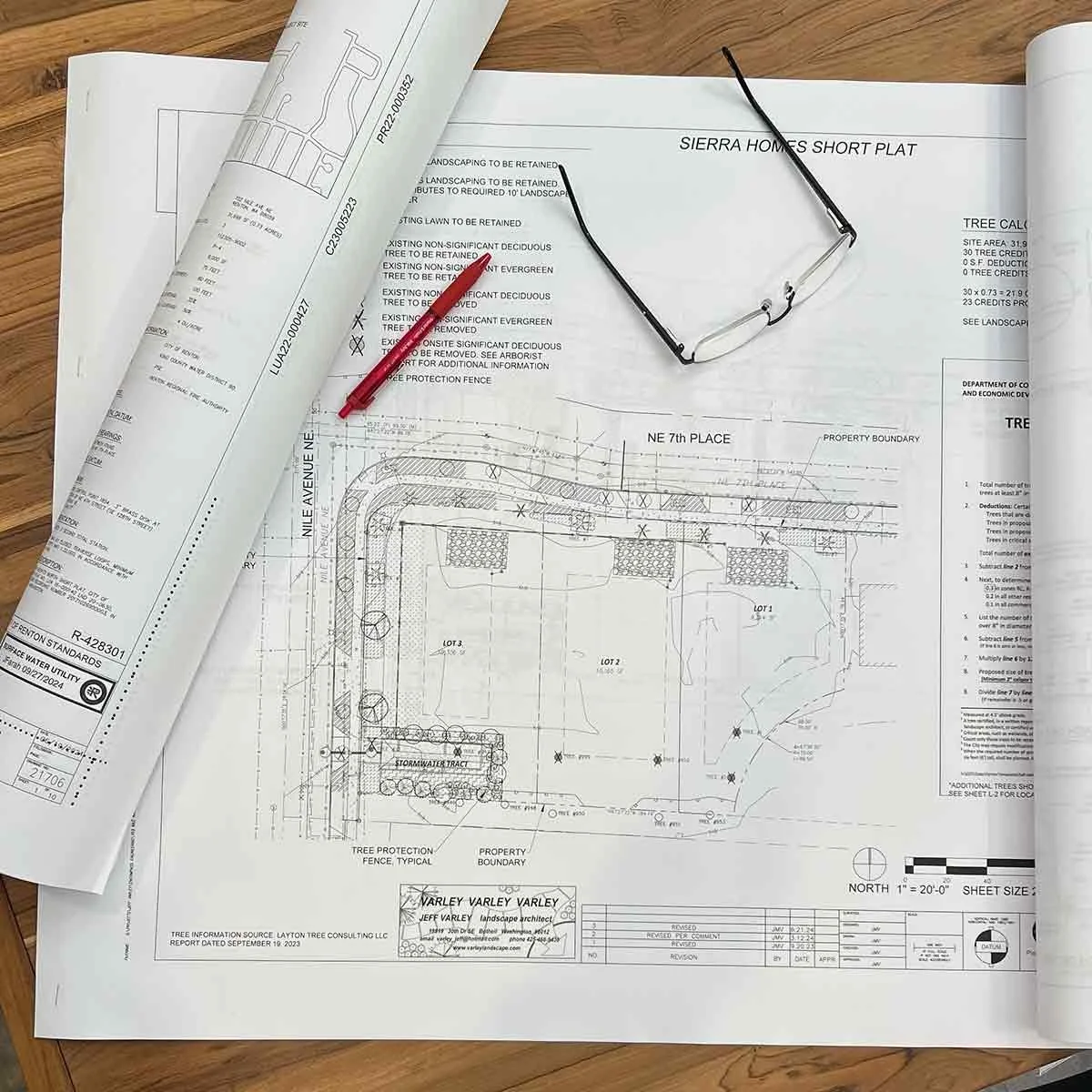
We're excited to share that site work has officially started on our newest short plat neighborhood in Renton. This is the first update in a series we'll be sharing as the project moves from cleared land to finished homes, so consider this your front row seat to watch it all come together.
Clearing the Land
The first phase of any new neighborhood starts with prep work, and that's exactly what's happening now. Bulldozers have moved in to clear the site, the old driveway has been demolished, and crews are trenching for the pipe and electrical lines that will service the new lots. Dan has been out at the property regularly, walking the site and keeping a close eye on progress each day.
Once this stage wraps up, the property will officially become a plat, with three individual lots ready for construction.
Three Homes, Three Distinct Personalities
We're currently working through floor plans for each of the three lots. One is already settled, a design we've built several times before, though we're working with our architect to update the exterior elevation so it feels current and up to date. The other two floor plans are still coming together. One of the lots has a more unique shape than the others, so finding the right footprint has taken some extra thought.
Our goal for this neighborhood is for the three homes to feel like they belong together from the street, while each one has its own character on the inside.
What's Next
Right now, most of the work is happening below the surface, literally. Once the plat is finalized, we'll move into permitting and the next phase of design work. We'll share more updates as the lots take shape, from foundation to framing to finished homes.
If you'd like to follow along as this Renton neighborhood comes to life, our newsletter is the best place to catch every update.

A Designer's Own Remodel: Starting With the Girls' Bathrooms
Even designers put off their own projects. Take a look behind the scenes as Kelly finally starts remodeling her own home, beginning with the girls' bathroom.
Kelly spends her days helping other people fall back in love with their homes. Her own house, somehow, always ended up at the bottom of the list. That's finally changing, and we're pulling back the curtain as it happens.
The Question Behind the Project
The house is 14 years old, and it's held up well. It's also seen a lot of life: three kids, three dogs, and a lot of years of upstairs carpet taking the brunt of it. The bigger question wasn't really about carpet or tile, though. It was whether to stay in the house long term or start preparing it to sell down the road, and if they're staying, what actually adds value versus what's just a want.
Even after 20-plus years of guiding clients through exactly this kind of decision, working through it for their own home took real thought around scope, budget, and what to tackle first. That's the process we're walking through here.
Why Start With the Bathrooms
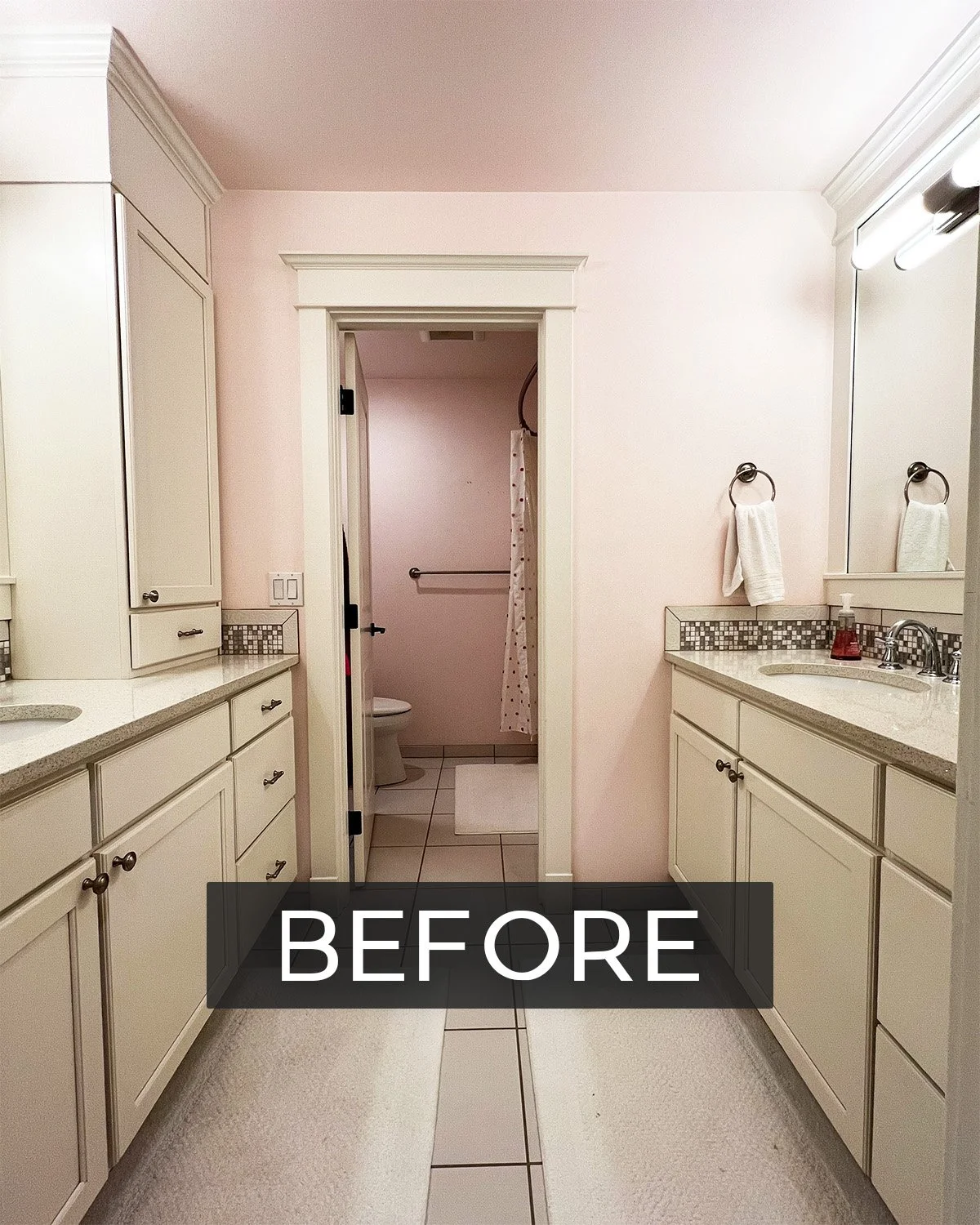
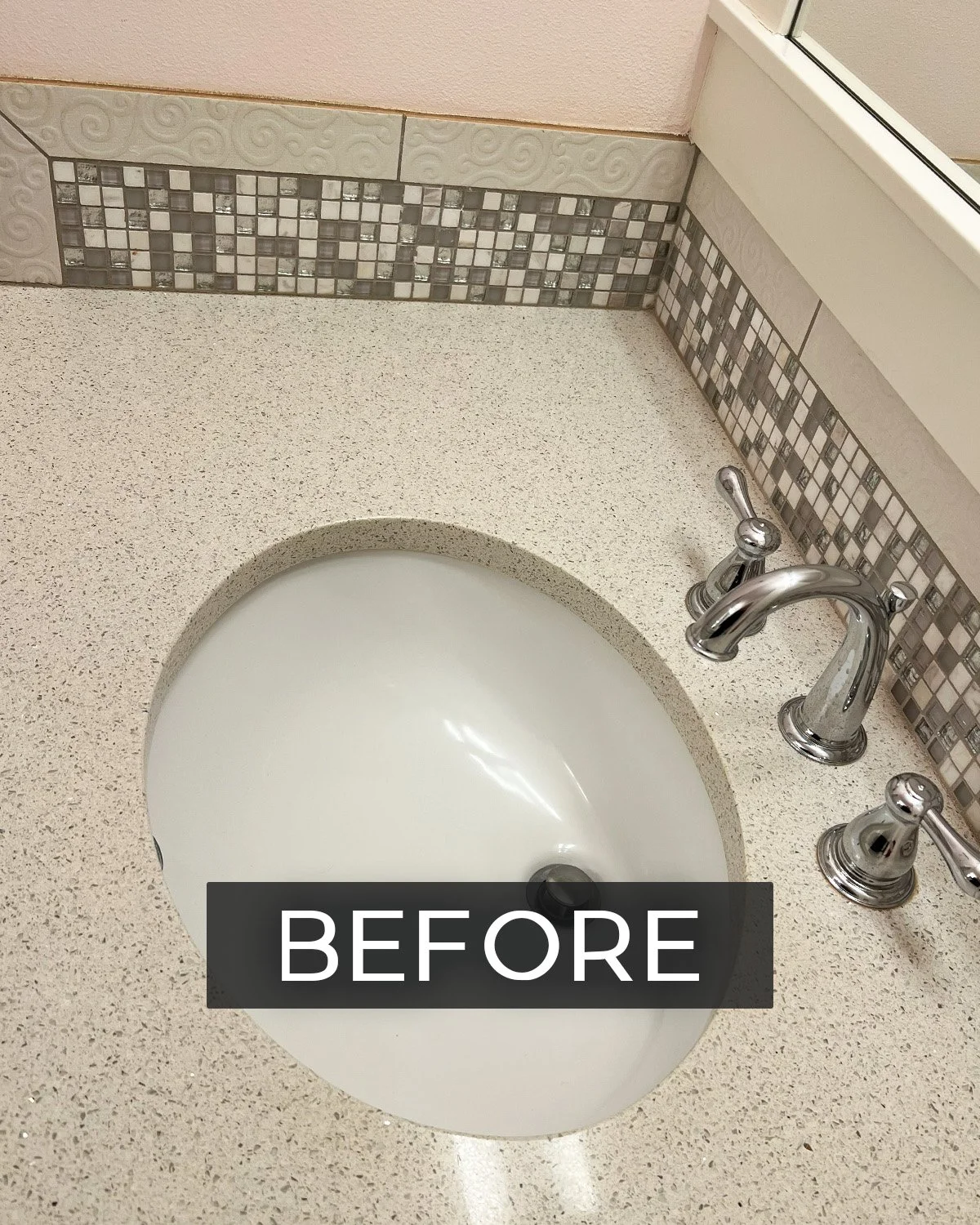
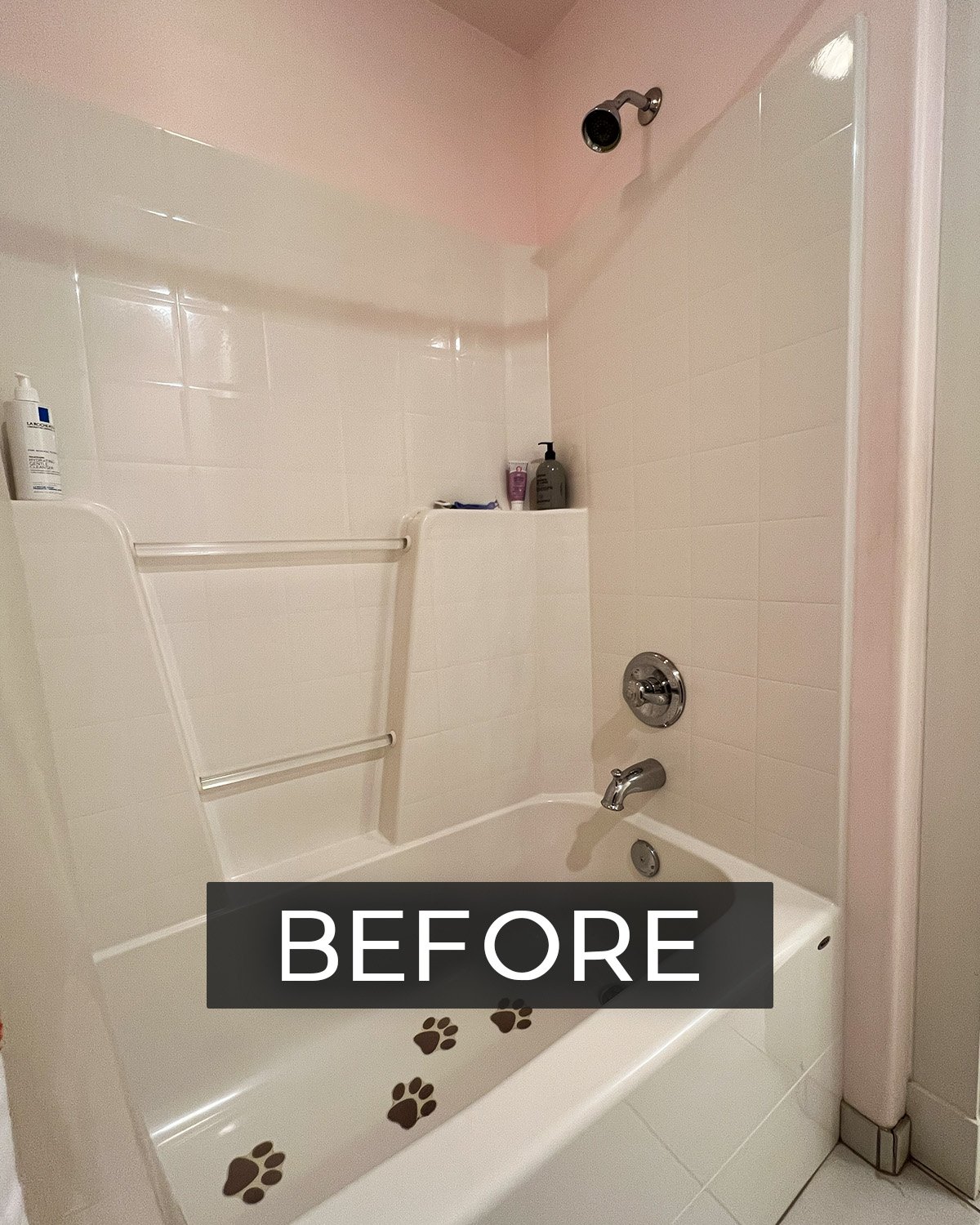
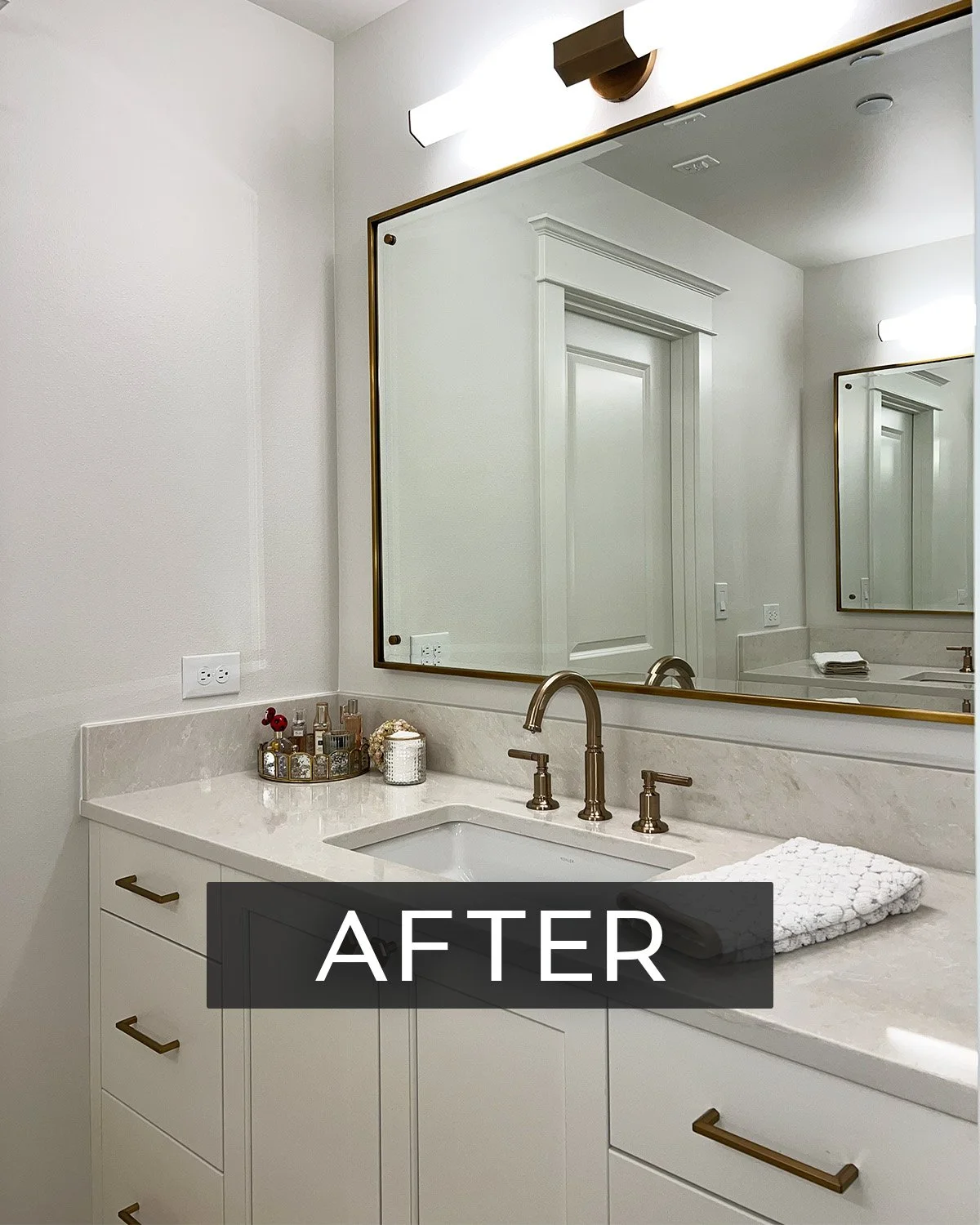
A bathroom upstairs was designed years ago for two little girls, complete with pink walls and sparkly countertops and backsplash. Those girls are grown now, so the space needs to grow up too, the same idea behind designing a kids' bathroom that ages well. That bathroom is being reimagined as a guest bath that will work for the house long term, whatever the future holds. Down the hall, the boy's bathroom has its own reason for a refresh: the walls and ceilings were painted blue, but the tile, cabinets and countertops are still in style.
While deciding on what to change immediately, it made the most sense to start with the bathrooms and laundry room upstairs. All of the demolition, ripping out tiles, removing cabinets and countertops, drywall repair and paint needed to happen BEFORE the new carpet goes in upstairs.
What's Staying and What's Changing
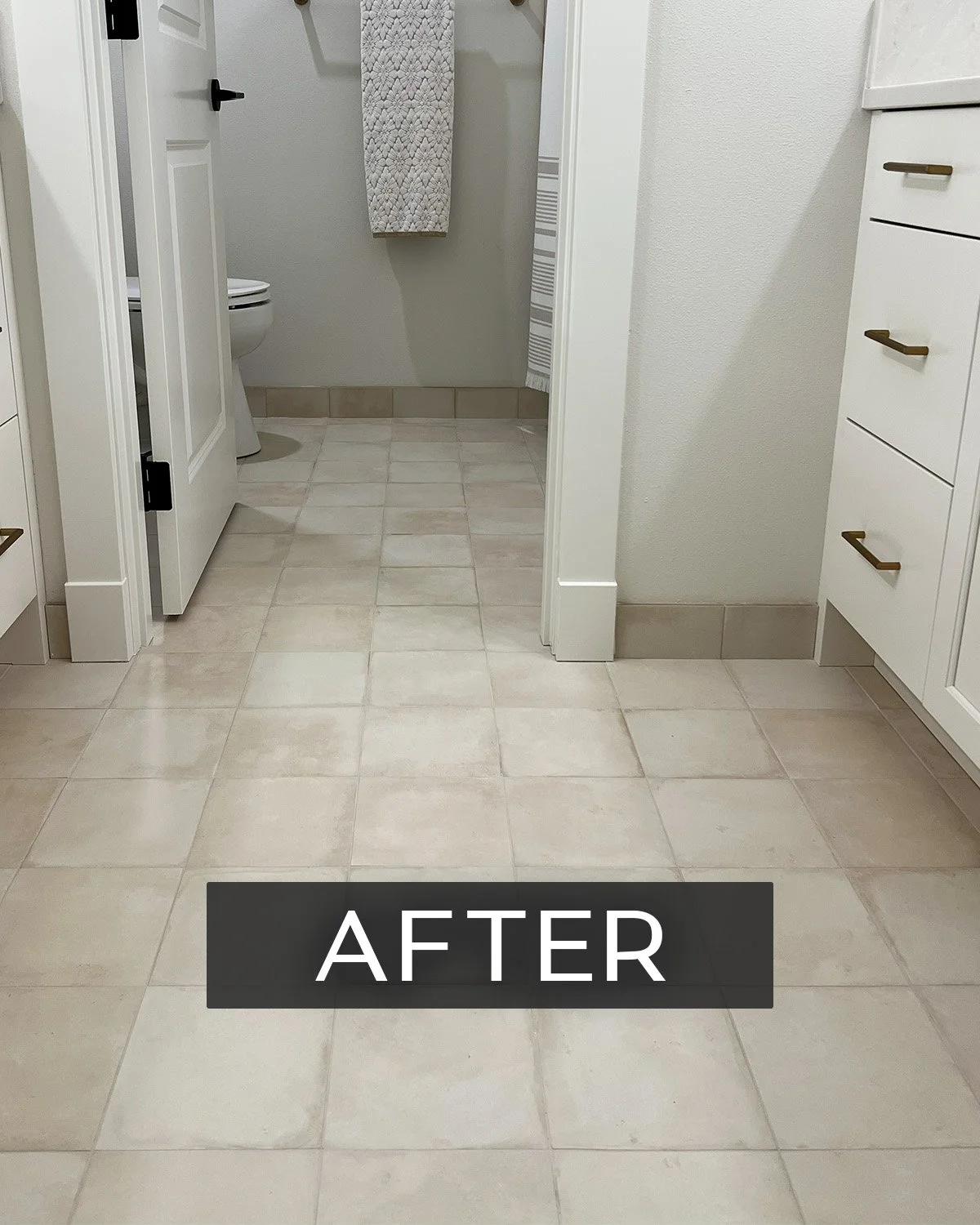
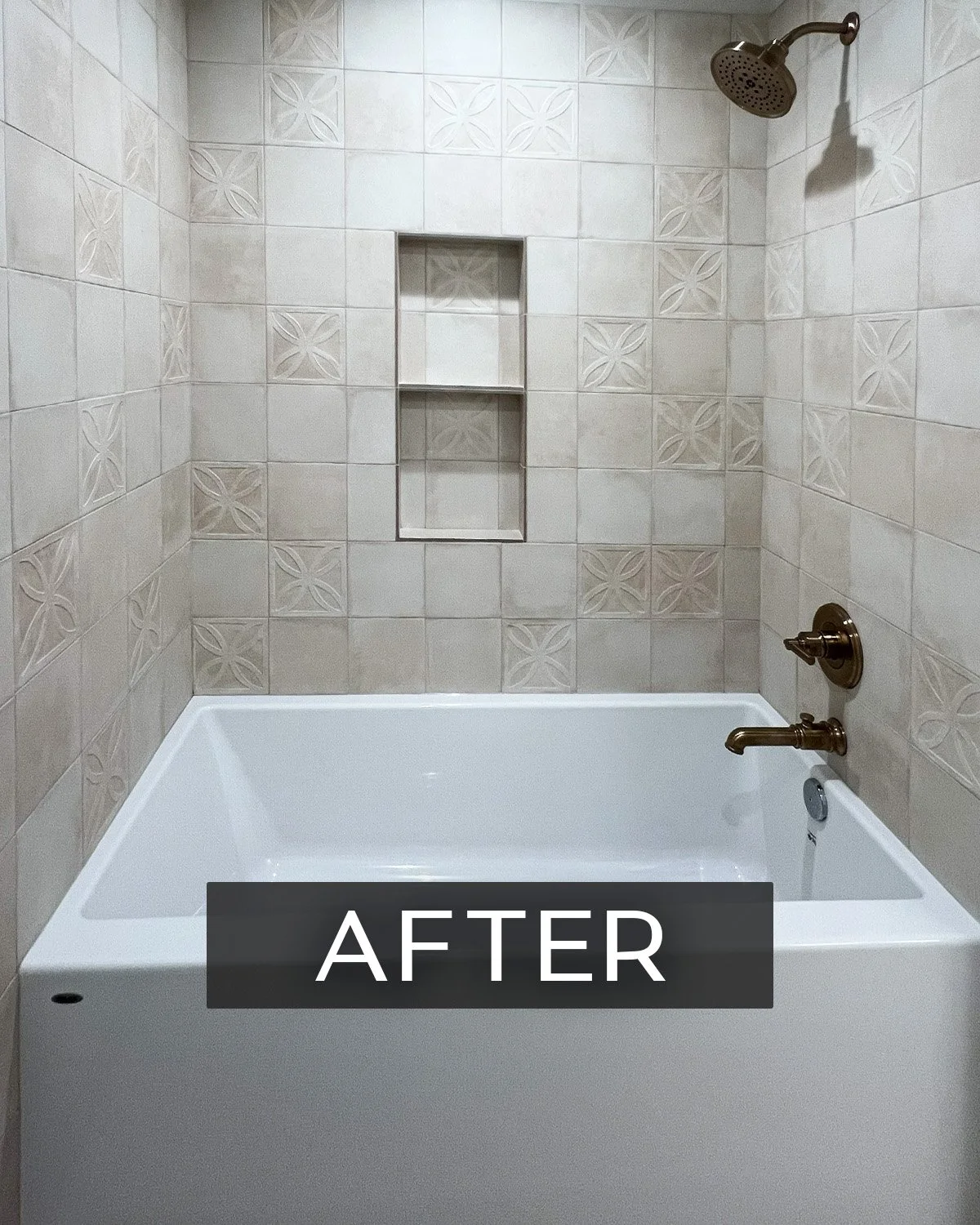
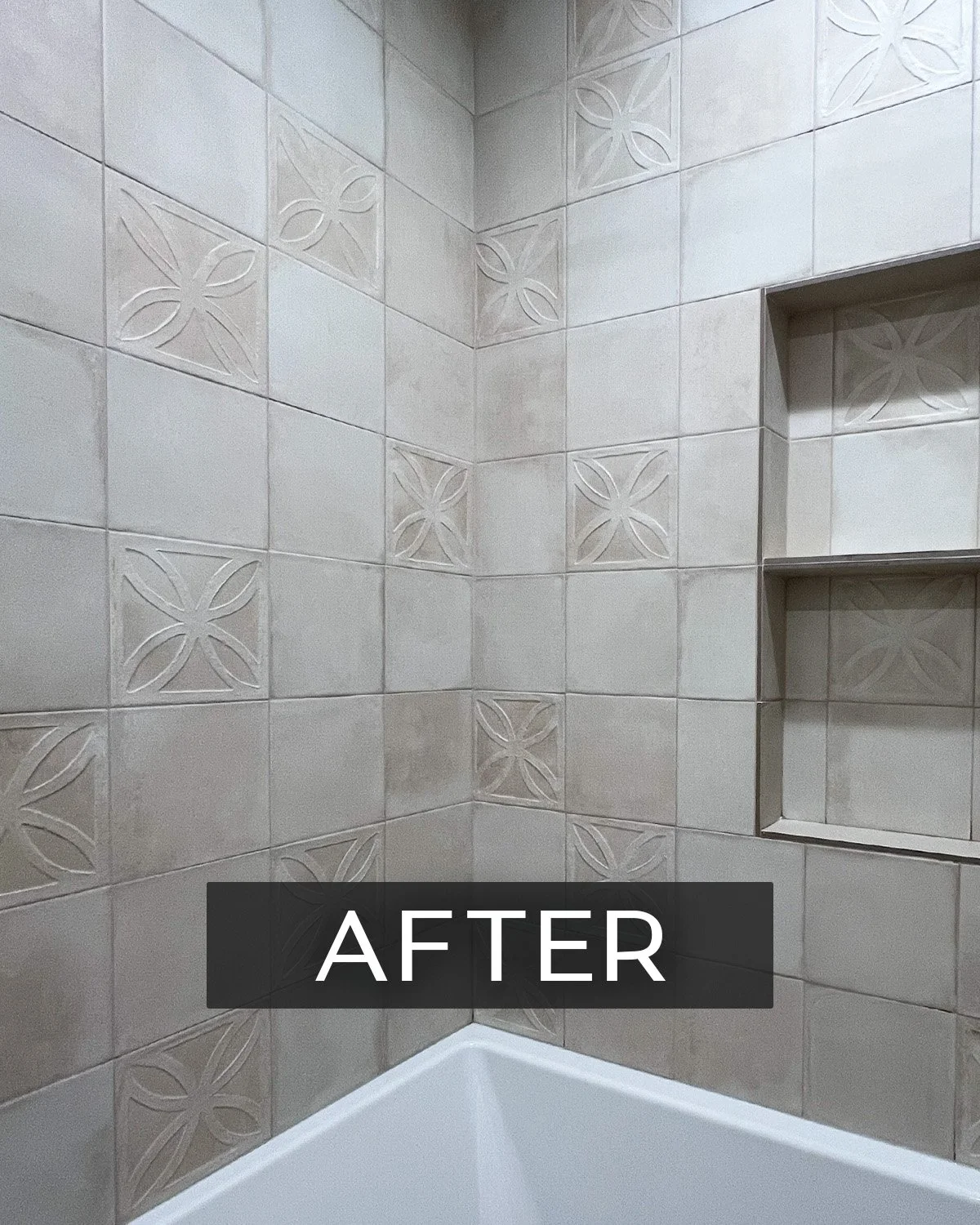
Before deciding what to replace, Kelly asked herself the same question she'd ask any client: is there anything worth keeping? Sometimes floor tile still has life left in it, or cabinets just need a fresh coat of paint and new hardware. In the girls bathroom, the existing finishes had too much wear to make sense of salvaging, so a full refresh made more sense. In the boys bathroom, all of the hard surfaces were still in good condition, so a fresh coat of paint, a deep cleaning, and a new light fixture were all that were needed to update the space.
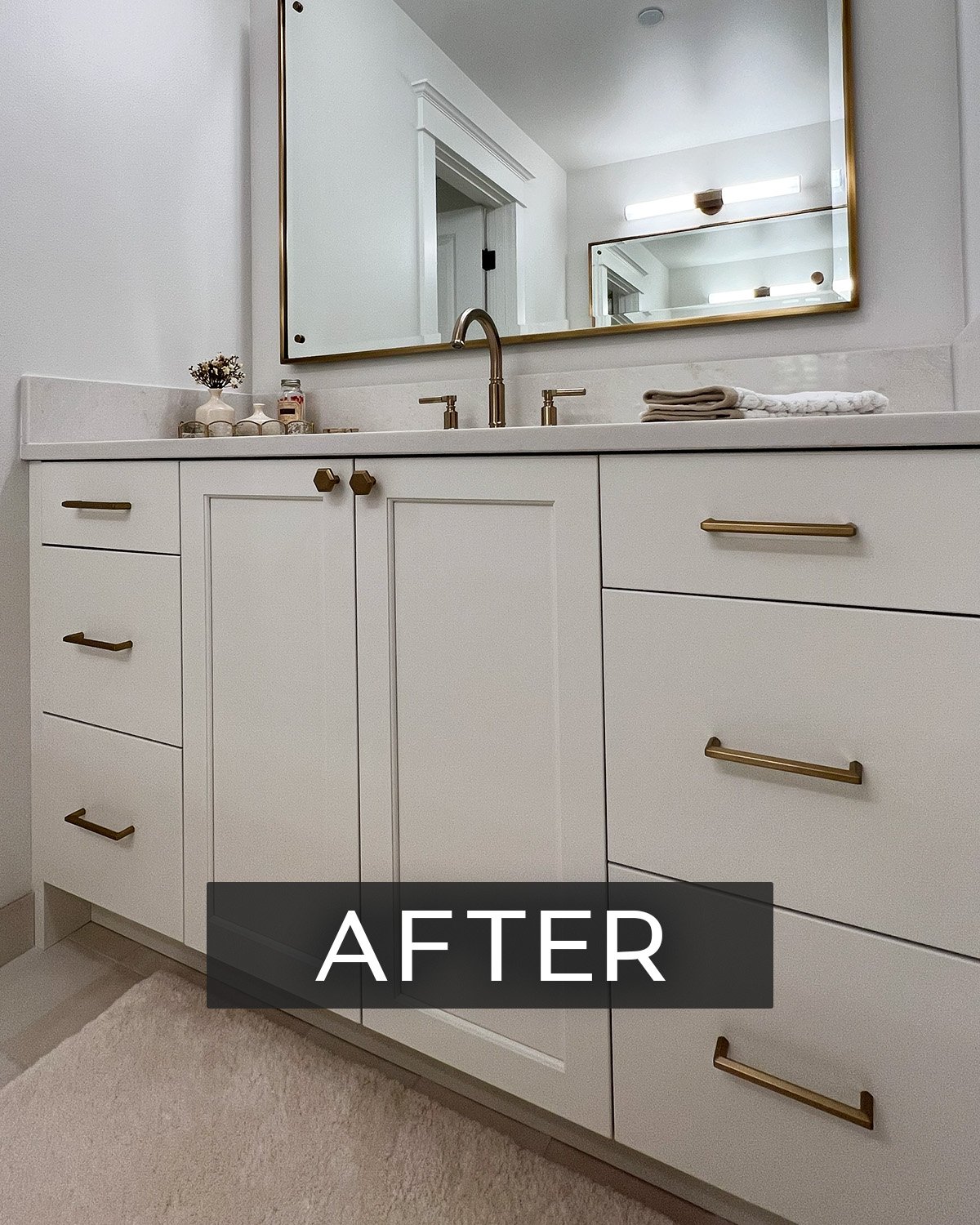
The plan across the upstairs spaces includes new tile in the girls bathroom and laundry room, white bathroom cabinets, fresh paint, and updated hardware and light fixtures, simple and classic choices that fit the character of the house. Kelly's also thinking about how the tile choices flow from one space to the next, so the hall bath, laundry room, and primary bath all feel connected rather than disjointed.
The Vendor Lineup
Kelly's holding her own home to the same standards she brings to every Sierra Homes project.
Cabinets - Bellmont Cabinets
Countertops - quartz from MSI fabricated by Dominis Stone
Bathroom tile - Tile Northwest
Laundry room tile - Ann Sacks
Paint - Benjamin Moore and Sherwin Williams
Painters - Guzmans Painting
Expect the Unexpected
As the the project is wrapping up, Kelly and Dan reflect on the reminder of every single remodel job. Opening up walls is like opening up a Pandora's box, you never know what you may find that will (literally) throw a wrench in all of the best laid plans. You need to be ready for "plan B."
In the case of the girls bathroom, the plan was to remove the hinged bathroom door and install a pocket door to make more room and create a more open flow in the space. But as soon as the drywall was removed and studs were exposed, so was a giant air vent that could not be moved without tearing out more walls. So no pocket door. The swinging hinged door would have to stay.
That door issue was just a minor problem with an easy solution, much easier fix than some of our other remodels, but just a reminder to always expect the unexpected when starting a remodeling project!
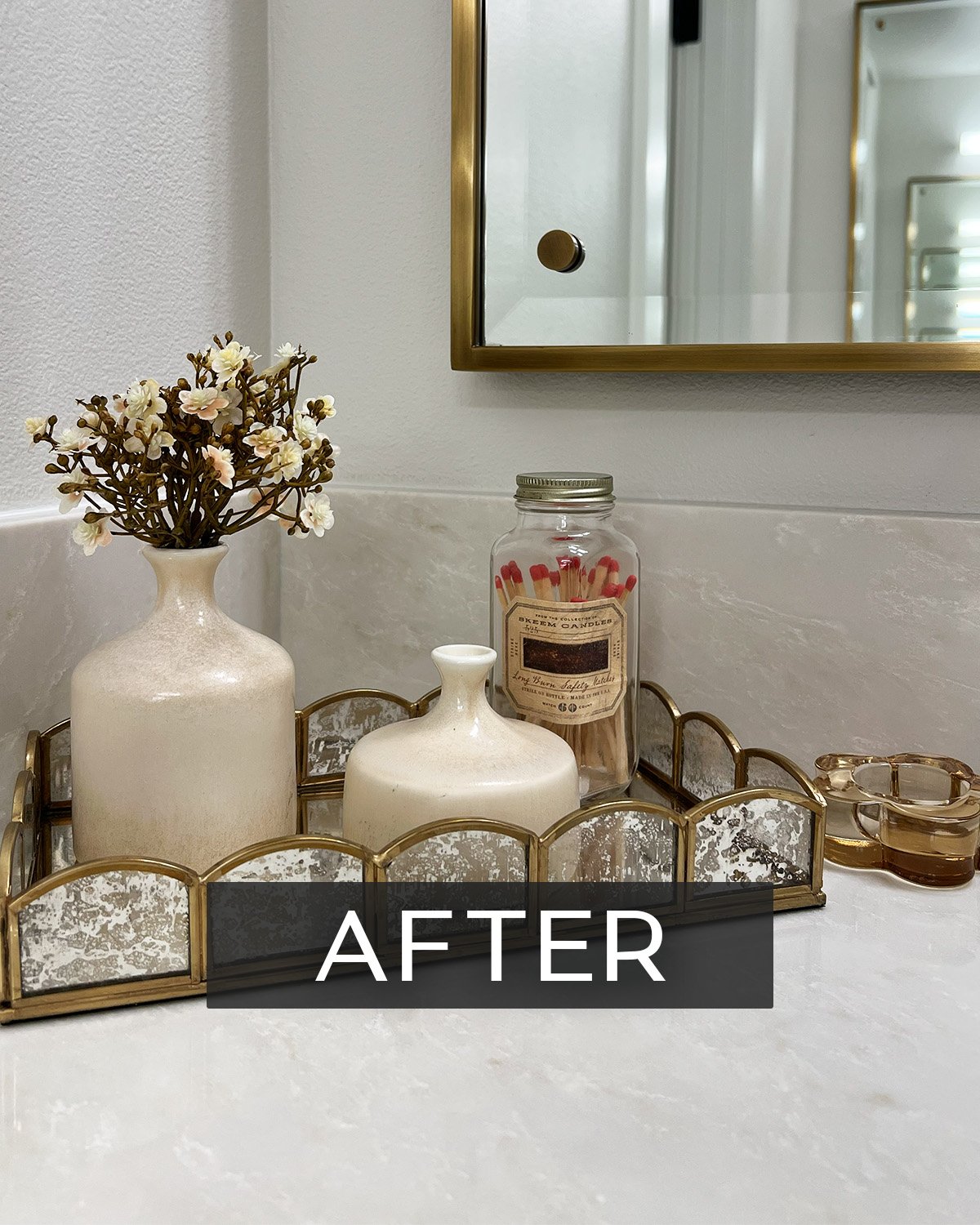
Standing back and taking a look at the transformation is very rewarding and, overall, Dan and Kelly feel they achieved their goal. Take a look at the gallery to see before-and-afters of the girls bathroom changes!
Ready to rethink a space in your home?
Even for a designer, remodeling your own home takes the same clarity we bring to every client project: knowing what to keep, what to change, and what order to tackle it in. If you're weighing a similar decision for your own home, whether it's one room or the whole house, we'd love to help you think it through.
Formal to Functional: Living Room to Home Office Remodel
What looked like a straightforward door installation turned into a full framing rebuild — and a hunt through Seattle's oldest millwork yards to find trim that hadn't been produced in years. Here's what we found inside the walls.
What started as an “easy” door-hanging job turned into a trip through Seattle's oldest millwork yards, creating custom-milled trim, and eventually ended with a husband’s work (finally) off the kitchen counter.
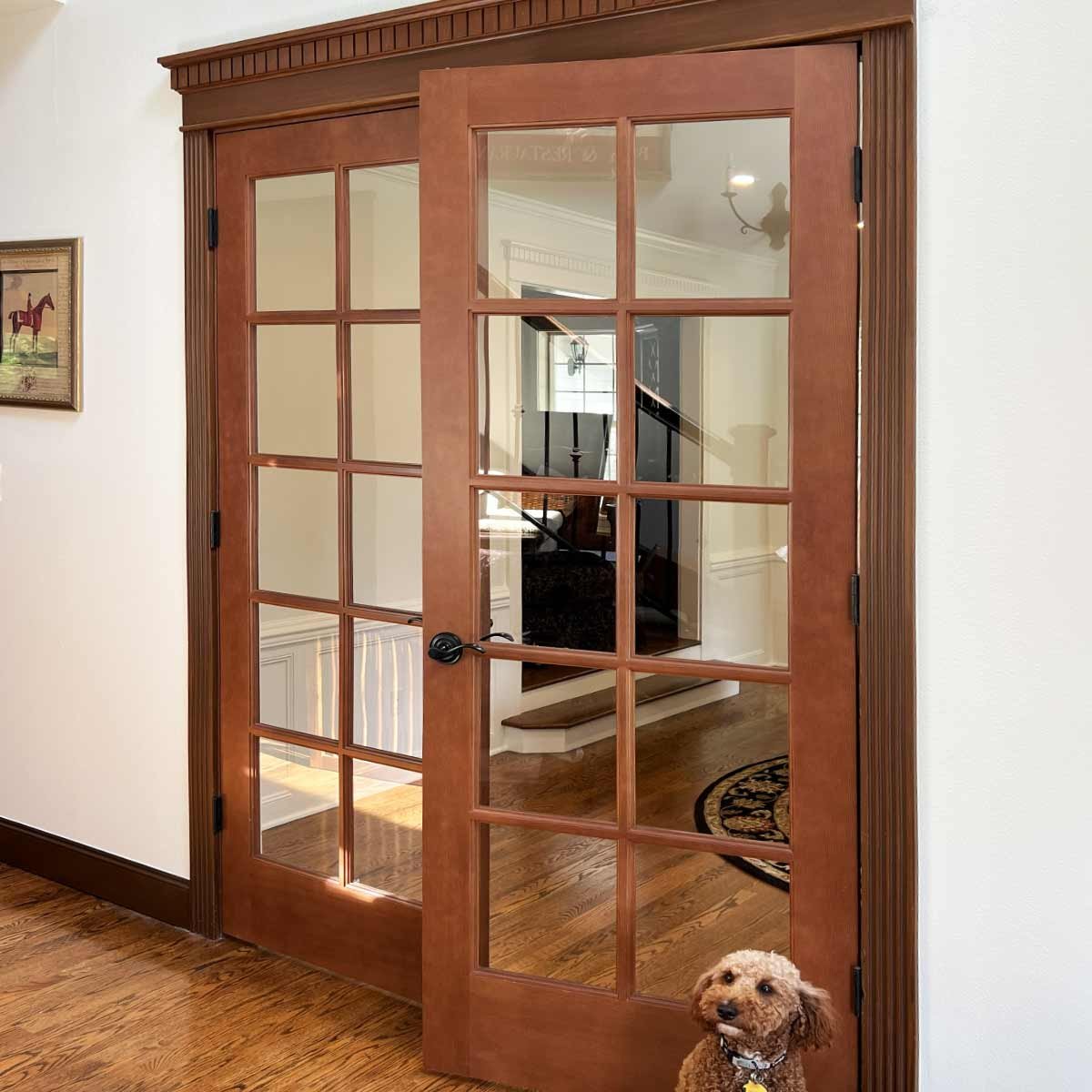
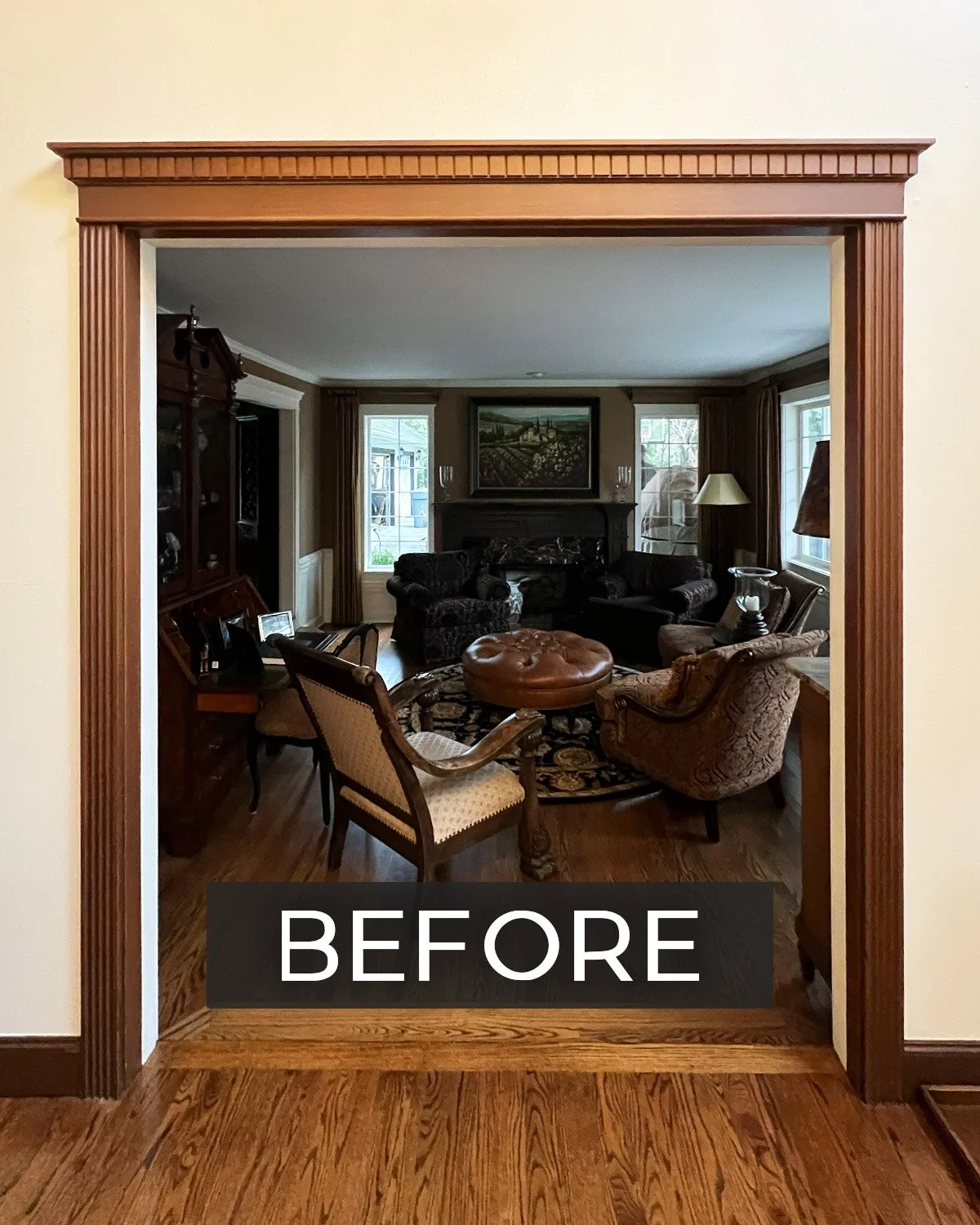
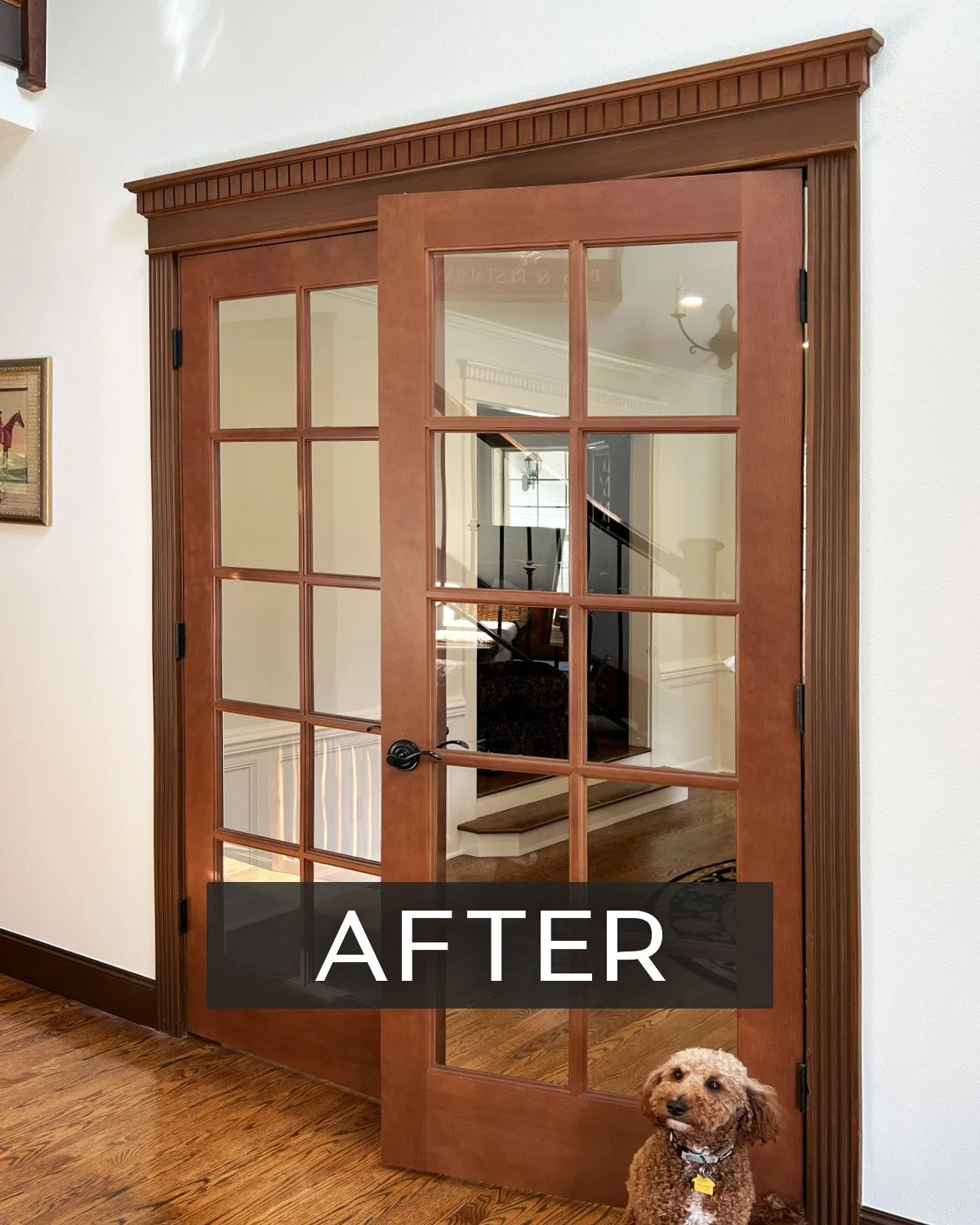
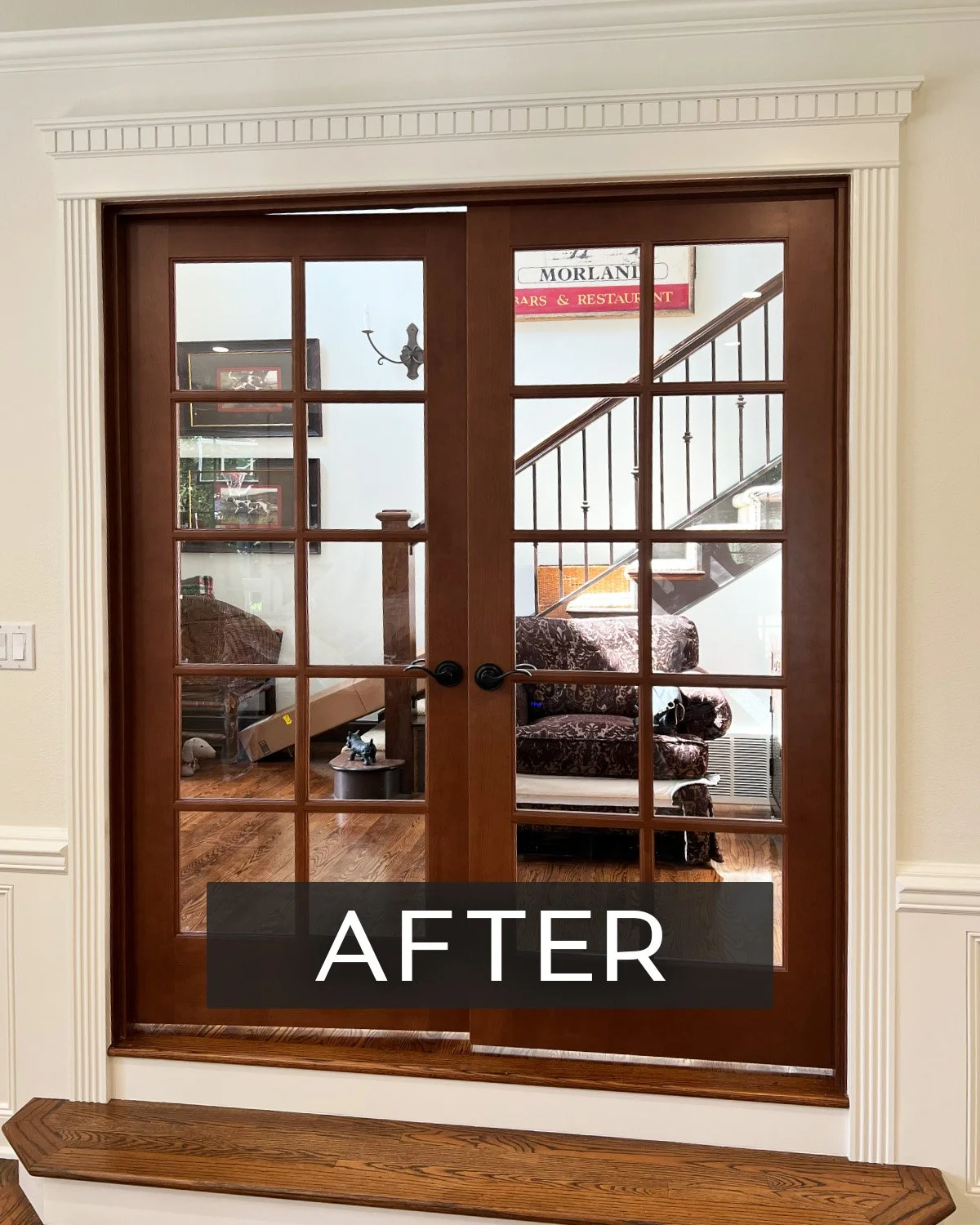
A homeowner wanted to convert her formal living room into an office for her husband, who recently started working from home and had his computer and paperwork taking over the kitchen. She simply needed a closed off space for him by adding double doors onto a wide cased opening that led into the old living room, which seemed straightforward enough.
The problems behind the doors
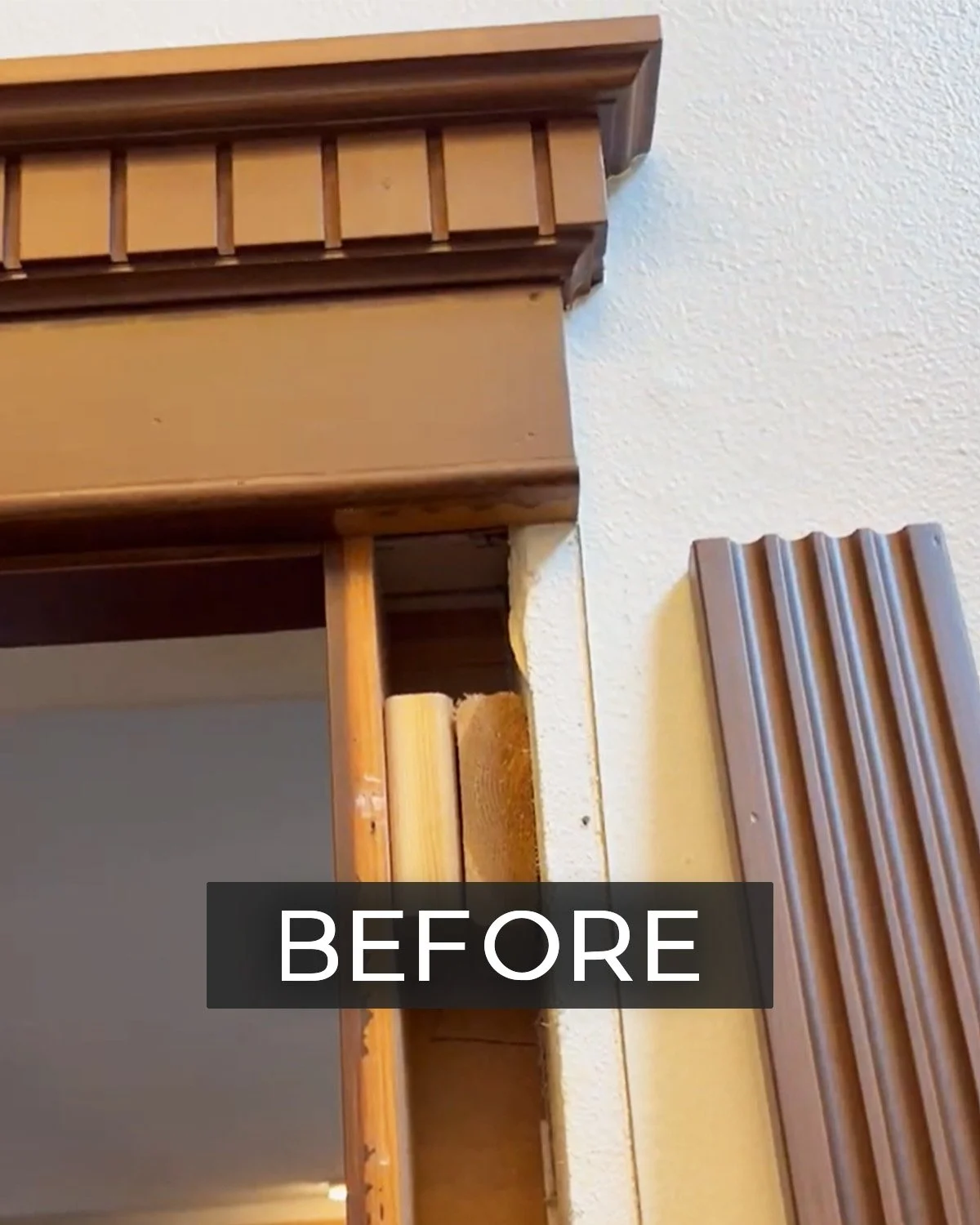
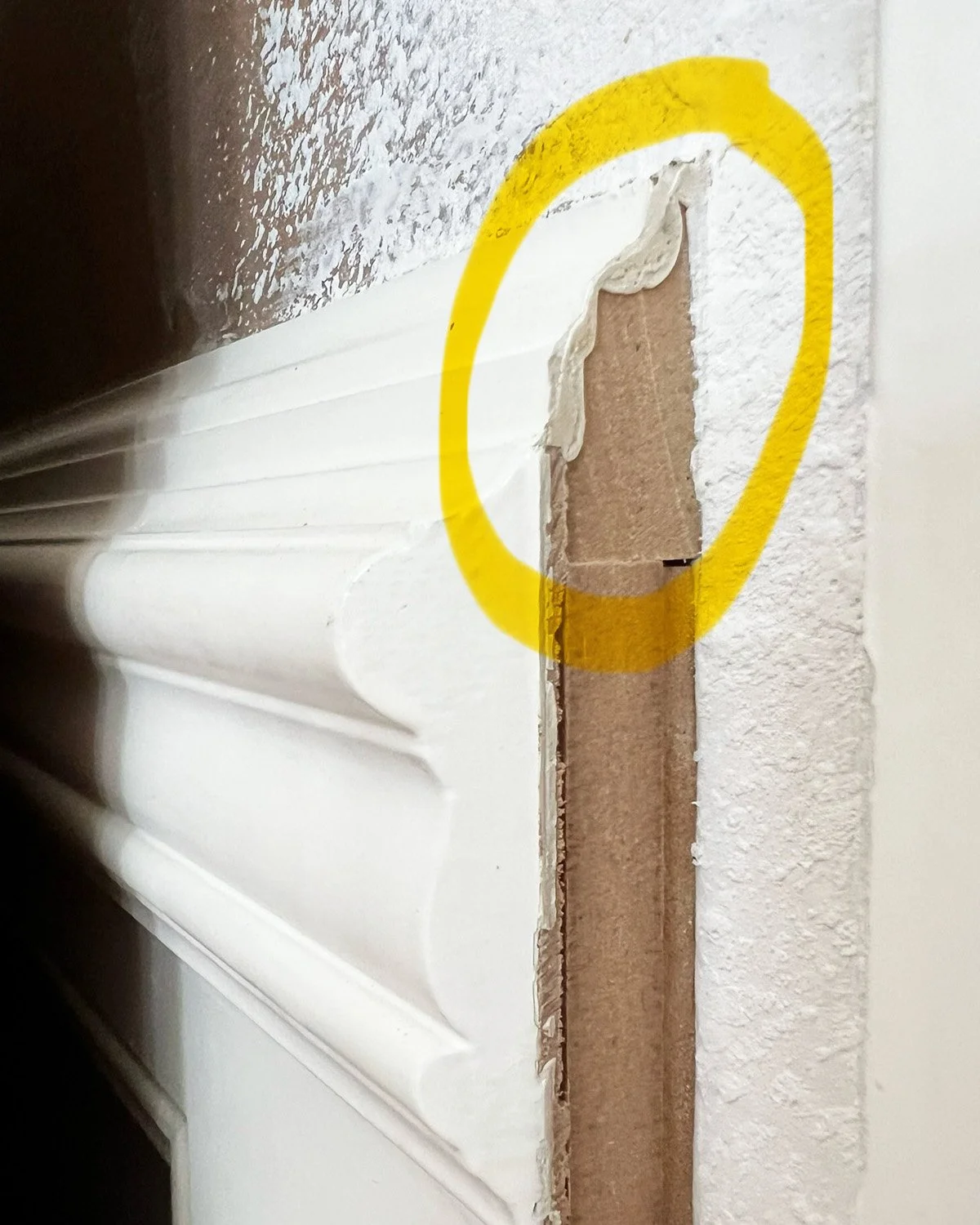
First, the doors were ordered, but took weeks longer than expected due to weather and shipping issues. Once they arrived, the custom factory staining (to match the rest of the doors in the house) took additional time. Next, when our finish carpenter pulled back the casing to prep for the door installation, he found something that stopped the job cold. The cased opening had a 4 to 6 inch gap between the framing and the casing, and the trim was literally hanging on drywall with no structural support behind it.
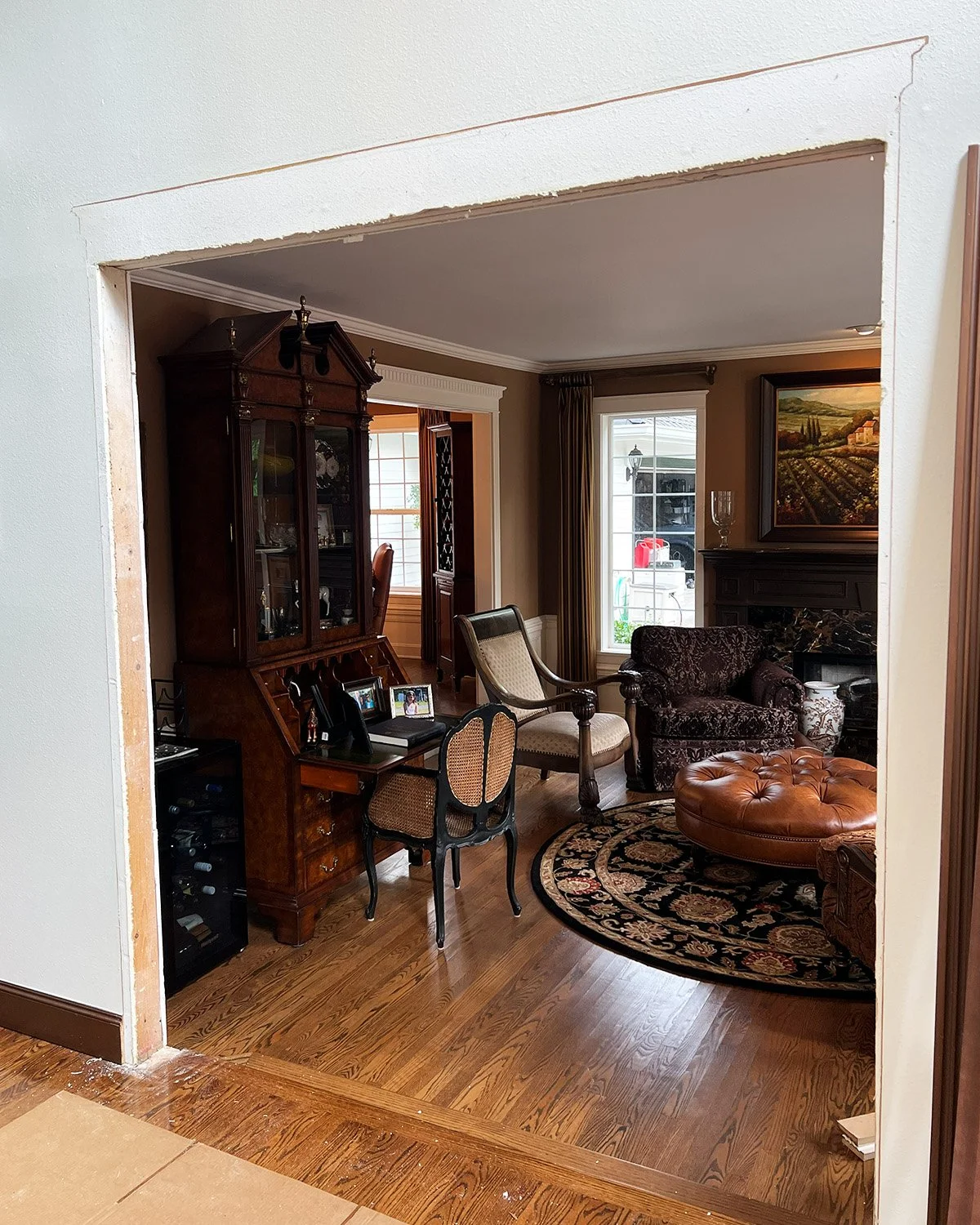
The heavy weight of wood and glass double doors cannot hang on extended drywall alone. The casing had to come out completely, the walls were reframed correctly with proper two-by-fours, plus a new header was added, and the walls were drywalled, textured and painted before we could even think about installing the doors.
The millwork hunt
Rebuilding the framing was an unexpected structural challenge, but easy enough to fix. The bigger adventure turned out to be matching and replacing the trim. What seemed like a quick and easy $3,000 job was becoming closer to a $10,000 job.
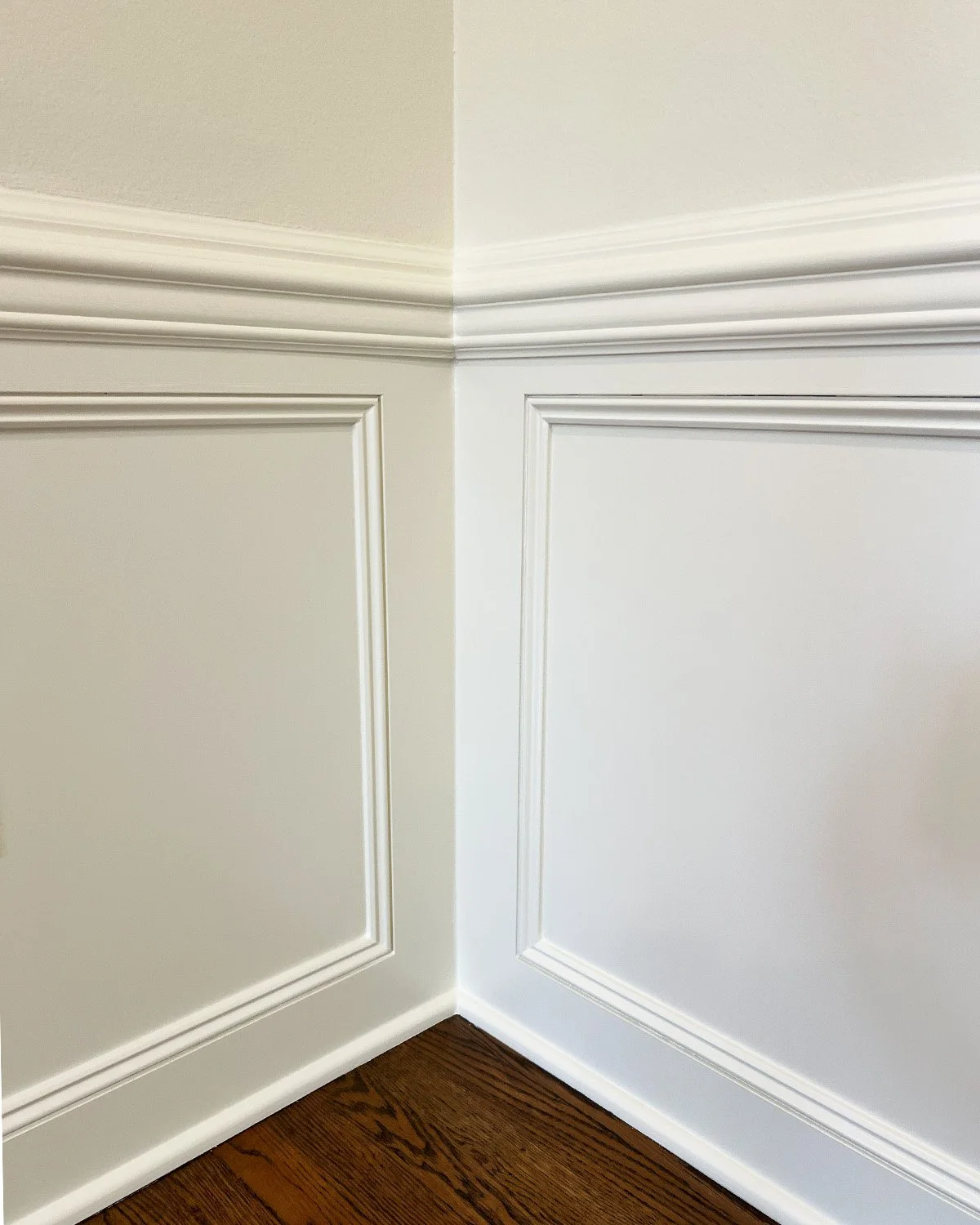
Built in the 1990s, the home had beautiful existing millwork throughout. Most of that was stained, but in the formal living room (now office), the custom millwork included very detailed casings, headers and an intricate chair rail, all painted white. Since we had to reframe the size of the door opening, there was a 3” gap on each side that needed to be filled in with millwork. Any new trim - casing, headers and chair rail details had to match to the existing 1990s millwork.
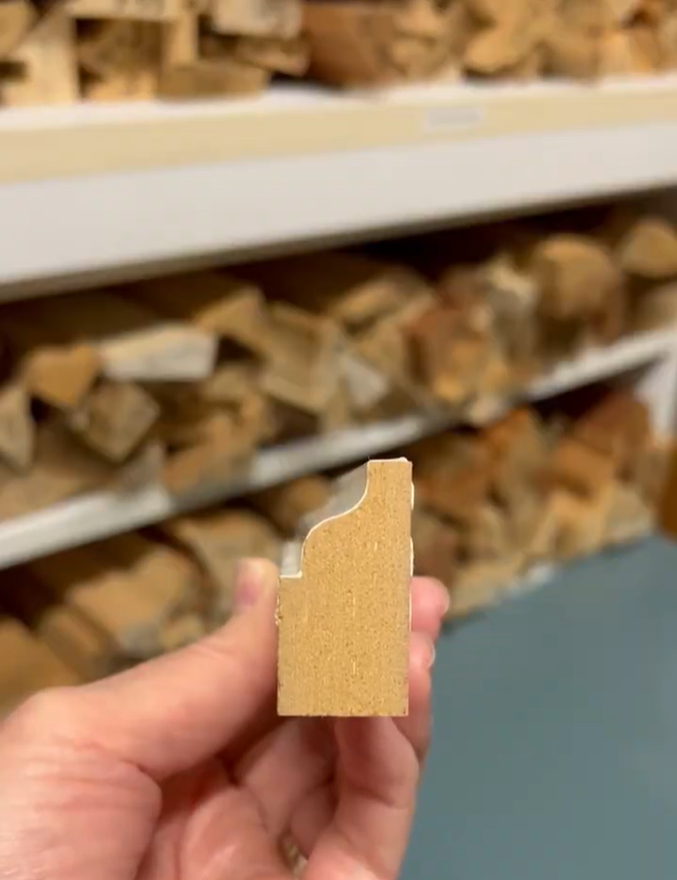
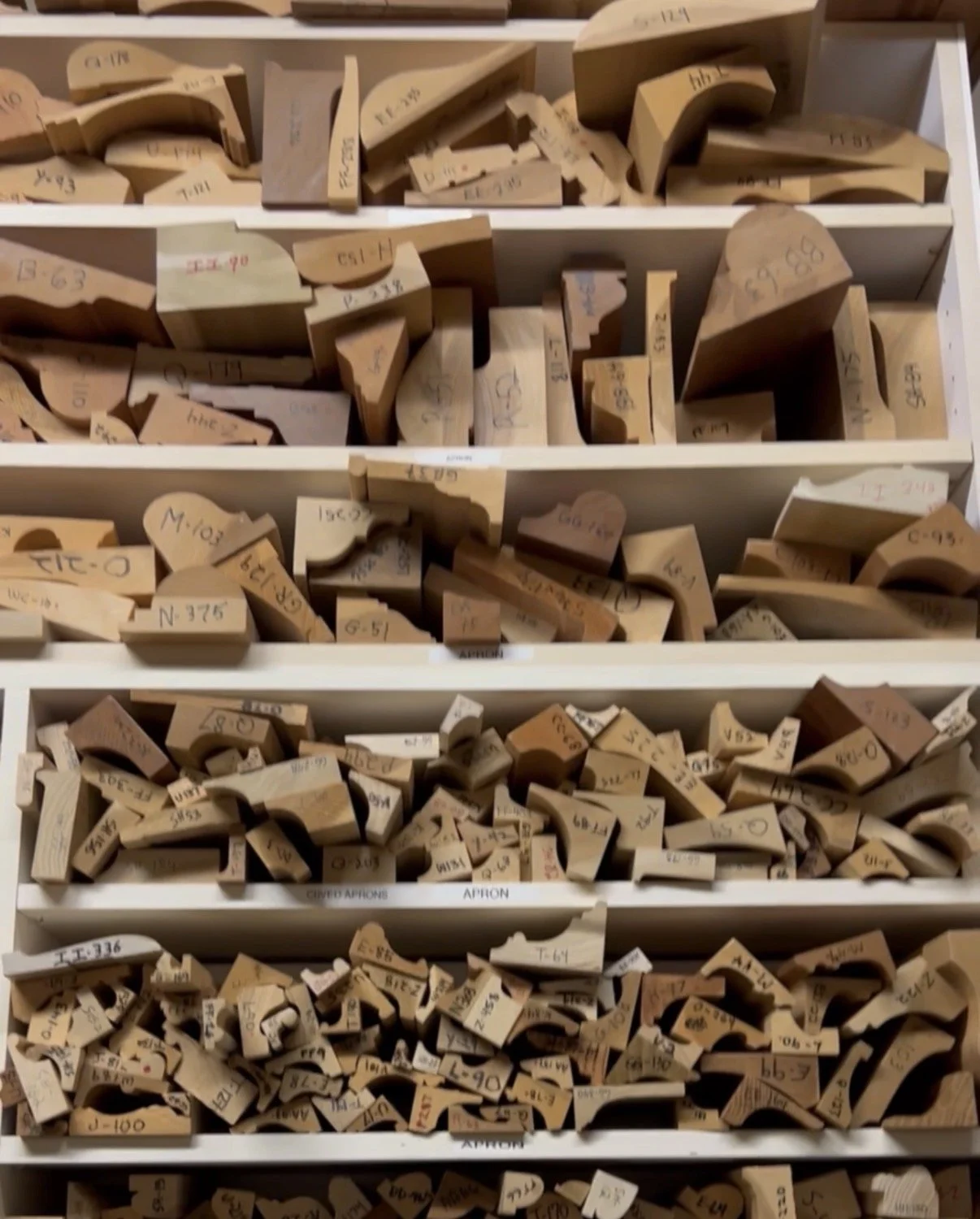
Custom millwork profiles aren't something you find at just any hardware store, and this particular profile hadn't been produced in years. So Kelly visited Seattle's older millwork yards — O.B. Williams (since 1889) and Limback Lumber (since early 1900s)— with a sample piece in hand, looking for a perfect match.
Kelly spent hours going through thousands of stacked profile samples, each one representing a different era and style. The profile in question was from the early 1990s, not particularly rare in terms of age but obscure enough that locating it required working through what felt like a catalog of nearly every trim piece ever produced in the Pacific Northwest. The first supplier didn't have the profile, but at the second shop, she handed over the sample piece and they recognized it immediately. They had the tooling to custom-mill the pieces she needed, and they cut them to spec.
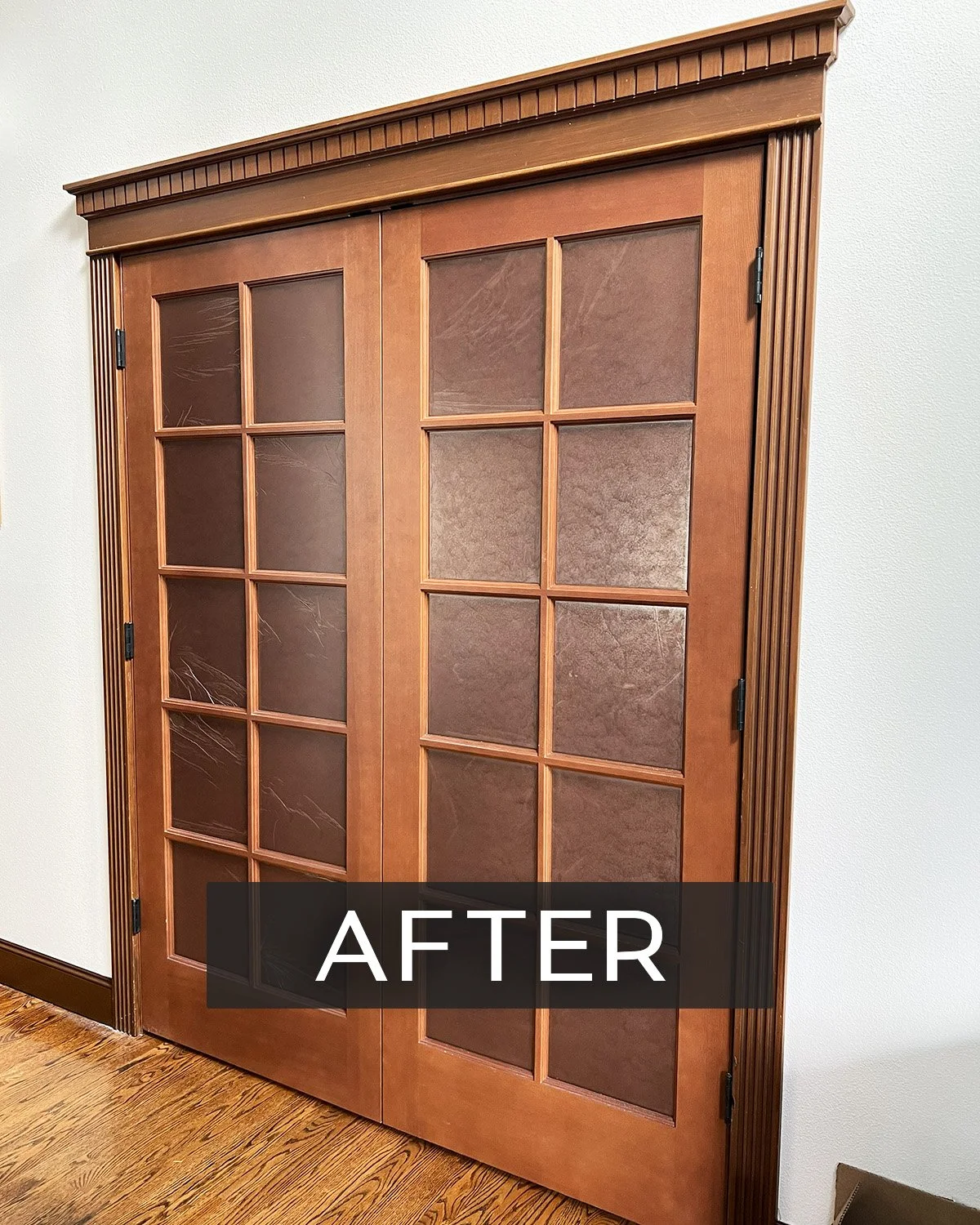
The result matched the rest of the house seamlessly.
What the finished space looks like
The old formal living room, once dark, heavy, and hardly used, now looks completely different, but still flows perfectly with the design of the entire house. This functioning home office is bright and beautiful with proper lighting and fresh White Dove paint throughout. The double glass doors are stained to match, and the hardware matches the existing doors. The client furnished the space with new Pottery Barn home office furniture, which provides drawers and cabinets to contain clutter, and best of all, to get her husband’s work off the kitchen counter!
What this project illustrates about remodeling
This project was a perfect example of what we explain to every client before we start: almost every remodel reveals something...the biggest questions are, what is the damage, and how much will this cost? The moment you open a wall or remove millwork, a cabinet, tile or anything from an older home, you often unveil unexpected (and expensive) surprises like structural issues, water damage, failed electrical or old plumbing. For this reason, we are reluctant to give firm estimates before we open walls. It's not evasiveness, we promise – it's just honesty, and it's the only fair way to set expectations.
If you're thinking about starting a remodel and want to understand more about how the estimating process works,our remodel guide covers what to expect before you commit to a project.
Construction surprises are the rule, not the exception
Older homes, even those built as recently as the 1990s and early 2000s, may have issues that don't surface until walls are open. Clients who understand this going in have a much better all-around experience with their contractor, who is ultimately there to fix the discovered issues!
Scope often grows once work begins, and that's okay
When surprise issues are discovered, the scope of work grows, the timeline extends and the budget expands. In the case of this home office, the structural correction was necessary to make sure the doors are solid, hung properly and will last for the life of the house.
Details (like millwork) matter more than people expect
Sierra Homes is very detail oriented. We make sure everything is done properly and no detail is missed. If the trim detail is not matching or even slightly off, we will notice that and fix it. Getting it right on this project required extra time and cost, and it was worth every bit of it in the end!
Frequently asked questions
Why can't contractors give exact remodel estimates upfront?
Until walls are opened, it's genuinely impossible to know what's behind them. Structural or framing issues, water damage, wood rot, electrical or plumbing problems, and code corrections are all common finds that may change the scope of a job. An experienced contractor can give a range and an honest set of conditions, but a firm fixed price before demo work is typically a sign that someone isn't being straight with you.
Can a formal living room be converted into a home office?
Yes, and it's a conversion that can make a real difference in how a home functions. Adding doors to an existing cased opening, updating lighting, and refreshing paint are all relatively contained changes that can transform an underused formal space into a room you actually want to work in.
How do you match existing millwork in an older home?
It requires locating the original profile, which may mean visiting specialty millwork yards or salvage suppliers with a sample piece in hand. Once the profile is identified, pieces can typically be custom-milled to match. It adds cost and lead time to a project, but a mismatched door casing will be noticeable for as long as you own the house, so it's usually the right call.
Is a living room-to-office conversion a good investment?
For homeowners who truly need dedicated workspace, this smart investment adds function to square footage that may otherwise go unused. Plus, a properly executed home office remodel, even with double doors added, can easily be converted back to a formal area for resale purposes. Glass doors in particular tend to read well to buyers because they allow light to move through the house rather than closing off a space completely.
Ready to rethink a space in your home?
Whether you have a room that isn't working for how you live now, or a design challenge that needs a fresh set of eyes, we'd love to talk through the possibilities.
How to Design a Kids' Bathroom That Ages Well
The tile, countertop, and cabinet choices you make in a kids' bathroom today will determine whether you're remodeling it again in ten years. Here's what we recommend for a space that holds up — and still has room for a little personality.
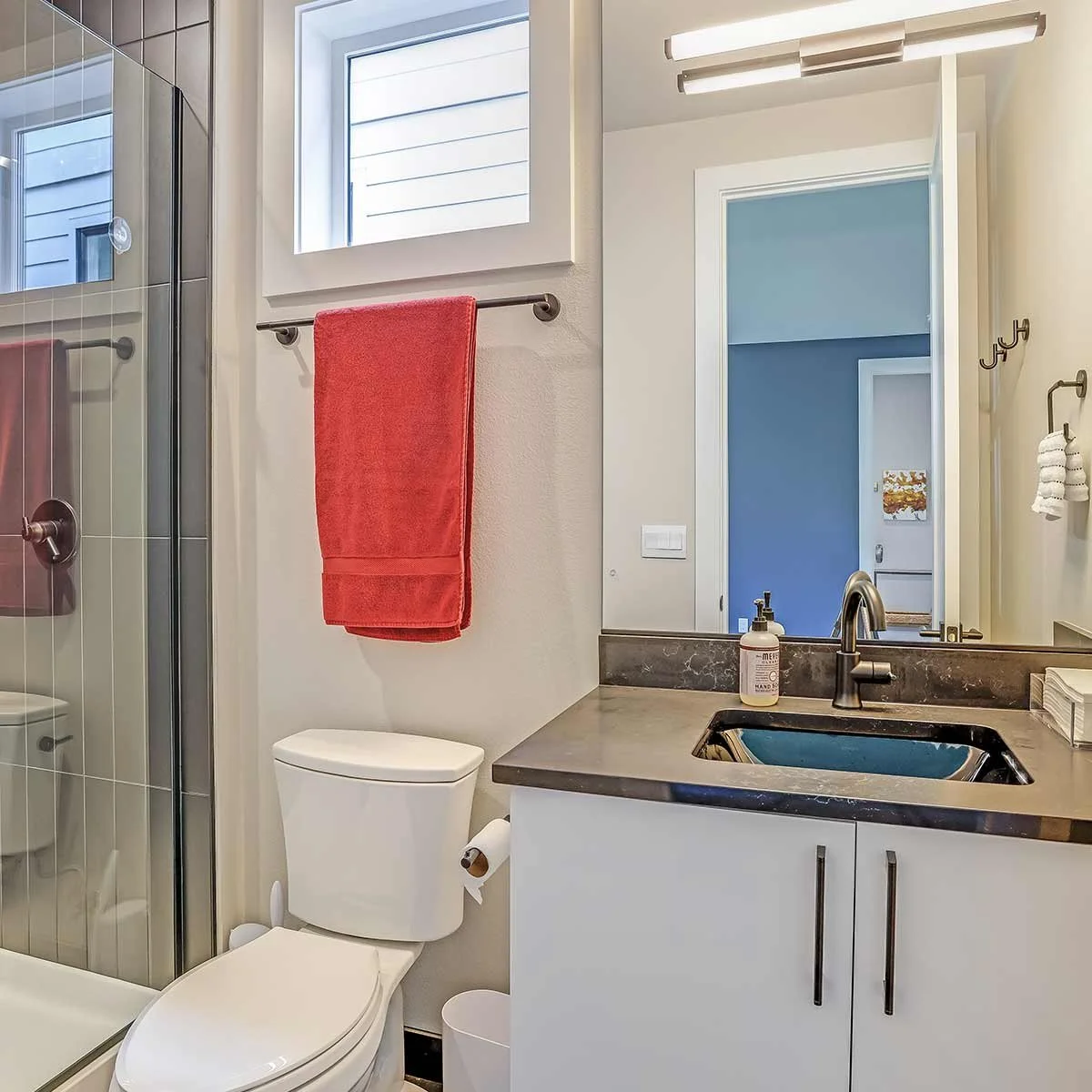
When families are building or remodeling a home, it is common to design the kids’ bathroom around the age of the children at the time of the build. Short cabinets, sparkly countertops, tiny fixtures scaled to small children, and trendy tile that looks charming at seven years old and dated by seventeen.
We know this firsthand. We made this mistake when we first built our own home fourteen years ago. The girls have grown up, the sparkly countertops have not; and now we are paying the price of a full bathroom remodel to bring the space up to date, and up to height!
We've worked on enough remodels to know this story is not unique to us. Parents invest real money into a kids' bathroom, and a decade later, they're tearing it out entirely because nothing held up—not the materials, not the design, and not the style. A little more thought at the outset can save a significant amount of money and disruption later.
Here's what we recommend when designing a kids' bathroom built to last.
Select Permanent Fixtures That Can Handle Real Life
These are the most consequential choices in a bathroom, also some of the most expensive and disruptive to change later. The decisions you make here will affect the look and longevity of the space for years.
Flooring: Use tiles with slip resistant ratings, such as matte finishes. Or select small tiles like hex or penny rounds that have more grout, which creates a non-slip surface. Note: smaller tiles require more grout which may get stained and grimy over time, which means more cleaning!
Tile size and color: Choosing larger sized tile such as 12” x 12” or 12” x 24” calls for less grout and cleaner lines, and less grout scrubbing! Neutral colors and timeless designs will stay in style for the toddler to teen transition periods. Always check the slip resistant ratings.
Shower tiles: In kids and teen bathrooms, shiny wall tile is the way to go in showers. It's easier to wipe down and less likely to hold onto mold or soap residue. Light colors will show water spots less than dark colors. Larger tile sizes mean fewer grout lines to scrub clean.
Grout color: White grout is unforgiving. In a kids' bathroom, it will show staining from makeup, nail polish, hair dye and everyday grime faster than you'd expect. A neutral greige or mid-tone grout color is far more forgiving and will continue to look good with less effort.
Bathtub: We always recommend having a tub in a kid’s bathroom. A strong cast-iron or acrylic tub will stand the test of time, from bath toys to long soaks. Standard white will go with any color scheme or design theme over the course of years.
Showerhead, faucets, fixtures: Select timeless finishes such as chrome or brushed nickel for kid to teen bathrooms. Install an adjustable shower head on a slide bar that can be lowered for young children and raised up for teens or guests. Use anti-scald valves for all faucets to prevent burns.
Cabinets: Size the vanity and mirror for adults, not children. Install cabinets at a standard comfort height of 35” to 36” and set mirrors accordingly to that height. Pull-out step-stools can be built-in to cabinets so kids can reach, and they will grow into the standard height before you know it!
Countertops: A solid quartz or quartzite surface, which is durable, easy to wipe clean, and low maintenance is always a good choice. Select a neutral color with a natural stone look or marble veining that won’t seem dated in a few years.
Design the Space to Grow with Your Kids
The goal is a bathroom that doesn't need to be redesigned just because your kids got older or their tastes changed. The way to accomplish that is to keep the permanent, hard-to-change elements neutral and let the easy-to-swap design elements carry personality.
Keep the fixed elements timeless. Tile, vanity, countertop, fixtures—these are the things that cost real money to change. Choose colors and styles that are clean and neutral. White, off-white, soft gray, and warm greige all hold up well. Avoid anything that feels very of-the-moment.
Let the easy-to-change elements do the work. Paint color, shower curtain, towels, accessories—these are low-cost, low-effort swaps that kids can actually have some ownership over. A child who wants a bright yellow bathroom can have bright yellow towels and a fun shower curtain without requiring a tile installation. When their taste changes (and it will), you swap the accessories, not the whole room.
Have some fun with hardware. Cabinet pulls and knobs are an easy swap later, so this is a good place to choose something with a little personality. Glass or painted knobs, or knurled pulls can add style without being permanent.
What to Salvage and What to Replace in a Kids' Bathroom Remodel
If you do decide to do a full bathroom remodel, you'll face decisions about what's worth keeping. Here's a general framework:
Tile: In most cases, bathroom tile does not salvage well. Grout discolors, tile cracks or chips, and the overall look tends to be too tied to the original design to work with updated finishes. Unless the tile is in excellent condition and you're genuinely happy with the style and scale, budget to replace it.
Cabinets: Worth evaluating case by case. If the box is solid and the layout still works, painting and adding new hardware can deliver a significant visual refresh at a fraction of the cost of full replacement. If the layout is wrong, the condition is poor, or you're changing the countertop height, replacement is usually the better investment.
Countertop: Depends entirely on whether you'd choose it again. If the answer is no—if it feels too specific to a moment in time, or too catered to small children—replace it. Countertops are one of the most visible surfaces in a bathroom, and keeping one you don't love rarely feels like a savings once the rest of the room is refreshed.
Fixtures: Faucets, shower heads, and towel bars are relatively affordable to replace and have a big impact on the updated look. If you're remodeling, this is usually worth including in the scope.
The Bigger Picture
A well-designed kids' bathroom can function beautifully for children and also transition into a guest bath or secondary bathroom for teenagers and adults. The difference comes down to design choices that prioritize durability, neutrality, and flexibility over novelty.
The spaces that hold up best over time are the ones where the permanent elements were chosen with care, and the personality was layered in through accessories and paint, not baked into the tile and countertops.
If you're planning a remodel or a new build and want to think through bathroom design choices that will last, we'd love to help. If you're just beginning to map out the scope of a larger project, our guide on what to know before you start a remodel is a good place to begin. You can also browse our remodel portfolio for inspiration, or contact us to start a conversation. And if you'd like design tips and project updates delivered to your inbox, sign up for our newsletter.
Sammamish Entryway Remodel: Elevated Details
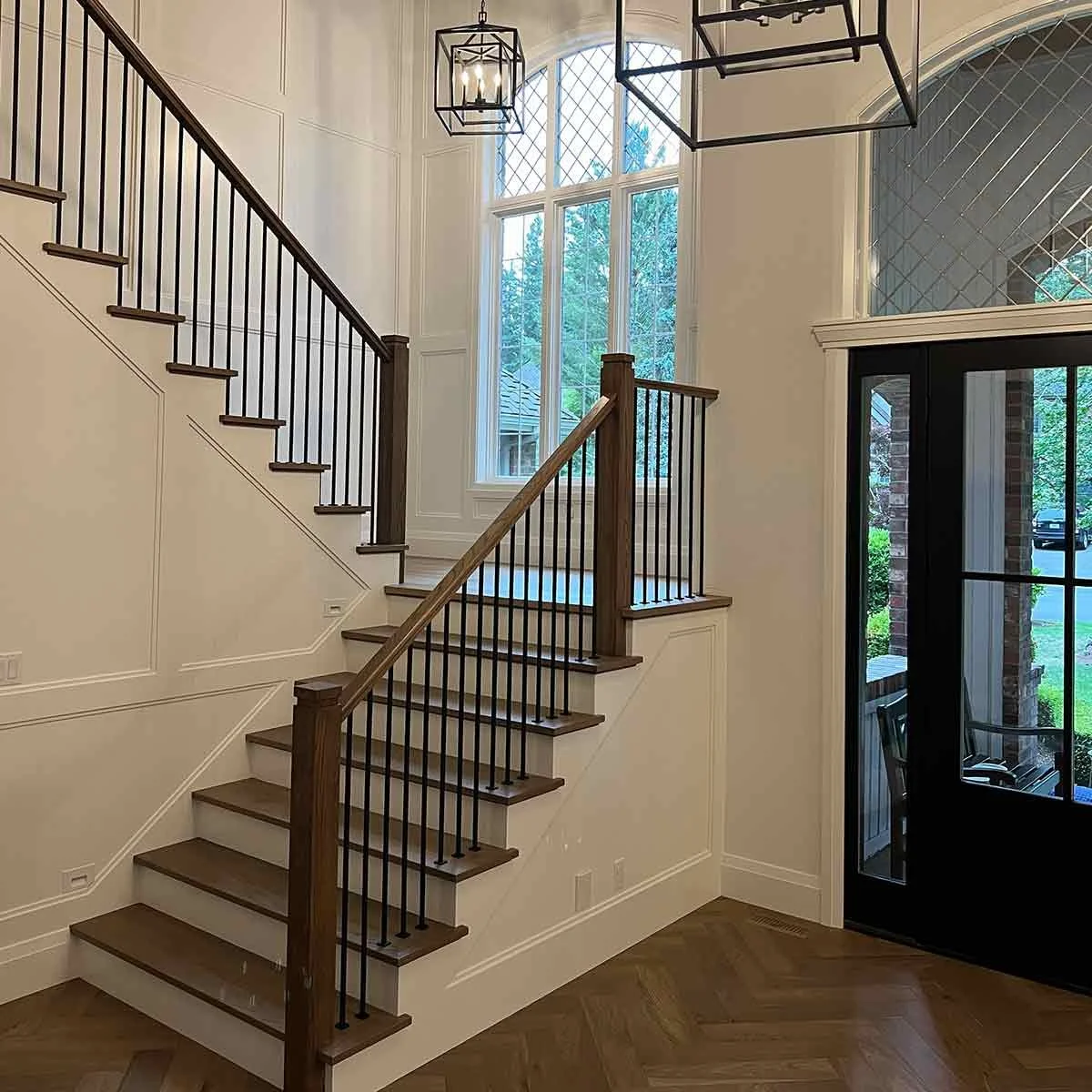
This entryway and staircase remodel shows how thoughtful material updates can completely refresh a space—without changing the layout. New railing, millwork, flooring, and paint brought a brighter, more refined feel to this high-traffic area of the Miller whole house remodel.
In our whole-house remodel of this 90s traditional home, the entryway and staircase received a focused refresh that proves you don’t need to change the layout to make a big impact. The existing footprint stayed exactly the same, but thoughtful updates to the railing, millwork, flooring, and paint completely transformed how the space feels.
Before the remodel, the entryway felt dated and a bit worn from daily use. By introducing a new stair railing, refined millwork details, updated flooring, and a fresh, cohesive paint palette, the space was brought back to life. These changes enhanced the natural light already present and gave the entry a cleaner, more intentional look without altering its original flow.
This project is a great reminder that high-traffic spaces benefit most from material and detail-driven updates. With the right design choices, an entryway can feel timeless, welcoming, and polished—while still honoring the home’s original layout.
Explore the gallery below to see the before and after photos of this entryway and staircase refresh!
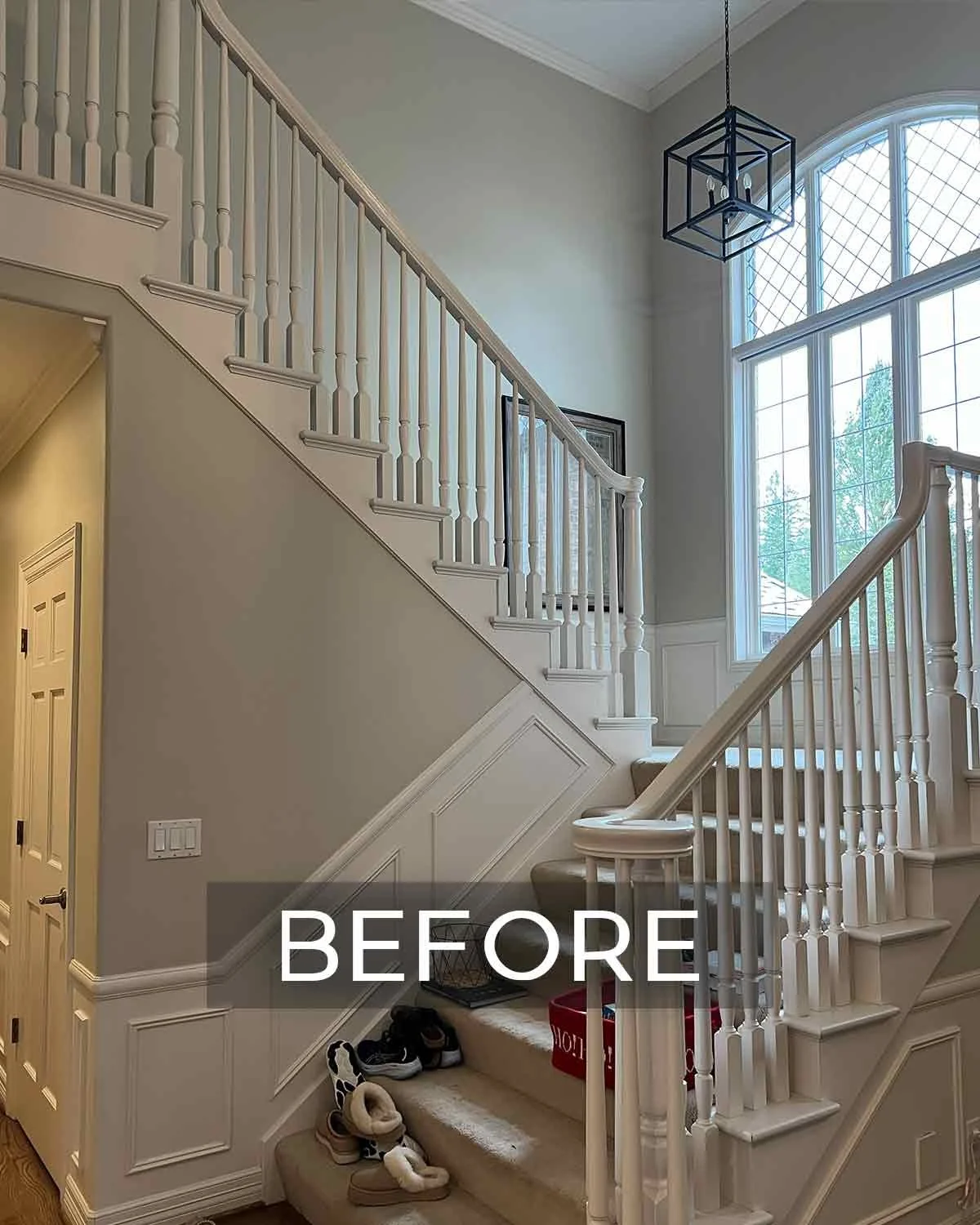
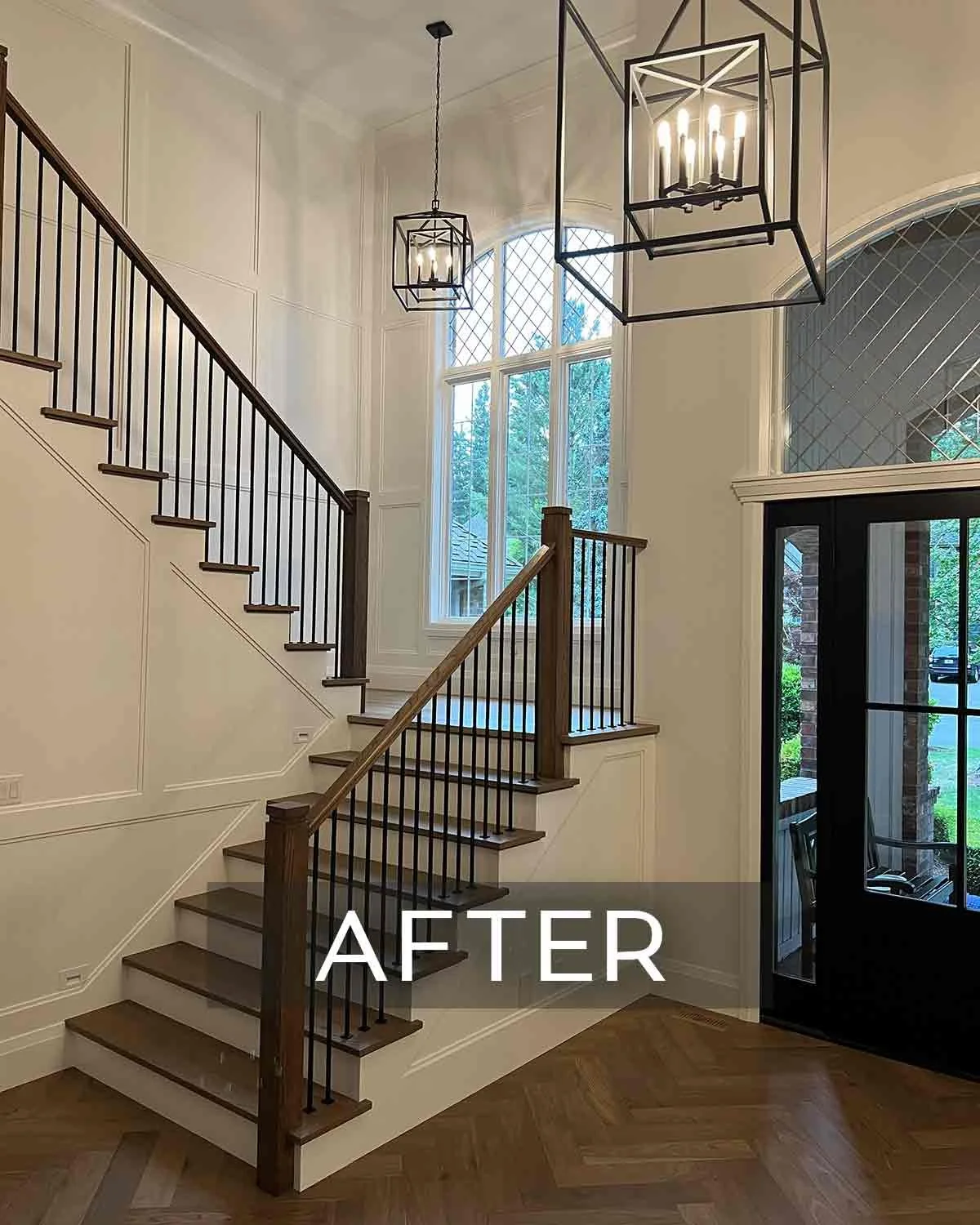
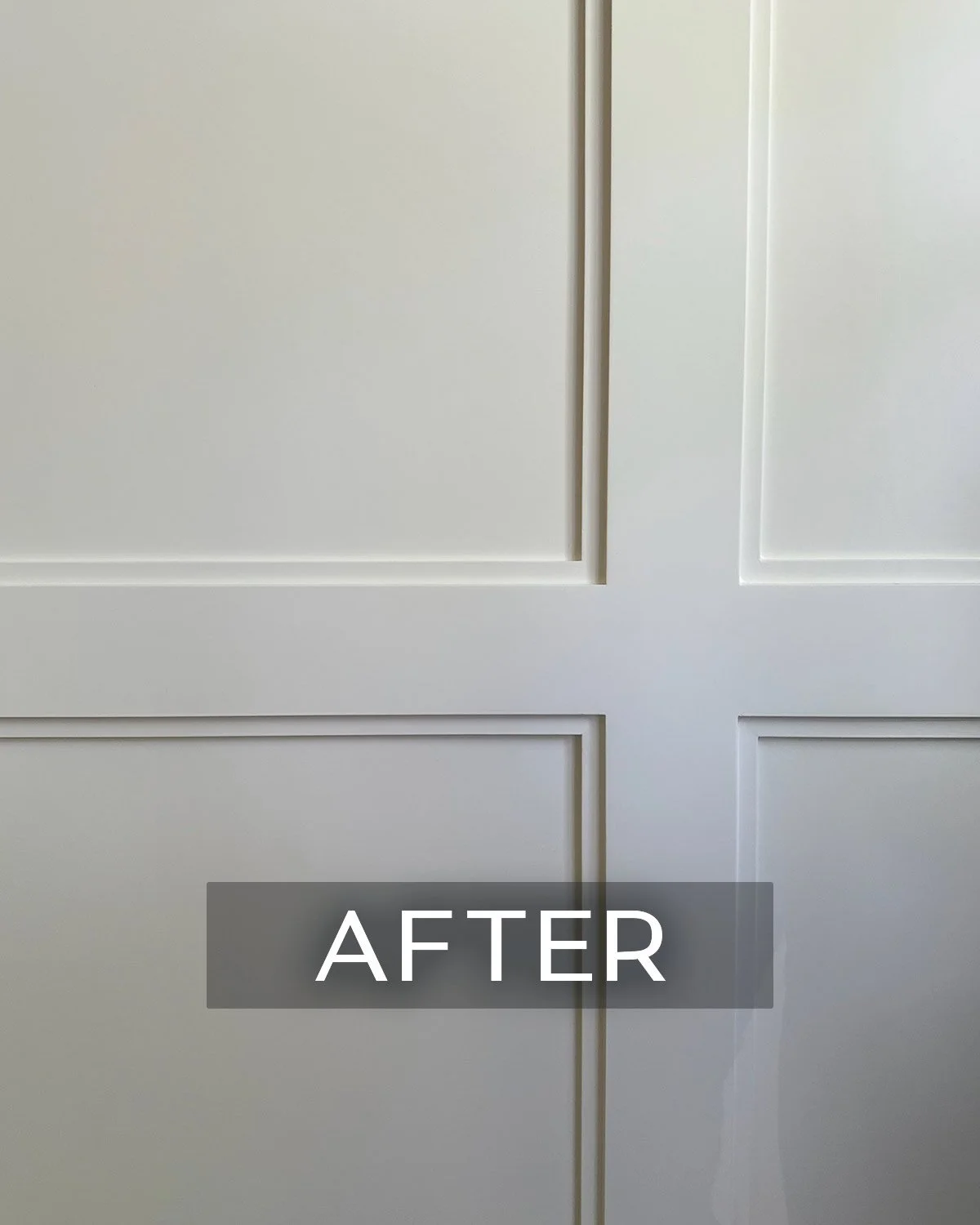
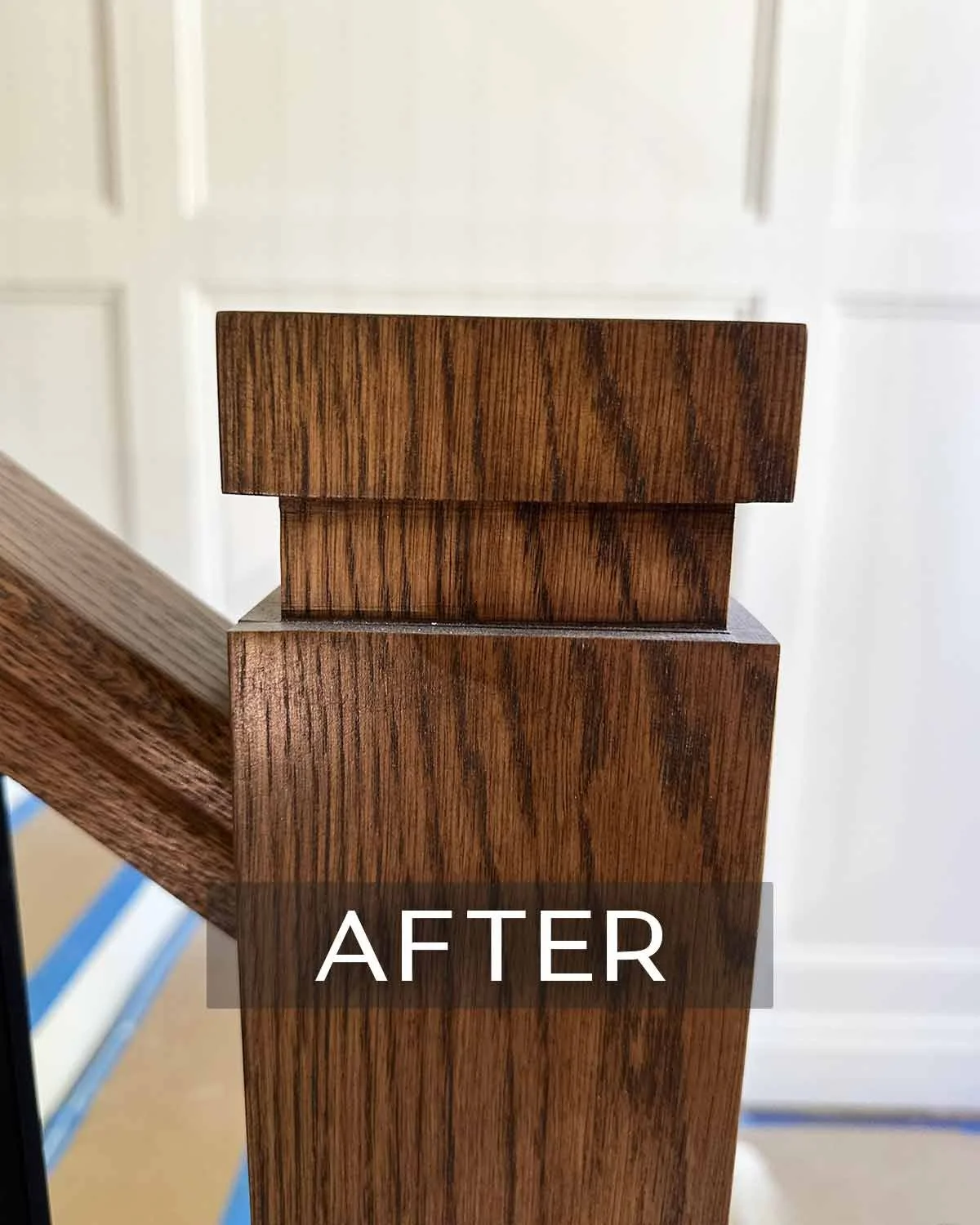
If you’re thinking about refreshing your own space, visit our Interior Design & Remodel Services page to learn how we can help you reimagine your home with craftsmanship and care.

Designing Homes for Scenic Views
Discover how Sierra Homes designs for PNW vistas—placing living spaces above for views, adding rooftop decks, and integrating thoughtful layout and materials.
Pacific Northwest landscapes are magical. When building dream homes, we plan our designs to maximize the views as much as possible. From choosing where to place living spaces to optimizing outdoor decks, here’s how we incorporate the area’s natural beauty into our clients’ homes.
Plan for the View: Floor Layout Strategies
When we are building on a lot with panoramic views (such as our Kennydale homes with views of Lake Washington), we choose the home’s layout strategically. Several of our popular floor plans include living areas (kitchen, great room) on the second floor so that the main living spaces enjoy a higher vantage point. For example, Kennydale Contemporary with Lake View II and III both use these types of layouts. We also consider window placement, and incorporate features like glass doors with multiple panels. We think about the natural flow between indoor and outdoor spaces and how to make it seamless– so that our clients can enjoy an integrated experience in their home.
Rooftop Decks & Elevated Outdoor Spaces
One of our favorite features to add to homes with great views is a magnificent rooftop deck. These beautiful additions serve as extra living and entertaining space, setting these homes above the rest, quite literally. For more examples of outdoor living spaces, see our blog post.
Seamless Access: Including Elevators
For homes with multilevel layouts, accessibility is a consideration for many, either now or in the future. Some of our designs include a high-end elevator to enhance usability and add a touch of luxury.
Thoughtful Detail that Enhances the View
We also include thoughtful details that enhance the view. Whether we’re designing a craftsman-style home or a sleek contemporary one, we always seek an integrated, harmonious look between all style choices. For homes with views, this means incorporating materials, lighting, and seating that don’t clash with but complement the vista, like minimalistic railings or subtle lighting.
Real Projects: View-Centric Design in Action
Here are a few real-life examples of projects from our portfolio.
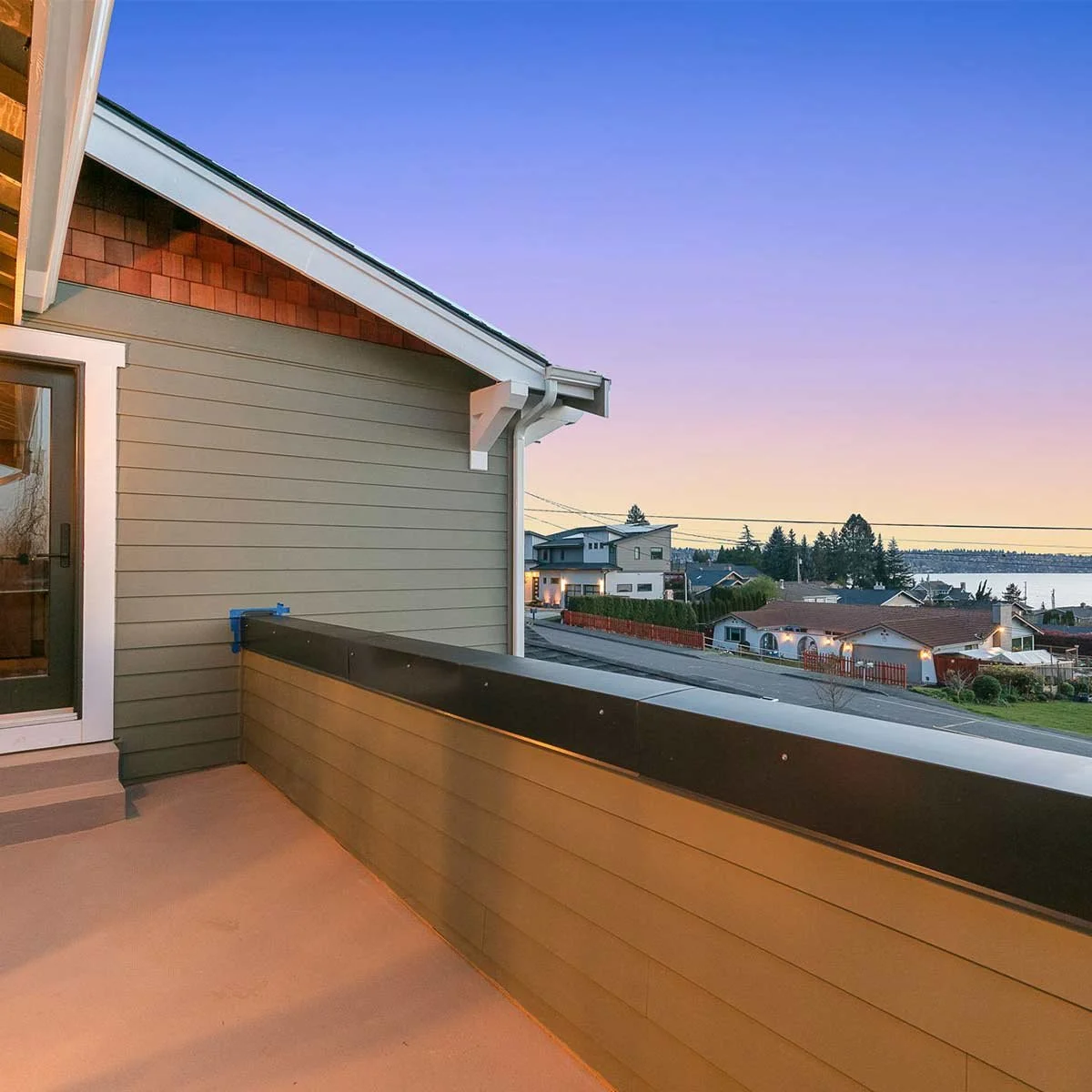
Kennydale Custom Craftsman with Lake View: covered deck oriented to Lake Washington.
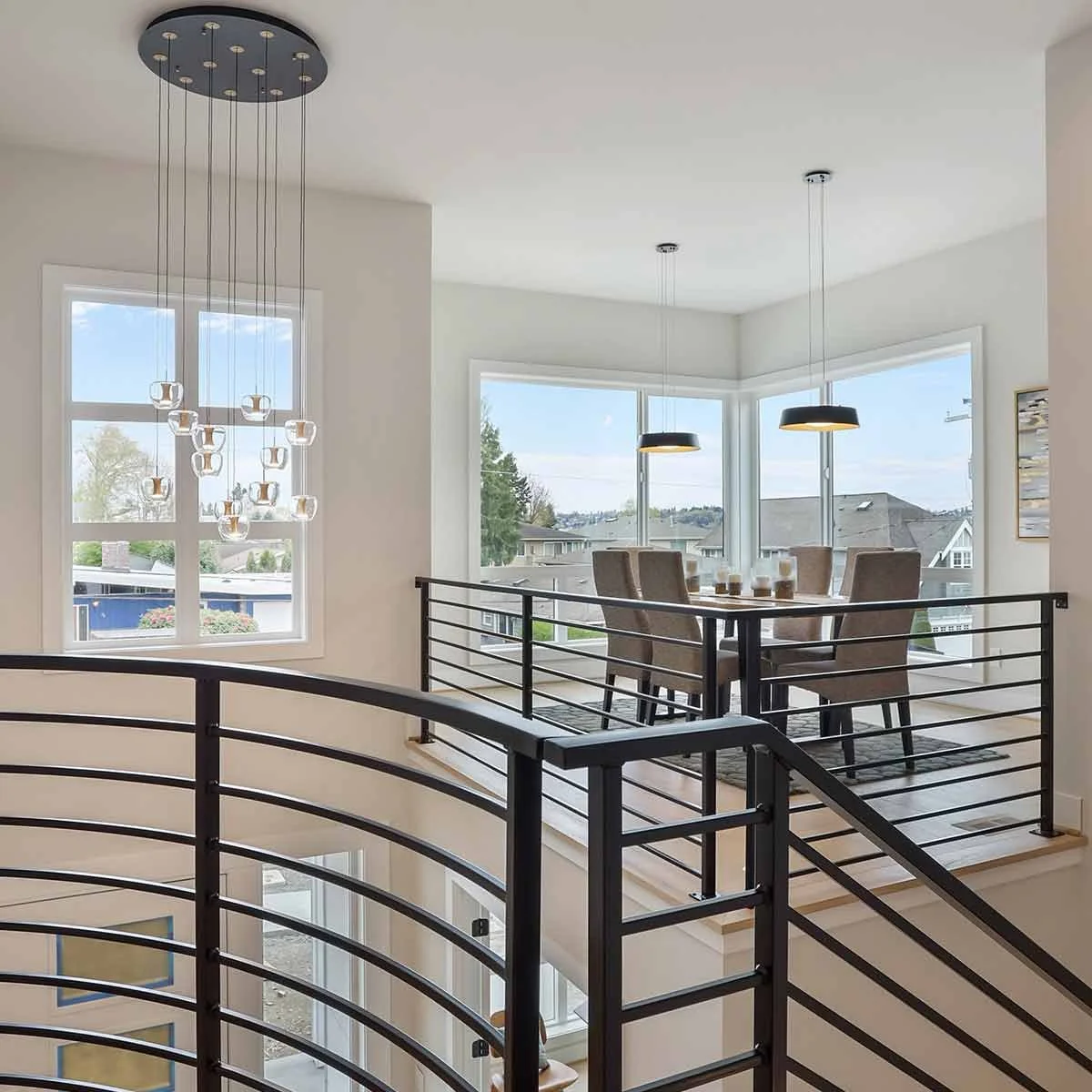
Kennydale Contemporary with Lake View II: Second-story living with dining room views.
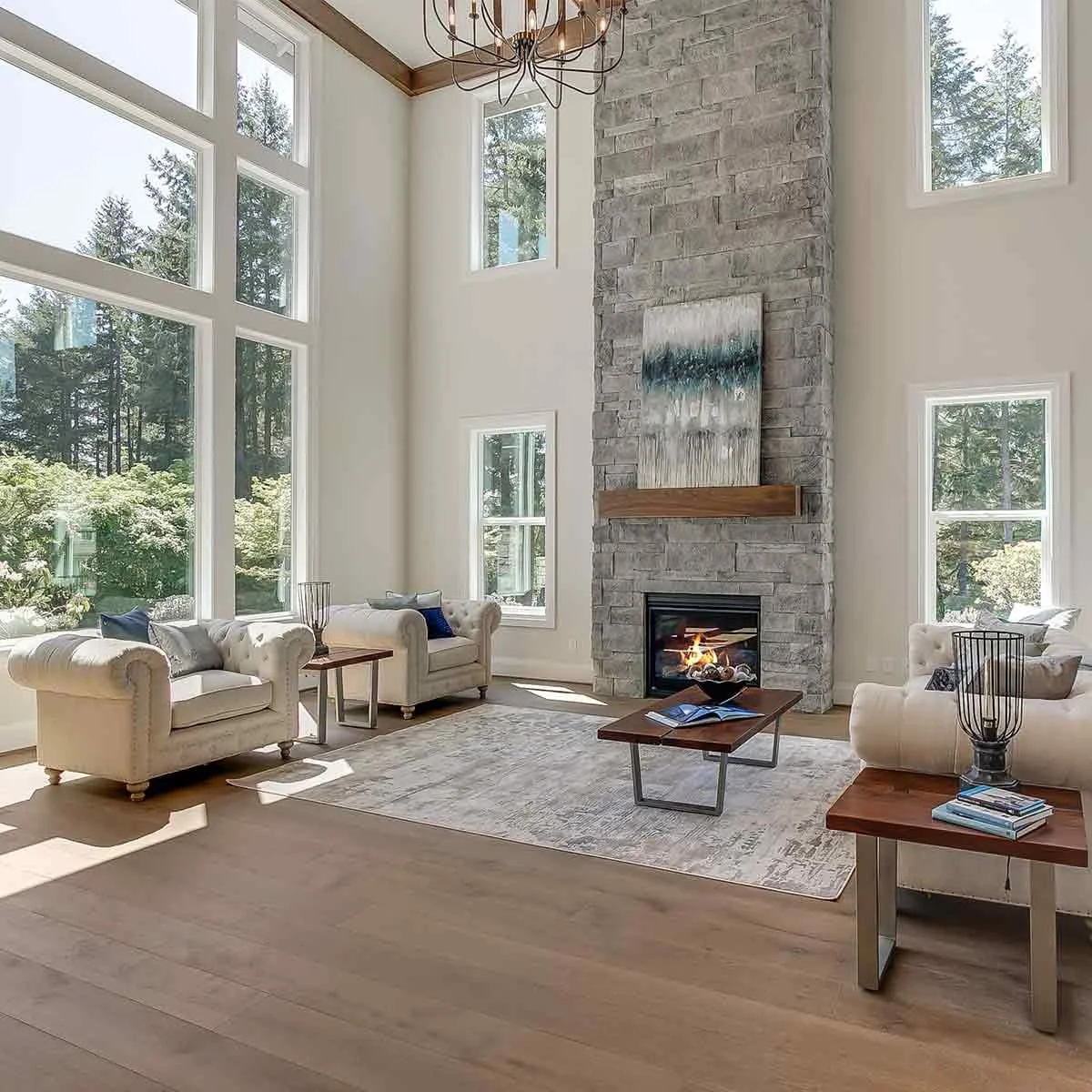
East Renton Highlands Modern Farm Masterpiece: Window placement to maximize forest views.
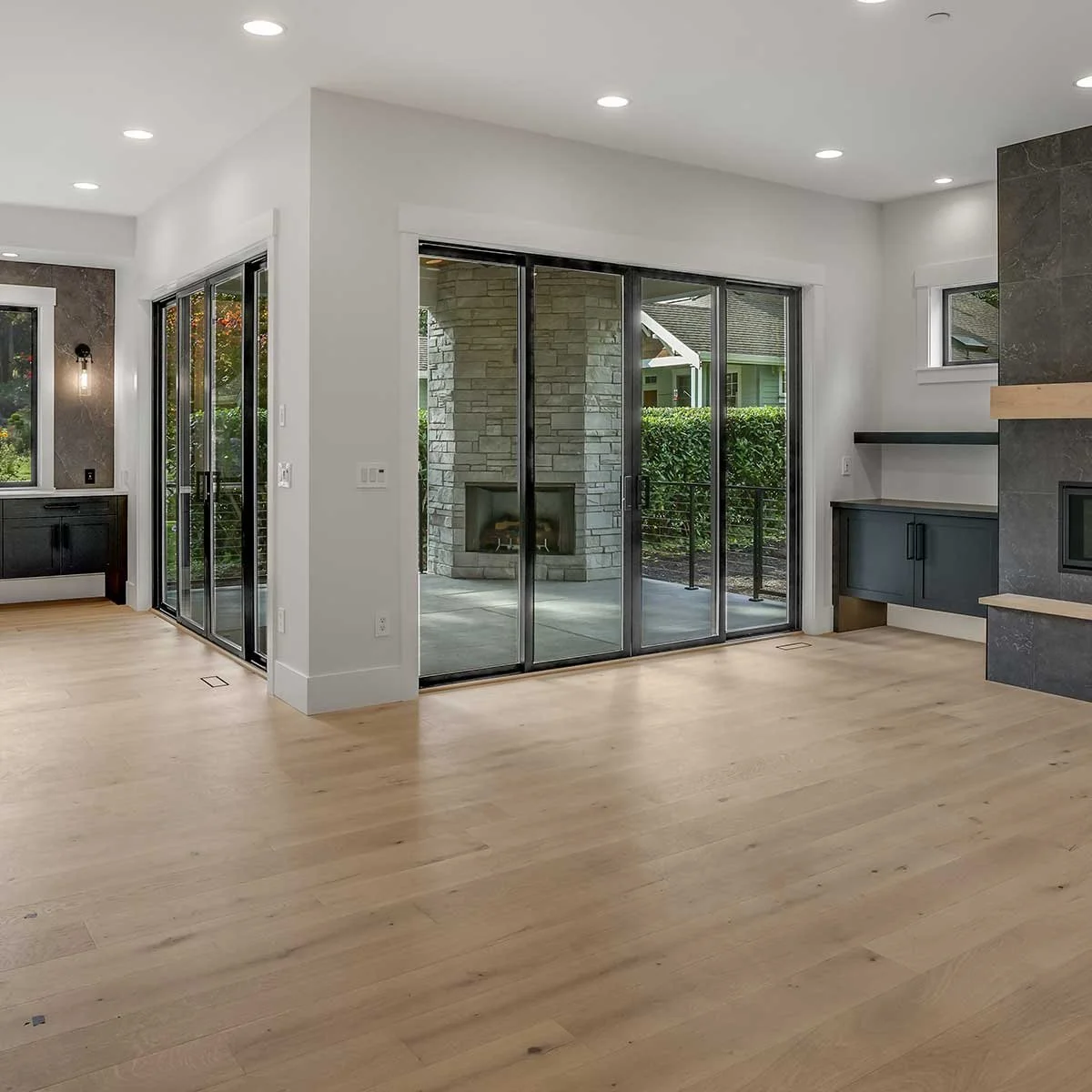
East Renton Highlands Lake Kathleen: Seamless indoor-outdoor living spaces.
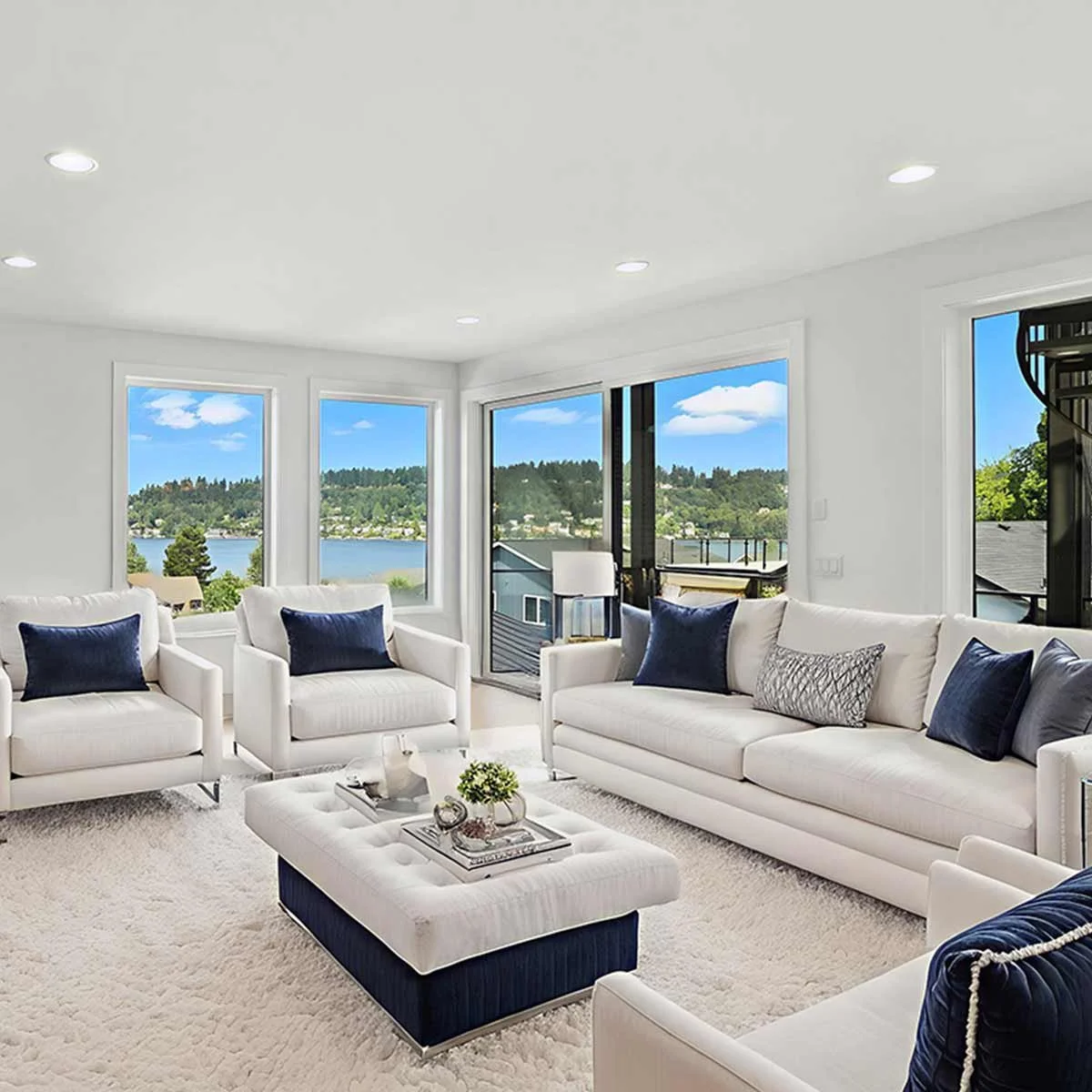
Kennydale Custom Contemporary: Living room with lake view and attached deck.
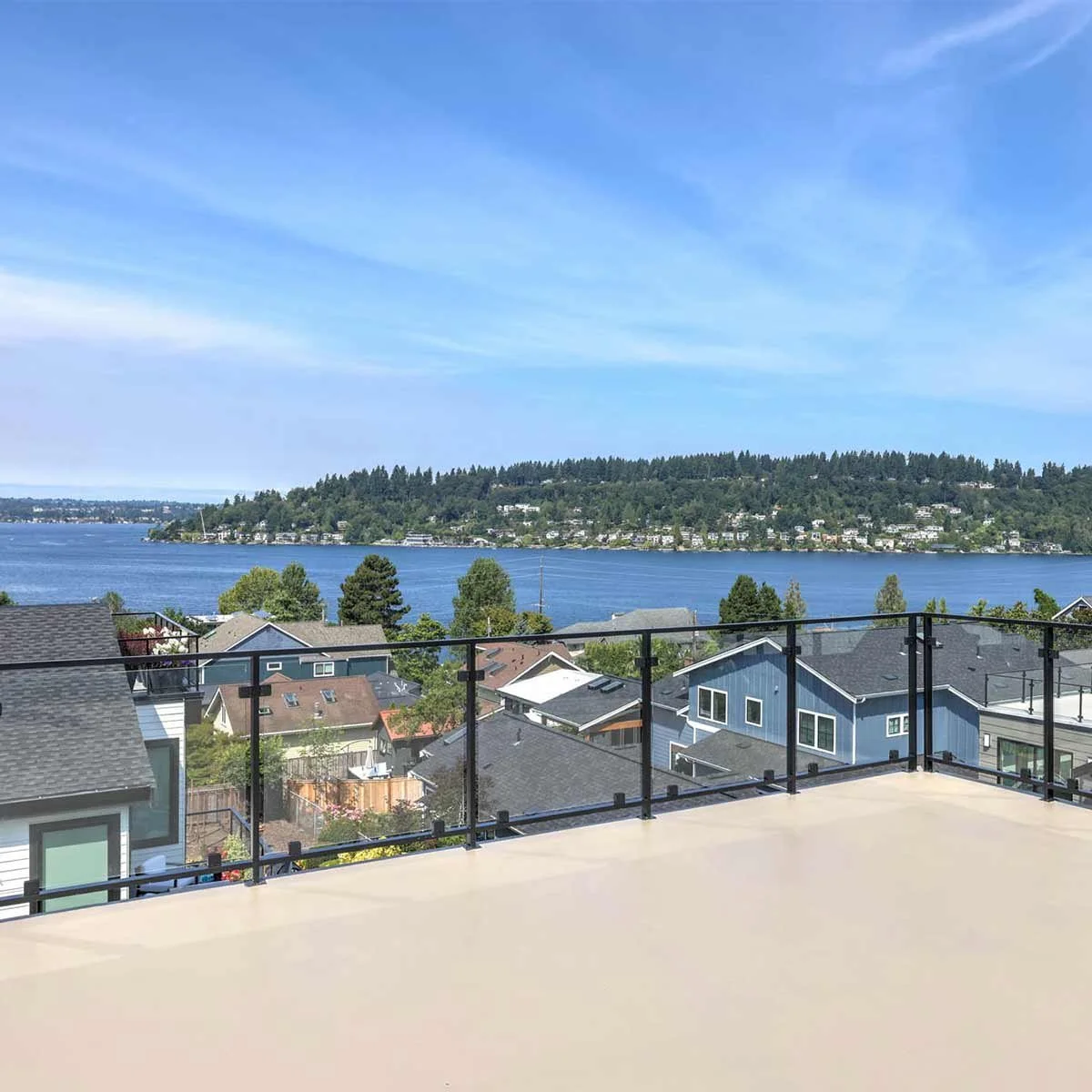
Kennydale Custom Contemporary: Rooftop deck for high-level relaxing and entertaining.
Frequently Asked Questions About Designing Homes with Seattle Views
Here are some common questions we hear from homeowners who want to maximize their Seattle views.
Q: What is the best way to design a home with Lake Washington or Seattle views?
A: The key is thoughtful layout. At Sierra Homes, we often place the kitchen, dining, and living areas on the upper floor so you can enjoy unobstructed sightlines to the water or mountains.
Q: Are rooftop decks a good idea for Seattle homes?
A: Yes. Rooftop decks maximize outdoor living, give you year-round entertaining space, and provide panoramic views that boost both lifestyle and resale value.
Q: How can I make the most of a property without a direct lake or mountain view?
A: We can still orient windows and outdoor spaces toward greenery, sunsets, or neighborhood skylines, and plan to maximize natural light. Even without a lake view, thoughtful design connects your home to its natural surroundings.
Q: Are second-floor living spaces or rooftop decks hard to access?
A: Not with smart planning. We consider the flow from room to room and the rhythms of daily living so that parts of the home don’t feel cut off from each other. Some of our Seattle view homes include elevators for convenience.
Q: Can I be part of the design process for my view home?
A: Absolutely. Homeowners often help decide window placement, room orientation, or even outdoor features so their home feels personalized and perfectly frames the view.
When it comes to crafting homes that celebrate natural surroundings and the changing seasons, thoughtful design is key. Carefully considered features create a home with beauty and functionality that will stand the test of time. Visit our portfolio to see more examples of our homes that integrate with their surroundings. If you’re interested in exploring your options to build your own dream home, you can read all about our process. For project updates and finished home photos, sign up for our newsletter.

Traditional 90s Living Room Remodel: A Fireplace-Centered Redesign
In this Miller home remodel, Sierra Homes reimagined the formal living room with fresh finishes and a custom-designed fireplace that now serves as the true focal point of the space. The result is a warm, inviting room that perfectly balances modern refinement with personal detail.
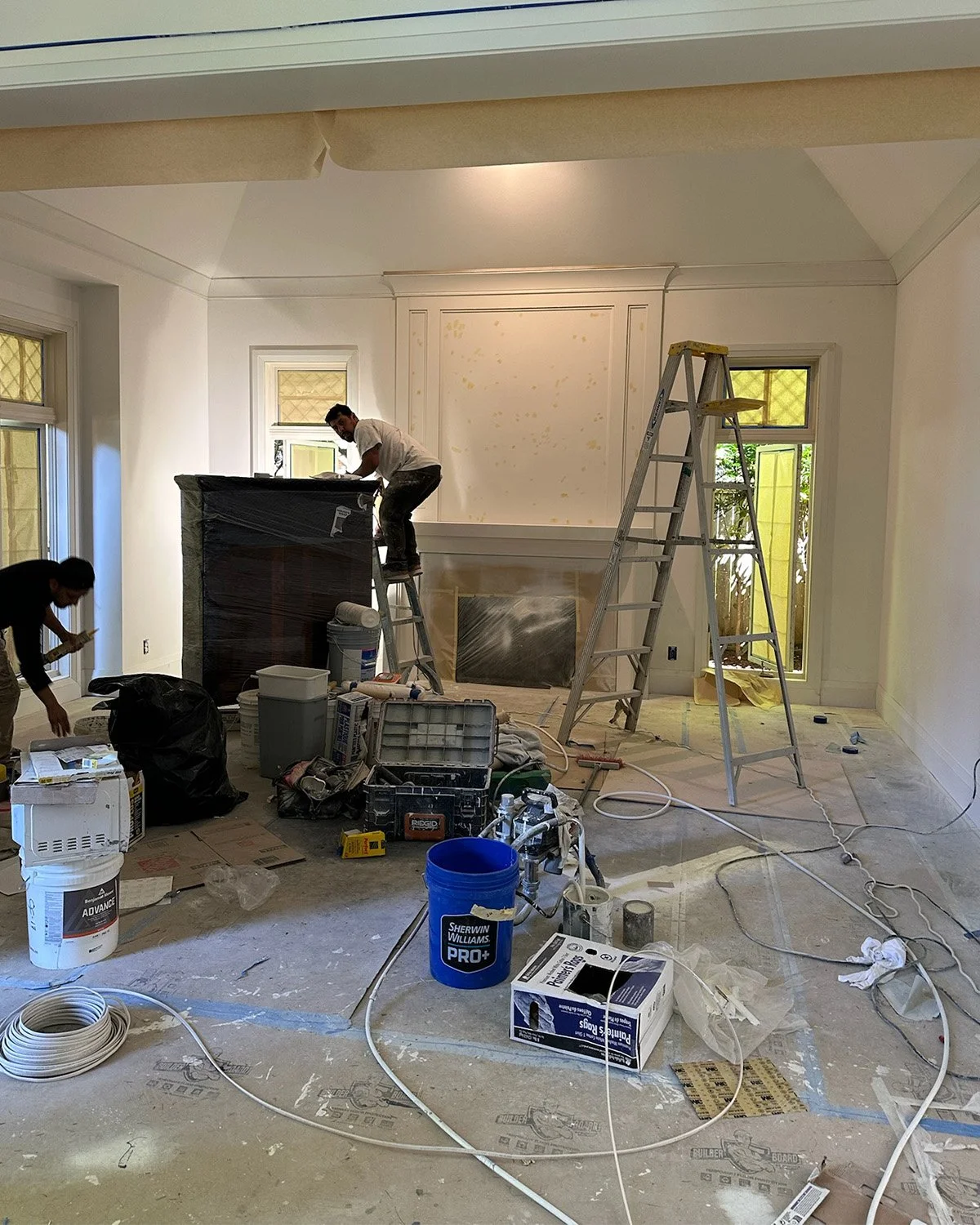
In our Miller home remodel in Sammamish, WA, the formal living room was ready for a refresh—and we loved helping this family bring it to life. With new flooring, fresh paint, and updated millwork, the space already felt brighter and more refined. But the true transformation came with the reimagined fireplace: custom-designed to showcase a favorite piece of art and serve as the heart of the room.
This remodel is a perfect example of how thoughtful design makes every detail feel intentional. By balancing clean lines with warmth and character, we created a space that feels elevated yet personal—one that reflects our clients’ style and the way they truly live in their home.
Explore the gallery below to see the before, during, and after photos of this transformation!




If you’re thinking about refreshing your own space, visit our Interior Design & Remodel Services page to learn how we can help you reimagine your home with craftsmanship and care.

Thoughtfully Designed Outdoor Living Spaces for the Pacific Northwest
Explore custom outdoor living designs by Sierra Homes—fireplaces, decks & rooftop patios for year-round living in the Pacific Northwest.
In the Pacific Northwest, homeowners are looking for outdoor spaces that are both beautiful and functional throughout the year. This area has an abundance of natural beauty, and people want homes that take advantage of scenic views and lush landscapes. However, since we do experience cooler temperatures and wet weather throughout some parts of the year, those outdoor spaces have to be thoughtfully designed with features that can help extend their use into the cooler months. At Sierra Homes, we specialize in outdoor spaces that maximize scenic views and while feeling like natural extensions of the home. Below, we’re sharing real examples from Sierra Homes projects that show how we turn patios, decks, and rooftop retreats into spaces for gathering, relaxing, and entertaining—rain or shine.
Outdoor Fireplaces & Decks That Bring People Together
One of the features that encourages gathering is a fireplace– the epitome of coziness. An outdoor fireplace draws people to it for connection and comfort year-round.
Spacious decks are also a must. Whether it’s being used for dining, lounging, or entertaining, a well crafted deck creates an extension of your home’s living space.
We always consider outdoor spaces like these when designing our PNW homes. Instead of being an afterthought, we integrate them into the home’s design right from the start.

Outdoor fireplaces like this one create a cozy, year-round gathering space.
Maximize Your View with Second-Story or Rooftop Decks
For example, many of the homes we design have a gorgeous view. For these homes, maximizing that view is essential. We do this with window placement, of course, but we also consider it in the overall layout of the home. In our Kennydale projects, we often place living areas on the second floor to take full advantage of sweeping Lake Washington views. In these layouts, a second-story deck connecting to the living area is a natural and beautiful extension of the living space. Decks that connect to the dining area can be used for extra entertaining room. For these spaces, we maximize indoor-outdoor flow with sliding glass doors or multi-panel openings. Some of our designs include a rooftop deck for an even higher and more stunning view of the lake! Creating extra outdoor space with a wrap-around or rooftop deck makes even more sense on lots that have limited yard space.
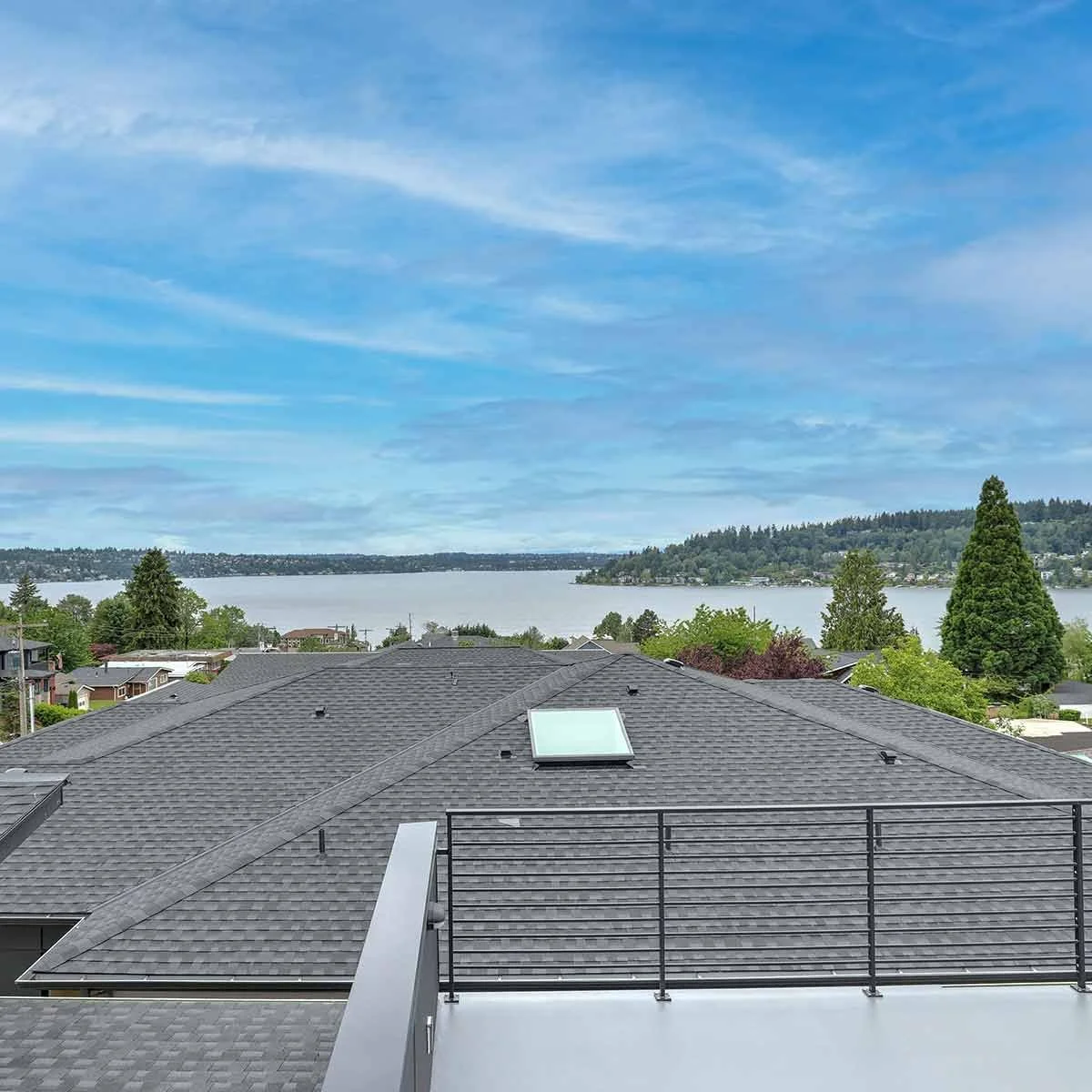
The view from this rooftop deck is unbeatable!
Custom Details That Make a Difference
We craft our outdoor spaces with the same attention to detail that defines us. Cozy and unique lighting creates the perfect relaxing ambience. Materials are chosen to harmonize with the home’s style and aesthetic. Seating and conversation areas blend style with function. We tailor all of these choices to the homeowner’s needs and lifestyle– for example, a stone pizza oven for an avid foodie.
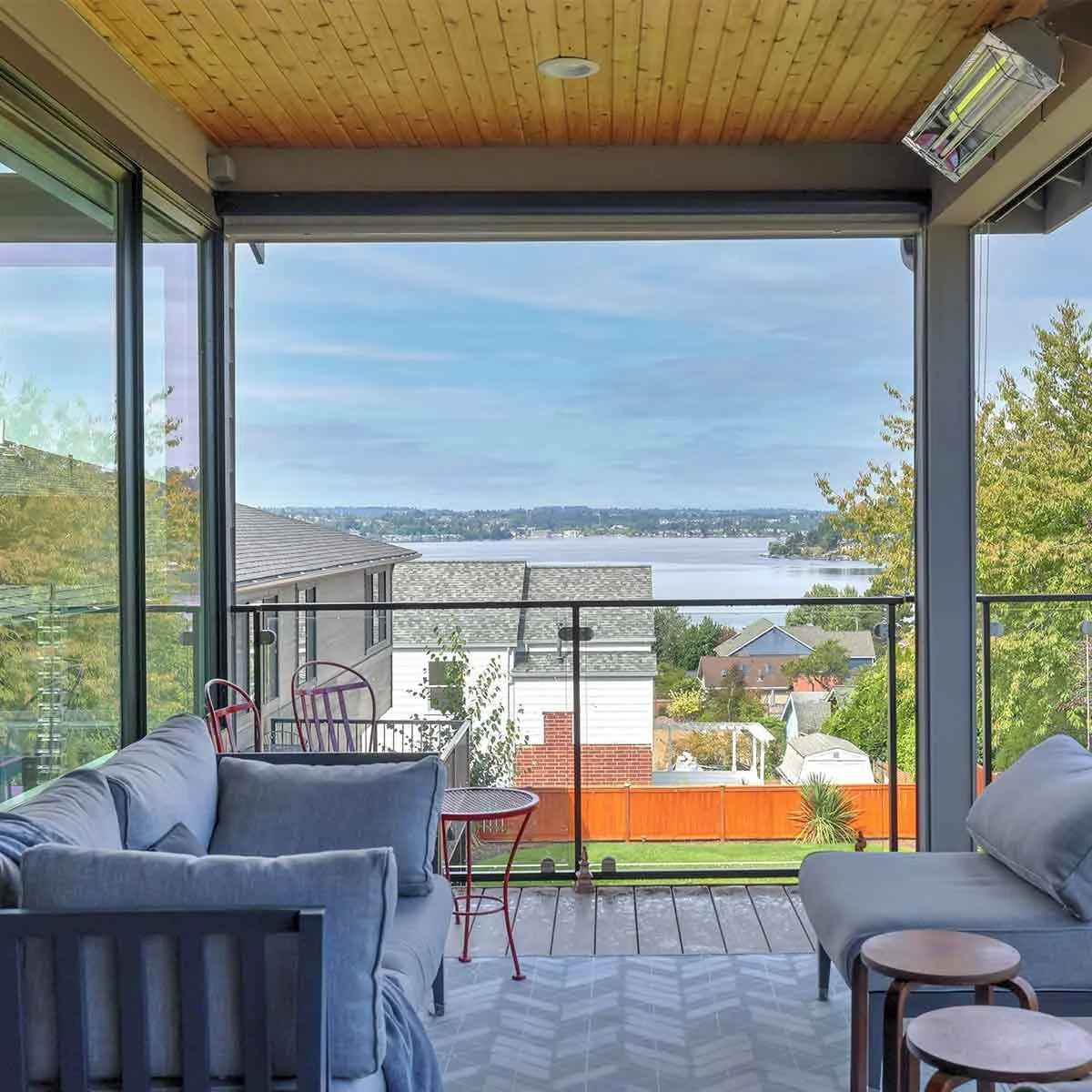
Cozy furniture, patio heaters, and scenic views help create an extra living room in this home.
FAQs
Q1: Can outdoor living spaces really be used year-round in the Pacific Northwest?
A: Yes—with the right design choices, your outdoor space can be comfortable and functional even during cooler or rainy months. Covered areas, outdoor fireplaces, patio heaters, and weather-resistant materials help extend the use of outdoor spaces year-round.

A stone fireplace and covered patio make this outdoor room inviting in all seasons.
Q2: What are the best outdoor features to include in a custom home?
A: Some of the most popular outdoor amenities include fire pits and fireplaces, spacious decks, second-story or rooftop patios with views, outdoor kitchens or bars, and outdoor dining areas.
Q3: How do you design outdoor spaces to maximize views?
A: We consider the site’s natural elevation, window placement, and home layout. In some homes, we shift living spaces to the second floor to capture lake or mountain views—and then extend those spaces with connected decks or balconies.
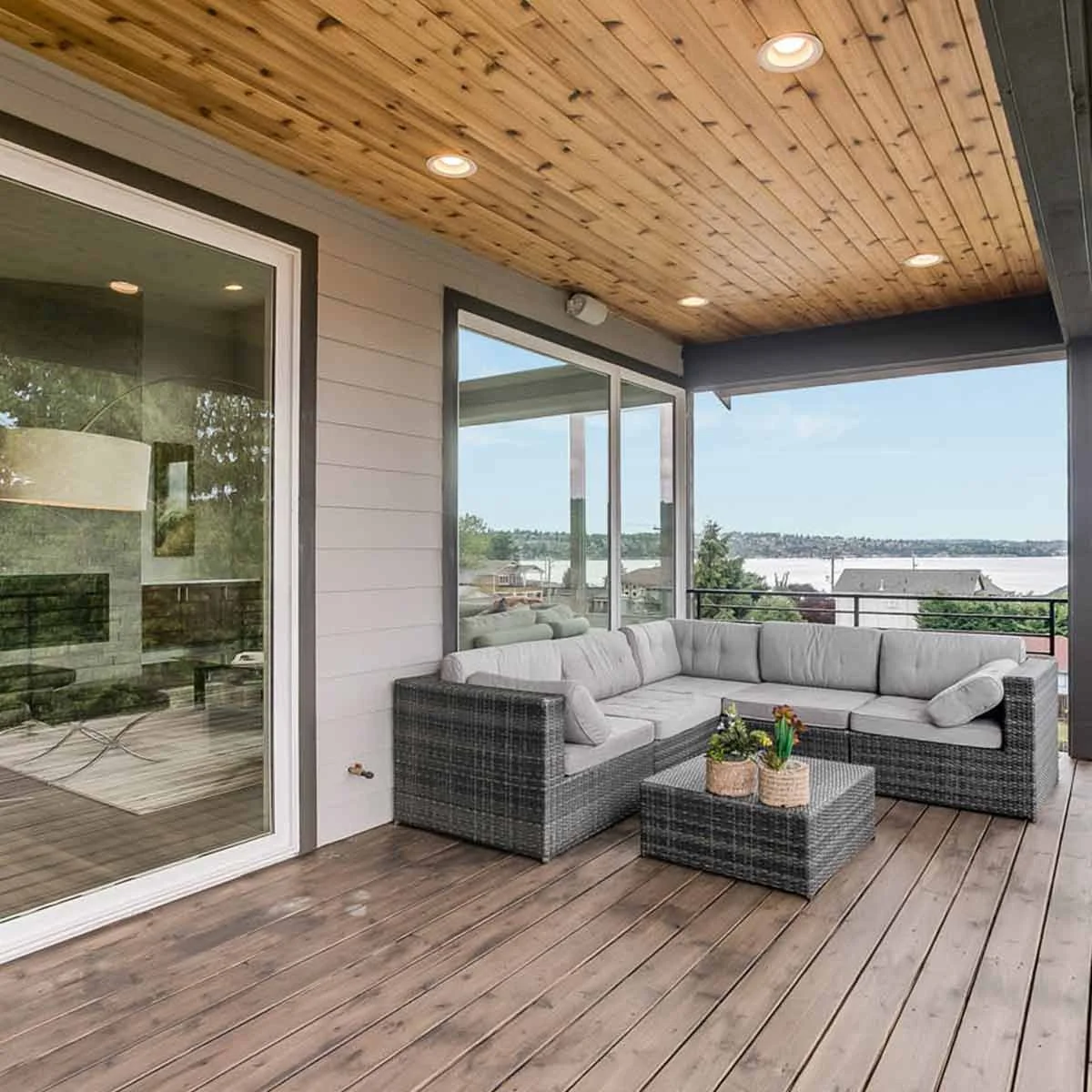
This beautiful deck extends the family’s living room outdoors to take advantage of lake views.
Q4: What materials hold up best in the Pacific Northwest climate?
A: We choose materials that can withstand rain and moisture while maintaining their beauty. This includes composite decking, weather-treated wood, natural stone, and durable outdoor lighting fixtures.
Q: Can I add outdoor amenities during a remodel, or only in new builds?
A: Absolutely! We can help integrate new features like decks, patios, or exterior lighting into your existing home design.
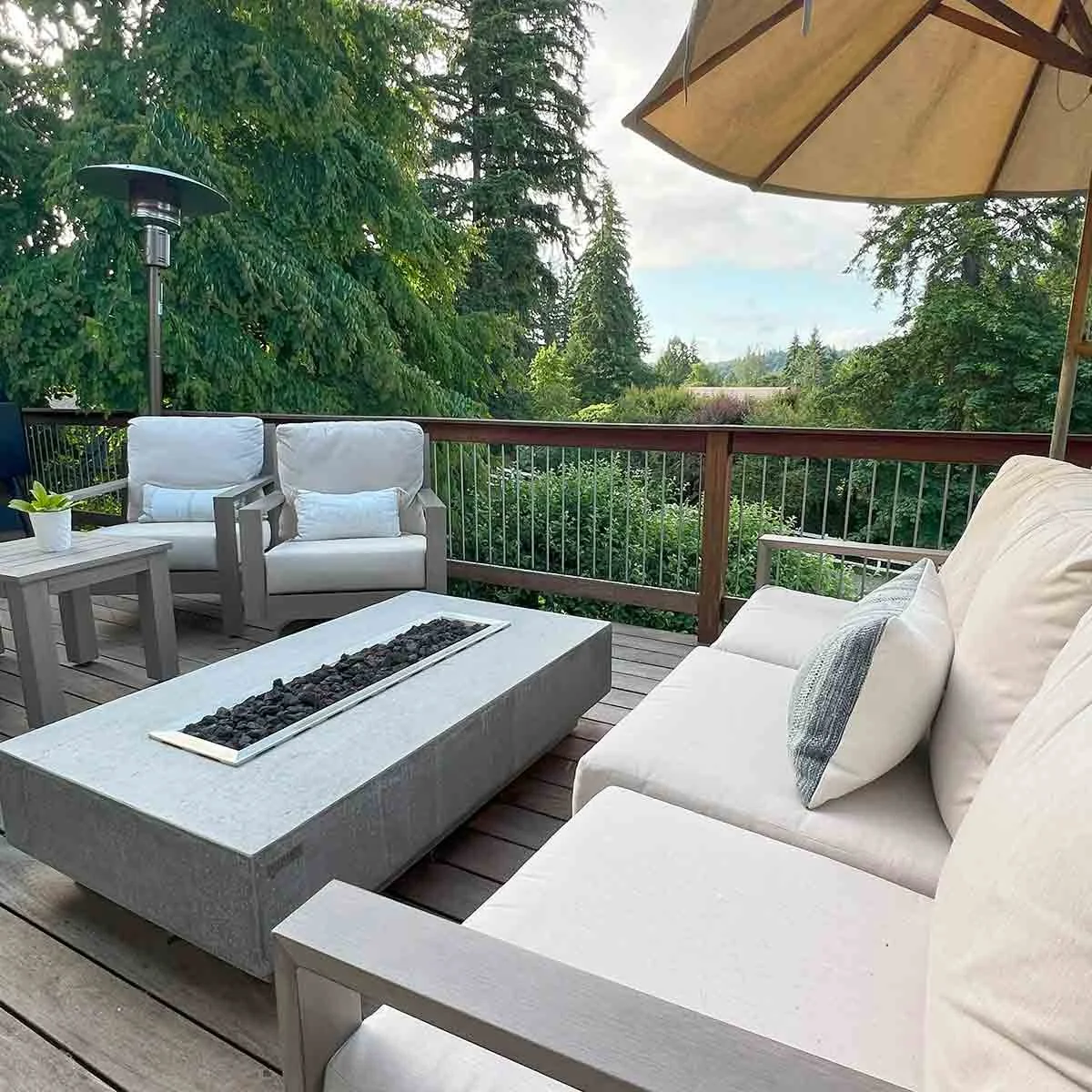
This seating area was designed as part of a remodel project in this Issaquah home.
More Outdoor Design Inspo
Outdoor amenities are an essential part of making a home livable and enjoyable. If you’re thinking about designing and building your own dream home, we’d love to hear from you! Browse our portfolio for inspiration and to see examples of our work. If you’re ready to discuss your options, please contact us for a consultation! And be sure to sign up for our newsletter for more design inspiration.

Kennydale 1940's Remodel - Modern Farmhouse Bonus Room Transformation
Curious how we modernized this bonus room’s look while keeping the 1940’s charm? Check it out!
Thoughtful design challenge: Modernizing this bonus room’s look while keeping the 1940’s charm
Discover the careful process of updating old-fashioned charm with modern style! We transformed this 1940s bonus room in our Kennydale Modern Farmhouse Remodel by blending modern touches with its original appeal. From painting red bricks gray to adding an energy-efficient fireplace, updating millwork, and refinishing hardwood floors, see how old meets new seamlessly.
Kennydale, WA 1940's Remodel - Modern Farmhouse Bonus Room BEFORE


Looking to refresh an outdated space? Get in touch!

What to Know When Starting a Remodel
Thinking about tackling a home remodel? Understanding the scope of the project and carefully weighing the pros and cons will lead to a smoother process and a favorable end result! Here’s our advice.
If you're thinking about starting a home remodel, it's important to understand your goals, budget, and timeline. Home remodeling can help with:
Creating more usable space with functional improvements, like finishing a basement or adding a bathroom, or opening a closed off kitchen
Updating certain features, modernizing fixtures, appliances or cabinets, refinishing floors or freshening up paint
Adapting to lifestyle changes, such as growing families, new hobbies with dedicated spaces, or changing mobility needs
Increasing your home’s resale value, particularly in competitive markets like the greater Seattle area
Whatever the reasons for considering a remodeling project, it’s important to be aware of what is involved. Based on our experience, we have a few recommendations before committing to a full (or even partial) renovation. Understanding the scope of the project and carefully weighing the pros and cons will lead to a smoother process and a favorable end result!
Defining Your Remodeling Goals
Define what your objectives are for the project.
Identify needs vs. wants
Set realistic expectations as to time, budget and feasibility
Prioritize projects, if you plan to tackle multiple areas
Consider long-term value and functionality. Some remodel projects will boost your resale value, if that’s important to you, while others will improve the day-to-day enjoyment of living in your home, which is also valuable!
Budgeting for Your Remodel
Create a realistic budget. Research the costs, get multiple bids from contractors, and determine how much you are willing to spend.
Build in a contingency fund (typically 10-20%). Costs fluctuate and unforeseen events occur, so give yourself some cushion here.
We usually do not recommend the risk of taking a loan against your home to remodel. Instead, save up in advance and pay with cash.
Understanding the Timeline
Timelines are completely dependent on the project. A full house renovation can take anywhere from 3 months to 1 year.
In the Pacific Northwest, exterior remodels such as outdoor covered areas are best done between April 1st and October 31st.
Factor in supply chain impacts on scheduling. Always assume some items will be backordered and allow for extra time to complete the project.
Decide on your living arrangements during construction. We always recommend homeowners try to stay somewhere else while their home is being remodeled. The constant noise, dust, and people in your space is very disruptive to everyday life.
Understanding Permitting and Regulations
Permit requirements in Issaquah/Greater Seattle: The permitting process varies depending on city or jurisdiction, as well as the scope of the project. Please plan for a long permitting period and allow the “start date” to be when you have a permit in hand.
Common zoning considerations: Research your property at the City or County for local regulations regarding setbacks and land use restrictions before beginning construction.
Get HOA approvals if applicable: Most HOAs require permission to do renovations to a home to maintain property values in the area and comply with community standards.
Sierra Homes is an expert in navigating local regulations in the King County area, and we can help guide you through the necessary steps.
Choosing the Right Contractor
Before hiring your own contractors, make sure you do your research.
Gather recommendations from family or friends, read online reviews, and check professional associations like the National Association of Home Builders.
Ensure any contractor you hire is correctly licensed, bonded and insured for the specific type of work they’ll be doing. Get detailed written estimates and compare proposals.
Confirm availability for your project and make sure you review a detailed contract carefully before signing.
If you choose Sierra Homes to manage your remodel, our team will meet with you to make sure the scope of the project is understood and implemented. We have solid, long-term relationships with our contractors and craftsmen, and we stand behind the work that they do!
Design Considerations
Designing a project that meets your functional needs and budget constraints, and ends with a look you love, is a big task. If you’re working with us, we will develop a beautiful, thoughtfully curated design for your remodel project.
We can work with your own contractors, or we can handle the remodel construction process as well. This gives our clients maximum flexibility.
As we work to develop the perfect design, we will personalize it to fit your design taste as well as your functional needs.
Visit this post to learn more about current design trends in the Pacific Northwest, and about our design philosophy and process.
Material Selection
When planning your renovation, unless you have an unlimited budget, you’ll have to balance quality vs. cost considerations.
We recommend identifying what’s most important to you, then creating a plan to splurge on certain materials while using cost-effective alternatives for others. For example, subbing quartz for marble, or ceramic tile for high-end stone. Your contractor or designer can help you figure out where to get the best value, and where you definitely don’t want to cut corners.
Lead times for specialty items can be longer, but the end result may be worth it to you. This includes things like custom cabinets, specialty windows and doors, or imported tile.
The Remodeling Process
Now that your plan is in place, the remodeling process can begin! To give you a sense of the process, here’s how Sierra Homes offers a comprehensive, client-centered approach to home remodeling through four key phases:
Initial Consultation
Design & Bidding
Project Management
Client Service
Our client-focused approach emphasizes collaboration and attentive service, from initial concept all the way through project completion. You can find out more on our remodeling services page.
Now that you know what to expect, you can feel more confident about tackling your home renovation. If you’re interested in taking advantage of our design or remodel services, feel free to contact us! You can view our remodel portfolio to see examples of recent renovation work we’ve completed.
Client Testimonials
Read through testimonials from our previous remodel clients!
Defining Your Home Style: Tips from Sierra Homes
What’s the difference between Craftsman and Contemporary? If you’re not sure, you’re not alone. In this article we’ll help you understand different architectural styles and how we personalize them to fit your vision, whether you’re starting a custom build or a remodel.
What’s the difference between Craftsman and Contemporary? If you’re not sure, you’re not alone. In this article we’ll help you understand different architectural styles and how we personalize them to fit your vision, whether you’re starting a custom build or a remodel. We’re experts at guiding clients through the design process, whether you know exactly what you want or you’re not quite sure!
Popular Home Styles in the Pacific Northwest
The Greater Seattle Area offers several popular home styles, but some have stood the test of time and never seem to go out of style.
One of those is the Craftsman home, which has been built around the Pacific Northwest since the early 1900’s.
Contemporary homes are always trending in the area, too. This ever-evolving style is particularly popular near the city centers and waterfronts.
Mid-Century Modern is another popular trend at the moment, especially for those who have the desire to take on a home renovation or update any split-level or 1960s home.
Defining Characteristics
Craftsman homes are known for their large inviting porches, gabled roofs, and tapered columns. Made to feel cozy, these homes have smaller distinct living areas, an extensive amount of woodwork, and use nature-inspired colors throughout.
Contemporary homes in the Pacific Northwest embrace natural elements such as wood, stone, and organic materials. The minimalist design exemplifies simplicity by using clean lines, open floor plans, and muted colors.
Midcentury Modern is defined by a low profile footprint, flat roof, and natural elements. These homes show a connection to nature by blending indoor and outdoor spaces and featuring floor-to-ceiling windows.
Personalizing Your Home’s Design
Every home is created by combining all of the design elements that will make up the style of that home. Elements such as paint color, cabinets, millwork, door styles, hardware and fixtures all come together to create an overall aesthetic that defines a particular home. There are certain design elements that are commonly seen in each style, and those elements should communicate a vibe for that style and be recognizable in the overall design.
While budget plays an important role in the design selection process, there are usually several options at various price points available. For example, if a client loves the look of genuine marble but cannot afford to have real marble, there are always porcelain tiles that are made to mimic the look and feel of genuine marble at a fraction of the price.
Making Design Decisions
For our projects, Kelly expertly develops the design direction and guides clients through the detailed process of making selections. We asked her a few questions.
Q. How does Sierra Homes take a basic style direction and make it unique to the client?
A. I try to spend time getting to know the clients by visiting their current home to see how they live in their space and ask questions about what they like and don’t like about their current home. Once I know the basic core design style, I will personalize it by coming up with an overall theme that appeals to them, while guiding them to stay close to the core design aesthetic.
Q. How do you guide clients who aren’t sure which style they prefer?
A. I like to use a client’s Pinterest board or magazine cutouts to help understand what they like. While visiting showrooms, I take note when the client reacts to a product they love. When observing a home, I walk through the space taking inventory of the areas that homeowners wish to update, such as millwork and flooring. I identify updates that will enhance the property and perhaps bring traditional styles forward if that is desired. It’s common for the scope of the project to expand as they consider additional improvements they would like to make.
Q. Can you give an example of a project where the style evolved during the process?
A. We are currently building a custom home for a couple who originally told me their style was ‘ultra-modern.’ As we were making selections, it became clear that their style is really much more ‘Northwest Contemporary.’ They were choosing a simple design of natural elements, stone, wood, and neutral colors that will make the home feel warm and inviting. Helping the client get to know their design style was an enjoyable experience, and it will be rewarding to see the finished product when the home is completed.
Q. How do you ensure the exterior and interior designs feel cohesive?
A. To be sure the design feels cohesive throughout, I make all the selections and then display them together and step back to look. A mood board or design board is a great way to visualize the overall look of a home.
Q. What are some signature design details that set Sierra Homes apart in each of these styles?
A. Sierra Homes takes great pride in creating warm and inviting living areas. With all of the rain we get in the PNW, it’s important to have cozy spaces to snuggle up and settle into. For that reason, we spend a lot of time thinking about and creating the outdoor living area as well as the fireplace design. We want people to feel comfortable in their new or remodeled homes!
If you’re interested in building or remodeling your home, be sure to sign up for our newsletter. You’ll get our best advice for homeowners embarking on this journey, as well as updates on current projects and available homes. If you’re ready to get started, reach out to us for a consultation!

Sammamish Mid-Century Family & Office Remodel
See how we removed an outdated fireplace, created new spaces, and brightened a 1962 mid-century family room & office.
Thoughtful design challenge: Removing an outdated fireplace and creating two new rooms, while brightening and updating the space
This 1960s family room in Sammamish, WA was weighed down by dark, outdated elements and impeded flow. It needed an update that would:
Transform the space by creating two new rooms out of one large room.
Keep the aesthetic of the mid-century modern era in this 1962 home, which still had much of the original building materials and design elements.
Challenge accepted!
Design challenges:
Remove the outdated, oversized, black-painted stone fireplace that was dividing the room down the middle, blocking the flow of the space.
Brighten up the entire home by removing the brown stone floor and outdated dark hardwood and replace all with polished, modern tile.
Bring in more natural light by adding windows and create a large glass wall and glass door leading out to indoor pool area.
Create two rooms, one for a functional office space that also serves as a guest bedroom and another large family room for TV and modern fireplace.


Looking to refresh an outdated space? Get in touch!

Top Tips for Vetting a Lot Before Building Your Custom Home
Besides the obvious elements, such as location, community, view, and sun exposure, there are many unknown details about a lot that could impact your building choices and your finished home. Here are our top tips to help you evaluate a lot before making a purchase.
When shopping for a lot to build your custom dream home, there are many factors to consider. Besides the obvious elements, such as location, community, view, and sun exposure, there are many unknown details about a lot that could impact your building choices and your finished home. Here are our top tips to help you evaluate a lot before making a purchase.
Research the property
When writing an offer on a property, make sure your real estate contract requests a feasibility period of 30-90 days to give yourself time to research the land you are considering. During that feasibility time, request Title reports from a Title company. Use the parcel viewer to view detailed information in the county by searching by address or parcel number. Visit the King County recorder’s office to obtain recorded documents, surveys, plat maps, and deeds. This research will provide invaluable information about property zoning, easements, drain fields, septic, water, and sewage availability.
Understand environmental restrictions
In some cases, the presence of slopes, streams, wetlands, trees, or protected natural areas can significantly impact the outline of your building footprint. Each jurisdiction has different requirements for critical area designations and environmental protections, so it is important to do your homework and learn everything possible about the land before buying.
Be aware of setback requirements
There are always setbacks put in place by the county to create buffer zones between buildings and property lines. Setbacks from the road, the sides and the back of the property are meant to ensure safety, allow emergency access, and promote a functional community.
For waterfront properties or lots with specific zoning restrictions, setbacks can dictate how far structures must be from the water or property lines. Updated setback requirements for the Greater Seattle area are more restrictive than in the past, so tearing down an older waterfront home may change the setbacks and cause the new home to be built further back.
Assess the lot’s natural features
Natural features of a lot, such as size, shape, and topography may limit your design options and influence the long-term enjoyment of your home.
Trees: Take note of the amount of tree cover. While trees can provide shade and privacy, they may also block sunlight. Keep in mind that many trees are protected and may not be removed without a permit.
Slope: A sloped lot can open up opportunities for a basement or multi-level design, but that may also require additional engineering and foundation work.
Perform a geological study
Geological studies are required to evaluate the infiltration of water into the soil, to determine the stability of the lot, to mitigate the risk of natural disasters on a property, and to study any toxins or hazards in the soil. This step ensures the land is suitable for your custom home and helps you anticipate potential costs for removal of toxic material, foundation work, or drainage systems.
Example of a difficult lot
One of our recent custom clients came to us with a lot they had already purchased without prior assistance of a builder. The lot size was over 2.5 acres, but there were so many protected trees, wetlands and critical areas that the building pad was small in comparison. The allowable building area limited the size of the home they could build, as well as the placement of the home on the lot. The restrictions proved costly and difficult throughout the entire building process. In the end, the house turned out beautifully, surrounded by trees and natural vegetation, but has wetland protection signs encompassing the entire property.
Partner with a reputable builder early on
One of the best ways to ensure you make the right choice is to work with an experienced custom builder, such as Sierra Homes while shopping for a lot. Builders can help you foresee potential challenges and guide you toward lots that fit your vision and budget. Their expertise can save you time, money, and stress in the long run.
Choosing the right lot is a critical first step in building your custom home. By taking these steps and partnering with a knowledgeable custom builder, you can avoid costly surprises and set the stage for a successful project. If you’re ready to start the journey, we’re here to help! Contact us to discuss your vision and explore how we can bring your dream home to life.
FAQS
-
Request a feasibility period of 30–90 days in your real estate contract. During that time, request Title reports, use the county parcel viewer, and visit the King County recorder's office to obtain surveys, plat maps, and deeds. This research will reveal important details about zoning, easements, drain fields, septic systems, and water and sewage availability.
-
The presence of slopes, streams, wetlands, trees, or protected natural areas can significantly limit your building footprint. Each jurisdiction has different requirements for critical area designations and environmental protections. It is important to research these restrictions thoroughly before purchasing, as they can impact the size and placement of your home.
-
Setbacks are buffer zones established by the county between buildings and property lines. They apply to the road, sides, and back of the property to ensure safety and emergency access. In the Greater Seattle area, setback requirements have become more restrictive over time, which is especially important to understand for waterfront properties or lots with specific zoning restrictions.
-
A geological study evaluates water infiltration into the soil, lot stability, natural disaster risk, and potential toxins or hazards. It ensures the land is suitable for building and helps you anticipate costs related to foundation work, drainage systems, or removal of toxic material before construction begins.
-
Yes. Working with an experienced custom builder while shopping for a lot can help you foresee challenges, avoid costly surprises, and identify lots that fit your vision and budget. Builders bring local knowledge of zoning, environmental restrictions, and site feasibility that can save significant time, money, and stress.

Sammamish 1990s Kitchen Remodel
Explore how we transformed a worn 1990s Sammamish kitchen with a fresh layout, painted cabinets, updated appliances, champagne bronze finishes, and functional storage solutions.
Thoughtful design challenge: Revamping a dated 90s kitchen with new layout, appliances, and style
This 1990s kitchen in Sammamish, WA was outdated with worn, broken cabinets, a built-in microwave/oven combo that no longer worked, and a leaking dishwasher.
Time for a complete makeover!
Design challenges:
Create a cabinet layout with a new 36” range into a corner/diagonal wall.
Bring in color by using a trending painted cabinet style.
Match existing hardwood floors and install all new on the entire main level.
Replace all appliances with new, top of the line, coordinating pieces.
Design a pantry cabinet with roll-outs for maximum storage.
Update plumbing fixtures, lighting, and cabinet hardware with champagne bronze
Freshen up quartz with bright, white color with gold veining.
Rebuild fireplace surround and add floating shelves to the family room.



Have an interior design challenge or remodel project? Reach out for help!

Designing Homes for Rainy Climates
Our cool, wet winters in the Greater Seattle region mean certain challenges for homeowners. What are some ways we recommend customizing home designs for the weather?
Over the past several decades, we’ve developed expertise in designing Seattle area homes that are suited for a very rainy climate! As you may be aware, the Seattle region is known for its mild, temperate climate with frequent rainfall. The city experiences over 150 days of rain annually, mostly during the fall, winter, and spring. Our cool, wet winters mean certain challenges for homeowners, such as moisture management, drainage, lighting, outdoor covered areas, and an efficient mudroom. What are some ways we recommend customizing home designs for the weather?
PROPER DRAINAGE SYSTEMS
Effective drainage systems are key to preventing water damage. Thoughtful landscaping, grading, roof and gutter systems work together to keep water away from a home’s foundation and prevent issues like flooding, erosion, and moisture buildup.
Proper grading ensures that the land slopes away from the house, directing rainwater away from the foundation. A slight slope (usually around 5-10% grade) prevents water from pooling near the home and seeping into basements or crawl spaces.
Strategic landscaping helps manage water flow. Features like gravel beds and permeable pavers allow water to naturally absorb into the ground, reducing runoff. Retaining walls with built-in drainage also help redirect water away from structures.
Well-designed gutter systems and downspouts capture rainwater from the roof and channel it safely away from the foundation. Adding gutter guards prevents clogs from debris and leaves, ensuring smooth water flow during heavy rain. Downspouts should extend several feet away from the home, often through underground pipes or splash blocks.
Architectural features like overhangs, eaves, and sloped roofs are designed to effectively channel rainwater away from the foundation.
MAXIMIZING LIGHT
One of our top considerations when designing for a dark, rainy climate is to maximize the home’s natural light. Light-filled spaces feel more open and airy, even on cloudy days, and enhance the home’s aesthetic appeal. We suggest:
Large windows: Floor-to-ceiling windows, bay windows, or picture windows flood rooms with daylight and provide expansive views of the outdoors.
Skylights: Adding skylights or roof windows brings sunlight into areas that may not receive enough natural light, like hallways, bathrooms, or kitchens.
Glass doors: Sliding glass or French doors allow light to flow between indoor and outdoor spaces.
Reflective surfaces: Other design tricks include using light-colored walls, glossy finishes, or mirrors to reflect light around the room, making the space feel brighter.
COVERED OUTDOOR SPACES
In order to enjoy outdoor spaces throughout the year, include covered areas, such as porches or decks with patio furniture and heaters. Make it visually stunning by installing an outdoor fireplace! Check out our outdoor spaces in our portfolio.
MUDROOMS
It goes without saying that mudrooms are essential in Seattle homes. With proper planning, they can be designed to handle wet and muddy conditions, providing a transitional space from outdoors to indoors. See our tips for mudrooms here!
In rainy climates like the Greater Seattle region, thoughtful home design is essential to ensure comfort, functionality, and long-term durability. With these tips, you can create a home that not only withstands the elements but also feels bright and welcoming year-round.
Ready to design your dream home? Learn more about our custom home building services.

Fall Organization Refresh: Smart Design Features
Streamline your home's organization with these design ideas.
In the fall, we often return to everyday routines after the hectic or unstructured summer days. This leads many people to think about refreshing the organization in their homes. Home design features can be personalized to fit your lifestyle, and when done effectively, can help with organization and simplify daily routines. At Sierra Homes, we understand that thoughtful design is essential for creating your dream home. Keep reading for some of our favorite organizational design features!

Built-in shelves are both stylish and functional.
Entryway / Mudroom
As the gateway into your home, your entryway plays a key role in preventing clutter and maintaining a tidy space. We recommend exploring some of the following ideas for this area:
Built-in storage: Built-in shelves or cabinets look stylish while storing backpacks, shoes, coats, and other frequently used items.
Overhead cabinets: These are perfect for storing less frequently used items like seasonal gear, extra blankets, or cleaning supplies.
Baskets for small items: Use baskets to easily access small items like gloves, hats, and pet leashes. These can be stored on open shelving, or inside cabinets or cubbies.
Hooks for coats and bags: Install hooks for hanging items for grab-and-go ease.
Bench with storage: A bench provides a seat while putting on shoes and concealed storage for other items.
Shoe racks and trays: Consider adding shoe racks to help keep your shoes neatly organized and contained. Shoe trays can help prevent dirt and water tracking inside.
Sliding doors: Consider sliding or pocket doors to close off the mudroom when needed. These save space compared to traditional swinging doors, and can help keep the area looking tidy.
Drop zone or command center: Some people find it helpful to design a command center near the entry, with a countertop, bulletin board, and mail slots.
Integrated Charging Station: Your command center might include a charging station for phones, tablets, and other electronics. Installing hidden outlets inside a drawer can keep messy cords out of sight.
Durable flooring: Choose durable, easy-to-clean flooring for this area, such as ceramic tile, vinyl, or rubber. A weather-resistant mat or runner at the entrance is essential to catch dirt and moisture.
These design features can transform a mudroom into a highly functional space that keeps your home organized and clean, while also serving as a stylish and practical entryway.

Pocket doors can hide miscellaneous items from view when needed.
Kitchen
The kitchen is a high-traffic area where counter space may be limited. The central location of many kitchens in the home also means that they can become a natural dumping ground for miscellaneous items. Try some of these design features to maximize storage space and accessibility in the kitchen:
Hidden “dumping” area: This handy feature can corral the miscellaneous items that tend to accumulate in the kitchen. A small area enclosed with sliding or pocket doors can hide these items from view for less visual clutter.
Appliance garages: Create an enclosed space on the countertop with a roll-up or lift-up door, where small appliances like toasters, mixers, and coffee makers can be stored and easily accessed without cluttering the countertop.
Pull-out storage for lower cabinets: These can be customized to fit various sizes of cookware, making it easy to access heavy pots and pans without having to bend down or reach into deep spaces.
Pull-down shelves for upper cabinets: Similarly, install pull-down mechanisms to bring items to a more accessible height.
Corner cabinet solutions: Use Lazy Susans or swing-out shelves to fully utilize the often-wasted corner space, making it easier to reach items stored in the back.
Deep drawer dividers: Deep drawers benefit from adjustable dividers to organize and store pots, pans, and their lids neatly. You can also use pegs or custom dividers to keep everything in place.
Overhead pot racks: Alternatively, hang pots and pans from a ceiling-mounted or wall-mounted pot rack. This keeps them easily accessible and frees up cabinet space.
Toe-kick drawers: Utilize the space under lower cabinets by installing these shallow drawers, perfect for storing flat items like baking sheets or cutting boards.
Pull-out bins: Hide trash and recycling bins in a pull-out cabinet, to free up floor space and keep them out of sight. These can be designed with multiple compartments for sorting.
Under-sink storage: Use sliding drawers or pull-out racks under the sink to make use of this awkward space. It’s ideal for storing cleaning supplies, sponges, and other small items.
Built-in knife blocks and utensil trays: Integrate knife blocks and utensil trays into drawers to keep these items organized and easily accessible. This also frees up counter space.
Integrated cutting boards: Design countertops with integrated pull-out cutting boards that can be tucked away when not in use. Some designs include a hole to easily slide food waste into a compost bin or trash below.
These features help maximize storage and make it easier to access kitchen items, making your space more functional and efficient.
Bathroom
Bathrooms provide their own challenges when it comes to organization. Limited counter space combined with few storage options will guarantee a messy space. Instead, try creative options like:
Drawers with built-in outlets: Install these for hair dryers and other appliances, which can help keep them off the counter.
Pull-out cabinet organizers: As in the kitchen, pull-out shelves or trays make it easy to access items stored at the back. These can include tiered shelves for stacking toiletries or bins for hair tools.
Magnetic strips: Install a magnetic strip inside a cabinet door or on the wall to store metal grooming tools like tweezers, nail clippers, and scissors, keeping them easily accessible yet out of the way.
Recessed shower niches: Instead of bulky shower caddies, recessed niches in the shower walls provide sleek storage for shampoos, soaps, and razors. Multiple niches can be designed for different family members or product types.
Hidden laundry hampers: Incorporate a pull-out laundry hamper into the vanity or a cabinet to keep dirty clothes out of sight and organized. These can also be divided into sections for sorting laundry by color or fabric type.
Wall-mounted dispensers: Install these for liquid products like soap, shampoo, and conditioner, to help keep the countertop clear.
Under-sink sliding storage: Sliding baskets under the sink can hold cleaning supplies, extra toiletries, or small towels.
Toilet tank tray: Place a stylish tray on top of the toilet tank for items like extra toilet paper, a small plant, or decorative candles, keeping essentials close at hand without taking up counter space.
Thoughtful planning and design can create a more organized and functional living space for you and your household. Feeling inspired? Contact us to discuss your custom home building project, and explore how organizational features tailored to your needs can be incorporated into your design!

Kennydale 1940's Remodel - Modern Farmhouse Kitchen Transformation
Take a look at how we created a more functional, open, and bright space in this 1940’s kitchen.
Thoughtful design challenge: Creating a more functional, open, and bright space in this 1940’s kitchen
Consider the challenges of the outdated 1940’s kitchen in our Kennydale modern farmhouse remodel and witness the incredible transformation!
Design challenges:
We conquered the small, closed-in feel by raising the ceiling and moving a wall.
We tackled the non-functional layout with no storage by redesigning, moving appliances, and creating a pantry/buffet.
We banished the dark, heavy setting with natural oak floors, white cabinets, more lights, and a larger kitchen window.
The result? A fresh, virtually unrecognizable space!
Kennydale 1940's Remodel - Modern Farmhouse Kitchen BEFORE


Looking to refresh an outdated space? Get in touch!
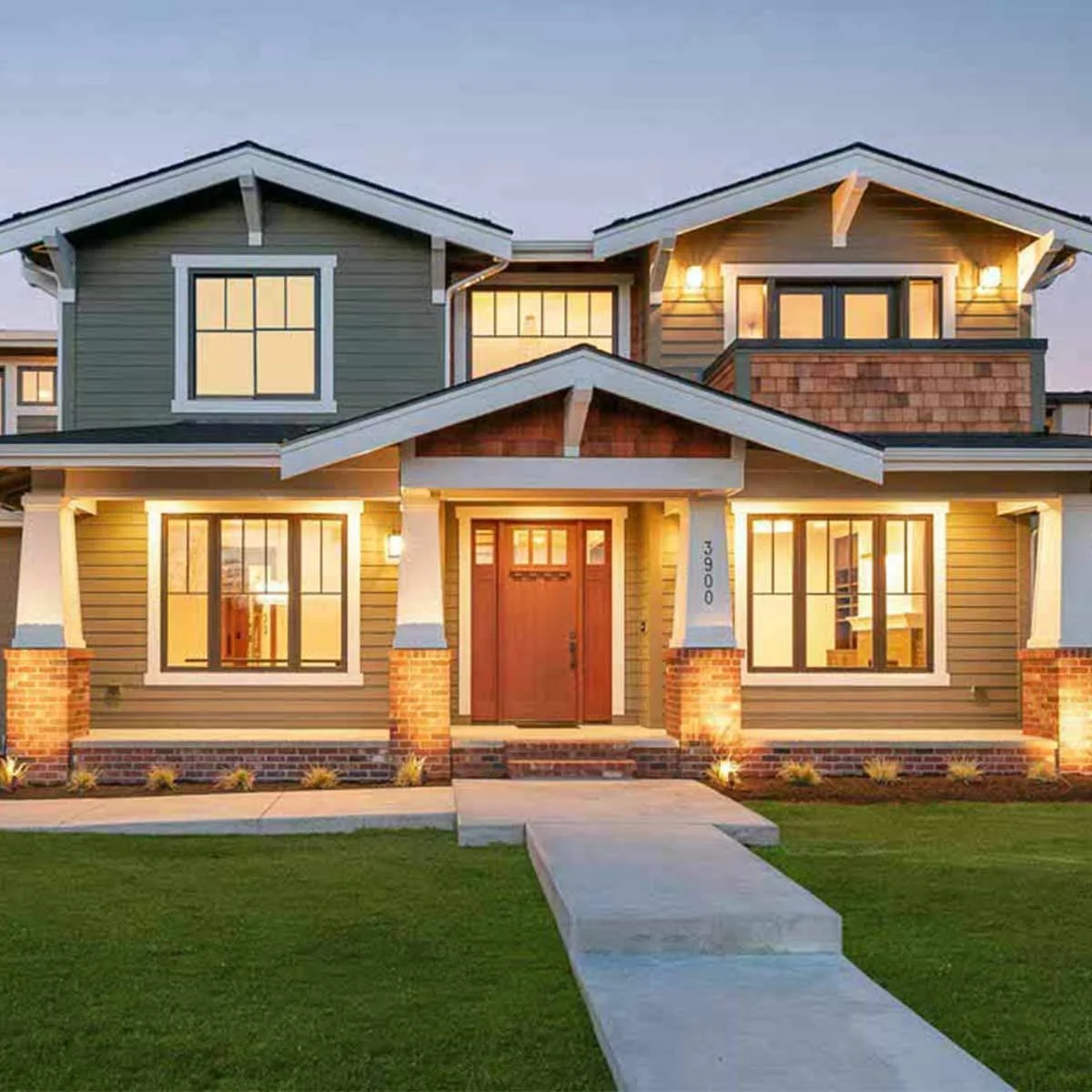
Starting Your Custom Home Journey: Key Questions We Ask Our Clients
To ensure we capture every detail and deliver a home that exceeds expectations, we ask a series of essential questions right from the start.
Beginning the process of building a custom home is an exciting and significant undertaking. It's an opportunity to create a space that perfectly reflects your lifestyle, tastes, and aspirations. At Sierra Homes, we believe that the foundation of a successful custom home build starts with a deep understanding of our clients' unique needs and desires.
To ensure we capture every detail and deliver a home that exceeds expectations, we ask a series of essential questions right from the start. These questions help us understand your vision, manage expectations, and navigate the complexities of custom home building with clarity and confidence. In this blog post, we'll share the key questions we ask our potential clients, helping us determine whether we are the right fit for you and helping you prepare for your custom home journey. Whether you're dreaming of a modern retreat, a classic family abode, or an eco-friendly haven, these questions will set the stage for creating a home that's truly yours.
Lot availability
We like to find out if our potential clients have a lot already, or need to find one. We can work with you either way, but the process will be different. It can be helpful for clients to utilize our expertise when finding a lot, as there is important research involved which may include topography, wetlands, and utilities to the property.
Location
What is your preferred location for your new home? We have extensive experience building in King County, and other city jurisdictions in the greater Puget Sound. We possess in-depth knowledge of the workings of these areas, especially concerning codes and permitting.
House style
What is the design style of your dream home? At Sierra Homes, we can bring any vision to life whether that’s ranch, craftsman, contemporary northwest, or modern farm. Some clients choose stock floor plans while others create custom plans with an architect. Either way, we can guide you in the direction to get the house of your dreams.
Budget
Establishing your budget is a crucial step in the custom home building process. Determine how much money you are willing to permit yourself to spend on your dream home. When working with a trusted builder, such as Sierra Homes, we will provide you with potential costs and examples of projects we have completed in the past. Learn more about construction loans and get pre-approval from your financial institution. Our clients for custom home builds are typically working with a budget of $1.5m and up.
Timeline
Understand that building a custom home takes time. The design phase alone may take 6-12 months for architecture, floor plans, and design selections. Next, permitting can take up to 6-9 months, depending on lot requirements and soils testing. Once Sierra Homes breaks ground, we typically take about 9-12 months to complete a project. Our commitment to superior quality and thoughtful design, delivered with unparalleled customer service, means that we focus on every detail of every home we build.
Homeowner involvement
How prepared are you to actively participate in the design and construction processes? Each customer is different and there are varying levels of involvement in each project we have done. We enjoy engaging with our clients and have found that open communication and collaboration are essential for a successful partnership during the entire process of building your home - from the design phase, to breaking ground, to building and the final walk-through - we want to hear from you!
These are just samples of the several questions we ask to get to know our potential customers before embarking on the exciting journey of building your custom dream home. If you are ready to bring your vision to life, contact Sierra Homes now!